
Pine-oak rust
Cronartium quercuum
Description
Symptoms
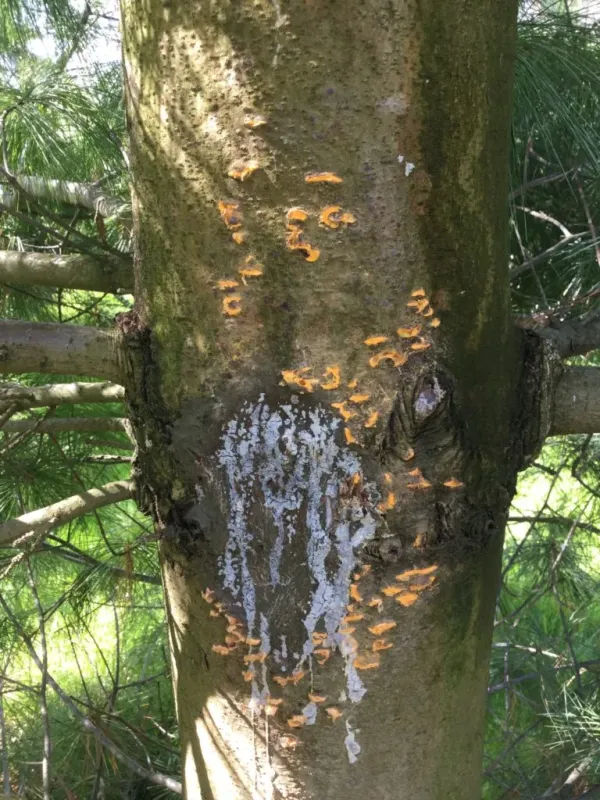
The primary symptom of this disease is the development of spherical or elongated galls on the branches and main trunks of affected pine trees.
During the spring season, these galls rupture to reveal bright orange or yellow aecia, which release large quantities of aeciospores into the air.
Wood tissue deformation at the site of infection leads to stunted growth, stem curvature, and eventually, the formation of open cancerous sores.
Needles on the affected branches often show signs of chlorosis, turning yellow and eventually dropping off as the tree's vascular system becomes impaired.
In advanced stages of the infection, the tree crown becomes thin, and the overall vigor of the pine tree declines significantly.
Pathogen
The disease is caused by the heteroecious rust fungus Cronartium quercuum, which requires two distinct hosts to complete its life cycle.
Pine trees serve as the primary host for the pathogen, while various species of oak act as the alternate host, supporting different stages of the fungus.
As an obligate parasite, the fungus derives nutrients directly from the living tissues of the host plant, resulting in chronic infections.
The life cycle involves multiple spore stages, with wind-borne aeciospores playing a crucial role in the infection of new pine tissues.
The mycelium of the fungus can persist within the tree's cambium for many years, causing slow-growing, perennial infections.
Conditions for development
The development of Pine-oak rust is highly dependent on environmental conditions, particularly cool and wet spring weather that favors spore germination.
High relative humidity levels are essential for the survival and successful infection of pine shoots by the fungal spores released from oak leaves.
Proximity between pine stands and oak populations significantly increases the frequency of infection and the rate of disease spread within a forest.
Densely planted areas tend to have a stagnant microclimate, which traps moisture and provides an ideal environment for the growth of the rust fungus.
Mechanical damage to the bark, caused by weather or logging operations, provides an easy entry point for the fungus to colonize the tree.
Why it matters
Pine-oak rust causes severe damage by reducing the growth rate and quality of pine timber, leading to significant economic losses in the forestry sector.
When the main trunk of a young tree is girdled by the infection, it often leads to the death of the upper portion of the tree.
The cancerous galls created by the fungus are entry points for secondary pests, including wood-boring insects and other wood-decaying fungi.
High infection rates often necessitate large-scale sanitary logging operations to remove diseased trees and slow down the spread of the pathogen.
The disease can cause devastating effects in forest nurseries and young plantations, requiring extensive management to maintain stand health.
Protection
Effective management includes the systematic identification and removal of infected trees to eliminate sources of inoculum in the forest.
Forest managers should avoid planting pine and oak species in close proximity to prevent the completion of the fungus's life cycle.
Thinning and proper spacing are critical forest management practices to improve air circulation and reduce the humidity levels that favor rust development.
In high-value areas, such as forest nurseries, the application of appropriate fungicides can provide temporary protection for young trees.
Selecting and planting genetically resistant pine genotypes is the most sustainable and efficient long-term method for managing this disease.
Discussion
No discussions yet — be the first.