
Fusiform rust
Cronartium fusiforme
Description
Symptoms
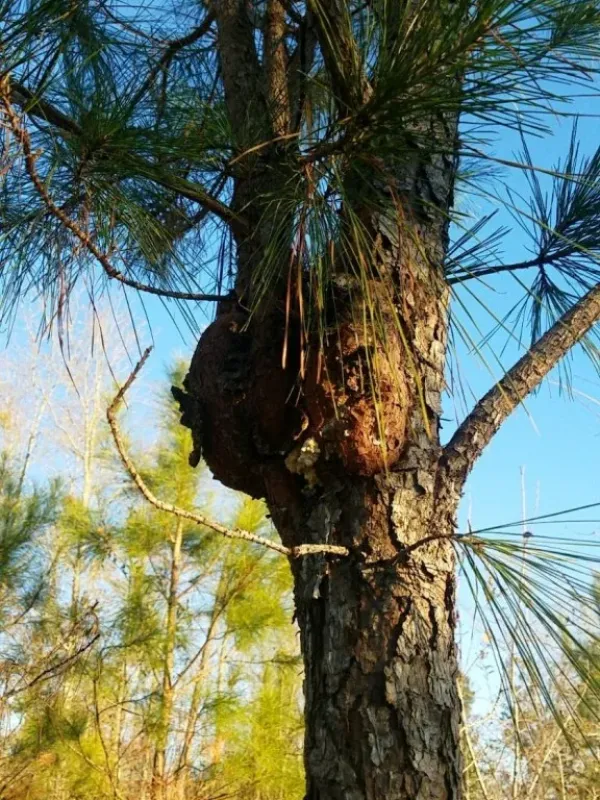
The most diagnostic sign of fusiform rust is the formation of spindle-shaped swellings, known as galls, on the stems or branches of infected pine trees. These galls are the result of uncontrolled cell division triggered by the fungal pathogen.
During the spring, the surfaces of these galls erupt with bright orange aecia, which release large quantities of aeciospores. This stage is easily visible and confirms the presence of an active fungal infection in the forest stand.
As the galls enlarge, the bark eventually cracks, exposing the wood and creating wounds that serve as entry points for secondary wood-boring insects. This further accelerates the decline and structural failure of the tree.
Infected seedlings often exhibit severe stunting, bending, or breakage at the point of infection. If the infection occurs on the main stem, the tree is essentially girdled, which cuts off nutrient supply and leads to death.
On nearby oak leaves, chlorotic spots may appear, indicating the presence of uredinia and telia, which are the reproductive stages that complete the fungal life cycle by producing spores that reinfect the pines.
Pathogen
The causal agent of this disease is the fungus Cronartium fusiforme, a specialized pathogen belonging to the order Pucciniales. This fungus follows a complex life cycle that requires two different hosts to complete its reproduction and spread.
The disease is heteroecious, meaning it must alternate between pine species (primarily loblolly and slash pine) and oak species. Without the presence of these two specific hosts in the environment, the fungus cannot persist or complete its cycle.
The pathogen utilizes airborne basidiospores for initial infection and produces aeciospores on the pine hosts during the spring. This specific biological cycle is highly synchronized with the growth stages of the susceptible trees.
Mycelium from the fungus colonizes the cambium and xylem of the tree, causing systemic infection that persists throughout the life of the host unless the tree is killed. The growth of the fungus is persistent and destructive to the vascular system of the pine.
The fungus is highly aggressive, capable of infecting seedlings within their first year of life, which often leads to early mortality in dense or poorly managed forest stands.
Conditions for development
The development of fusiform rust is heavily dependent on weather conditions, particularly high humidity and moderate temperatures during the spring infection period. Moisture is critical for the germination of spores on pine needles.
Periods of frequent rainfall coincided with the flush of new pine growth create the most favorable environment for infection. Young tissues are highly succulent and vulnerable during this active growth window.
The presence of oak trees within several hundred meters of pine stands significantly increases the likelihood of infection. The density and proximity of the two hosts are the primary determinants of the disease's spread rate.
Stands with high planting density or poor ventilation retain moisture longer, providing an ideal microclimate for the fungus to establish and propagate. These conditions allow for rapid disease escalation within a stand.
Stressed or nutritionally deficient pines show reduced resistance to the pathogen, making them more susceptible to infection. Proper forest management and site selection are vital for building resilience against this rust.
Why it matters
Fusiform rust is the most economically significant disease affecting pine plantations in the southern United States. It causes substantial losses in timber yield due to tree mortality and deformity of the remaining stems.
Infected trees that survive often develop crooked stems or structural weaknesses, making them unfit for high-value timber products such as sawlogs or poles. This forces landowners to harvest earlier or accept lower prices.
The cumulative effect of the disease leads to significant reduction in growth rates across entire forest stands. Increased mortality means that plantations often require extensive replanting, adding high costs to forest management operations.
Deformed crowns and systemic infection weaken the trees, making them susceptible to attack by bark beetles and other secondary pests. This often results in accelerated mortality across the entire landscape.
Failure to control the spread of the pathogen can lead to total loss of investment in young plantations, resulting in millions of dollars of annual losses for the forestry industry and timber producers.
Protection
The most effective strategy for managing fusiform rust is the use of genetically resistant pine seedlings. Breeders have developed families of pines that demonstrate superior resistance to the pathogen, which is the cornerstone of modern plantation forestry.
Sanitation efforts, such as the removal of heavily infected trees during thinning, can reduce the local inoculum load. It is essential to prune or remove diseased stems before the spring sporulation period occurs.
In certain cases, such as in high-value nurseries, the application of fungicides may be used to protect young seedlings during their most susceptible period. However, this is costly and requires precise timing to be effective.
Site preparation and managing the density of oak trees in the immediate vicinity of young pine stands can help disrupt the life cycle of the fungus and reduce the incidence of infection.
Regular monitoring and survey of plantations allow for early identification of infection centers. By managing the stand health and removing primary sources of inoculum, foresters can effectively minimize the impact of the disease.
Discussion
No discussions yet — be the first.