
Sweetfern blister rust
Cronartium comptoniae
Description
Symptoms
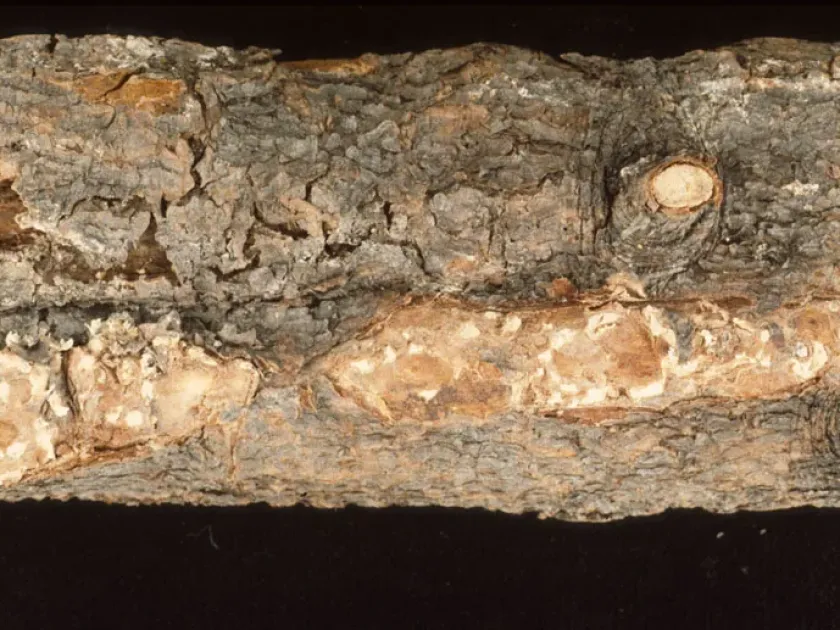
The most visible symptom of the infection is the formation of distinct, elongated swellings or galls on the main stem or branches of the pine tree. These swellings are caused by the abnormal growth of infected tissues.
During the spring, when the fungus is actively sporulating, the bark on these galls ruptures. Bright orange-yellow blisters, known as aecia, emerge from these cracks, forming pillar-like structures characteristic of this rust.
As the disease progresses, the tree crown above the point of infection often becomes chlorotic, showing needle yellowing and eventual shedding. The flow of water and nutrients is severely restricted due to the destruction of the vascular system.
Young trees are often deformed by the presence of these galls, leading to stunted growth or a "canker" appearance on the trunk. In severe cases, the bark may peel away, exposing the wood beneath to secondary pathogens.
- Swollen cankers on stems.
- Orange pillar-like aecia.
- Cracked and peeling bark.
- Reduced needle density and yellowing.
- Stunted height and tree deformation.
Pathogen
The causal agent of this disease is the heteroecious rust fungus Cronartium comptoniae. This pathogen requires two distinct hosts to complete its complex life cycle, alternating between pine species and specific alternate hosts.
The primary hosts are various species of pine, where the aecial stage develops on the stems and branches. The alternate hosts include members of the Myricaceae family, particularly sweetfern (Comptonia peregrina), and certain species of sedge.
The fungus produces a perennial mycelium that colonizes the cambium and inner bark tissues of the pine tree. Once established, the fungus remains active throughout the life of the tree or until the host tissue is completely destroyed.
Spore production occurs annually, with aeciospores being wind-dispersed to initiate new infections on susceptible hosts. The pathogen's ability to remain dormant within the bark tissues makes it particularly difficult to manage.
Understanding the interaction between the pathogen and its specific hosts is essential for effective forest protection programs, as the presence of alternate hosts is a prerequisite for the disease's persistence in an area.
Conditions for development
The development and spread of the disease are highly dependent on moist environmental conditions. High humidity, particularly during the late summer and early autumn, is crucial for the germination of basidiospores.
The physical proximity of alternate hosts such as sweetfern is a major factor in the epidemiology of the disease. Infections are most common in areas where these plants and susceptible pines coexist in close density.
Poorly ventilated forest stands or dense nurseries provide an ideal microclimate for the fungus, as air stagnation allows moisture to persist on the surfaces of the bark and needles for longer periods.
Mechanical injuries to the trunk provide entry points for the fungus, making younger or stressed trees significantly more susceptible to successful colonization by the rust spores.
Cool, rainy summers facilitate the production of spores and ensure their survival during transit. Environmental monitoring of these patterns is used to predict high-risk periods for potential infection outbreaks.
Why it matters
The primary impact of sweetfern blister rust is the significant mortality rate among young pine stands. Trees that are infected while still in the sapling stage often die before they reach maturity.
For mature trees, the disease results in reduced timber quality and structural integrity. The presence of large stem galls makes the wood prone to splitting and reduces the economic value of the tree.
By weakening the host, the rust fungus leaves the trees susceptible to secondary attacks by wood-boring insects and other opportunistic fungal pathogens, further accelerating the decline of the forest stand.
Economic losses in the forestry sector include the costs of removing infected stands and the lost potential for timber yield. In nurseries, entire batches of seedlings can be lost, requiring substantial replanting efforts.
The cumulative effect on a forest landscape can be profound, changing the species composition and density over time. Continuous management is required to minimize the impact on productive forestry lands.
Protection
Effective management begins with the systematic removal of alternate hosts such as sweetfern in and around pine nurseries. Maintaining a "host-free" zone is the most successful preventative measure.
Sanitation cutting, which involves the physical removal and destruction of infected pine trees, is critical for limiting the inoculum load in an affected area. It is vital to perform this before the spring sporulation period.
In high-value plantations, the application of systemic fungicides may be considered, though this is rarely practical for large-scale forest stands. Monitoring and early detection remain the most cost-effective strategies.
Site selection for new plantations should prioritize areas where environmental factors do not favor the rust, such as avoiding known hotspots or low-lying areas with poor air circulation.
Long-term resistance breeding programs are focused on developing pine varieties that show natural immunity or reduced susceptibility to the Cronartium species, providing a sustainable path for future forest regeneration.
Discussion
No discussions yet — be the first.