
Comandra blister rust
Cronartium comandrae
Description
Symptoms
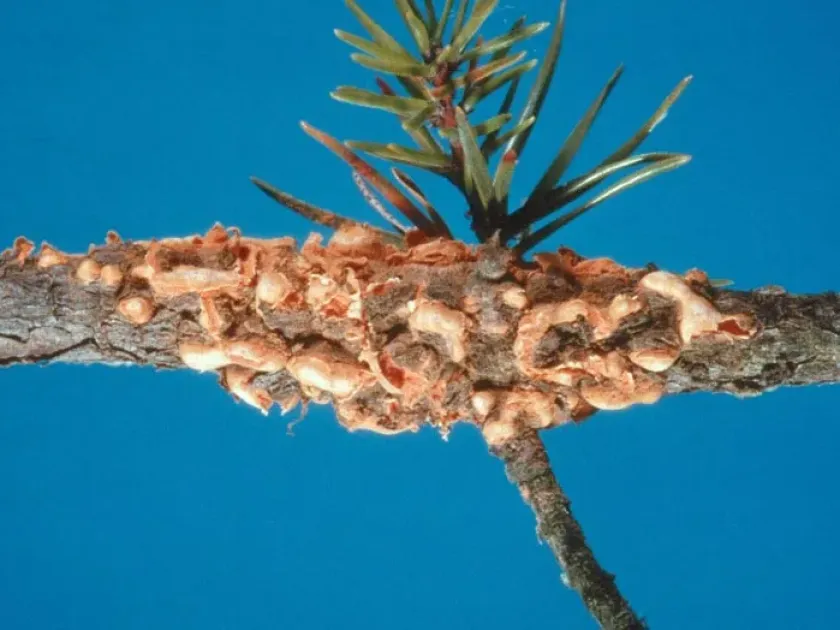
The most prominent symptom is the development of spindle-shaped swellings, or galls, on the branches or the main stem of the pine tree. These areas often exhibit heavy resinosis as the tree attempts to combat the infection.
During the spring, bright orange, dusty aecia erupt through the bark in the infected zones. These structures release massive quantities of aeciospores into the atmosphere.
As the disease progresses, the bark in the infected area dies, leaving deep necrotic wounds that expose the xylem and predispose the tree to further decay or structural failure.
On the alternate host, Comandra, symptoms appear as small, yellow-to-orange pustules on the undersides of the leaves, which serve as the source of inoculum for reinfecting nearby pine stands.
Trees affected by the disease often show signs of crown thinning, chlorosis of the needles, and eventually the dieback of branches distal to the site of the infection.
Pathogen
Comandra blister rust is caused by the heteroecious rust fungus Cronartium comandrae. This pathogen requires two distinct hosts to complete its complex biological life cycle: pine trees as the primary host and plants from the genus Comandra as the alternate host.
The fungus is a basidiomycete that produces multiple spore stages. Aeciospores are formed on pine branches and trunks, while urediniospores and teliospores develop on the leaves of the alternate host during the growing season.
The mycelium of the fungus is perennial, allowing it to survive for many years within the cambium and bark tissues of the pine tree, causing chronic infection that gradually weakens the tree.
Infection spreads via wind-borne basidiomycetes, which are highly mobile and can travel significant distances, especially during cool and humid spring weather conditions.
The pathogen's biology is characterized by its ability to induce abnormal cell division in the host, leading to large stem swellings that disrupt the tree's internal nutrient and water transport systems.
Conditions for development
High relative humidity is the most critical environmental factor for the successful germination of basidiospores. Extended periods of rain or fog during the spring promote widespread infection.
Moderate temperatures are ideal for the development of Cronartium comandrae. The fungus thrives when spring weather remains cool enough to prevent spore desiccation but warm enough for mycelial growth.
The proximity of the alternate host, Comandra, is essential for the disease to persist in an area. Without this alternate host, the rust fungus cannot complete its life cycle.
Young pine plantations, typically under 20 years of age, are at the highest risk due to their susceptibility and the rapid expansion of the fungus within their young, thin-barked tissues.
Dense stand structures facilitate the accumulation of humidity within the canopy, creating a stable microenvironment that allows the fungus to thrive and infect neighboring trees more efficiently.
Why it matters
The primary impact is the structural weakening of the pine stem, which frequently leads to breakage at the site of the gall due to wind stress or the weight of the crown.
Growth reduction is a significant economic consequence, as infected trees show drastically reduced height and diameter growth, rendering them unsuitable for timber production.
Infected trees become highly susceptible to secondary attacks by bark beetles and other wood-boring insects, which rapidly colonize the weakened tissues and accelerate tree death.
In nursery settings, Comandra blister rust can result in total losses of seedlings, causing significant financial damage and disrupting reforestation efforts.
At the ecological level, the disease causes severe damage to pine forest communities, leading to stand fragmentation and the loss of sensitive tree populations.
Protection
The most effective management strategy is to eradicate the alternate host, Comandra, within a specified radius of pine plantations to break the fungus's life cycle.
Regular sanitation thinning is recommended, where infected branches and trees are identified, removed, and destroyed to lower the local inoculum level.
In high-value nurseries, the application of systemic fungicides during the peak infection period (typically spring) can help protect young seedlings from successful inoculation.
Using disease-resistant genetic stock during the planting phase is a crucial long-term strategy to minimize future outbreaks and ensure the health of the new forest stands.
Monitoring programs should be implemented to detect early signs of rust infection, allowing for rapid management intervention before the disease becomes firmly established in a stand.
Discussion
No discussions yet — be the first.