
Corineum leaf spot of rhododendron
Seimatosporium rhododendri
Description
Symptoms
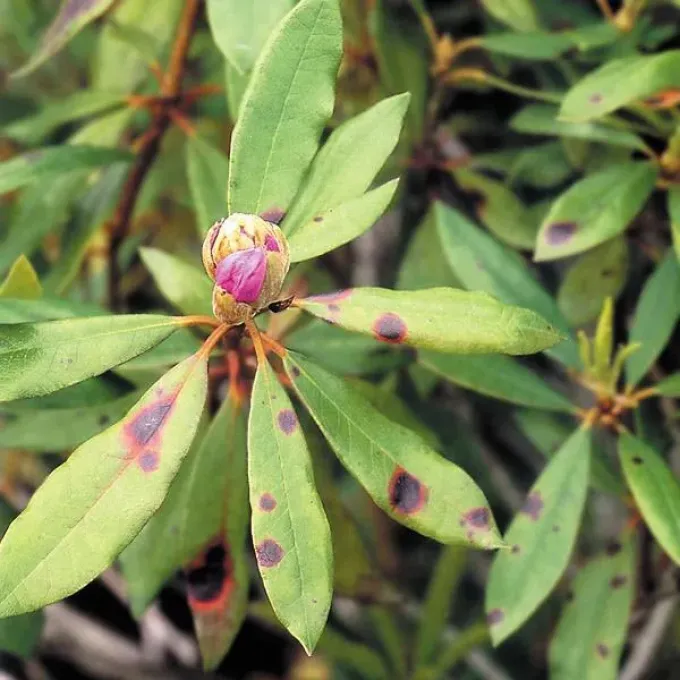
The primary symptom includes the appearance of small, circular or irregular spots on the leaves. These spots are initially brown or reddish-brown and are often surrounded by a distinct purple or dark red halo.
As the spots mature, the centers may bleach out, turning a greyish or tan color, while the edges remain dark. Tiny black dots, which are the fungal fruiting bodies (acervuli), eventually emerge within the central area of the lesions.
If left unchecked, multiple spots can coalesce, covering large parts of the leaf surface. This leads to premature chlorosis, leaf curling, and eventual leaf drop, which significantly thins the plant's foliage.
The disease also attacks the stems and twigs, where it manifests as sunken, necrotic lesions or cankers. These can girdle the stems, leading to dieback of entire branches, giving the plant a scorched or unhealthy appearance.
Early diagnosis is crucial, as the symptoms can sometimes be mistaken for other leaf spot diseases or environmental stress. The presence of the black fruiting bodies is a key indicator for this specific pathogen.
Pathogen
The disease is caused by the fungus Seimatosporium rhododendri (syn. Monochaetia rhododendri). It is a specialized fungal pathogen that primarily infects ornamental shrubs of the Ericaceae family, particularly rhododendrons and azaleas.
The pathogen survives the winter in infected host tissues, fallen leaves, and twigs. In the spring, it produces acervuli that release spores (conidia) which are disseminated by rain splash, wind, and irrigation water to healthy leaves.
Infection typically occurs through natural openings like stomata or through existing wounds caused by pruning, insect feeding, or mechanical damage. Once inside, the fungal mycelium colonizes the plant tissue, causing necrosis.
The life cycle of the fungus is highly dependent on moisture. Wet conditions facilitate the germination of spores and the subsequent development of the disease, making the spring and early summer periods critical for monitoring.
This fungus is not just a surface pest; it can penetrate deeper into the vascular and cortical tissues, affecting the overall health and structural integrity of the affected plant segments.
Conditions for development
High humidity and prolonged leaf wetness are the most significant factors driving the disease. Overhead irrigation, combined with high temperatures, creates an environment where the fungus thrives and reproduces rapidly.
Optimal temperatures for the fungus range between 18°C and 25°C. During warm, rainy spells, the disease can spread throughout a rhododendron garden in a matter of weeks.
Poor site selection, such as planting in areas with stagnant air or poor drainage, increases the susceptibility of rhododendrons. Good airflow is essential to keep the foliage dry and reduce the likelihood of infection.
Stress factors like nutrient imbalances, incorrect soil pH, or previous mechanical injury make the plants more susceptible to colonization by Seimatosporium rhododendri.
The spread of the disease is also aided by horticultural practices. Contaminated tools or poor sanitation practices (leaving debris under the canopy) allow the fungus to persist and re-infect the plant year after year.
Why it matters
The most immediate harm caused by the disease is the loss of aesthetic value. A rhododendron with spotted, dropping leaves loses its primary function as an ornamental specimen in the landscape.
The loss of photosynthetic area severely weakens the plant, reducing its ability to store energy for the following season. This results in reduced vigor, smaller blooms, and poor overall growth.
Persistent infection leads to branch dieback and, in severe cases, the death of the entire shrub. The fungal cankers on the stems disrupt the plant's vascular system, hindering the transport of water and nutrients.
For nurseries and garden centers, an outbreak of corineum leaf spot can cause substantial economic losses, as infected stock must be discarded or kept in quarantine for lengthy treatment periods.
The disease acts as a multiplier of stress. A plant already struggling with climate or soil conditions will decline much faster once infected with this fungus, often becoming irreparable.
Protection
Effective management begins with sanitation. Prune out all infected twigs and leaves at the first sign of symptoms. It is vital to remove and destroy all fallen foliage from beneath the shrub to eliminate primary inoculum sources.
Improve air circulation by thinning out dense foliage and ensuring proper plant spacing. Always irrigate at the base of the plant to avoid keeping the foliage wet for extended periods.
Chemical control includes the application of protective copper-based fungicides or systemic products belonging to the triazole or strobilurin groups. Treatments should begin in early spring as new growth starts.
Maintaining optimal plant health through balanced fertilization and proper soil acidification helps the rhododendron naturally resist fungal attacks. A healthy plant is much less likely to develop severe symptoms.
- Disinfect pruning tools with alcohol or a bleach solution between cuts.
- Avoid working in the garden when the plants are wet to prevent spreading spores.
- Apply a layer of fresh mulch to cover any remaining spores in the soil.
- Use fungicides as a preventative measure during cool, wet spring seasons.
Pathogens and affected parts
Affects crops · 1
Discussion
No discussions yet — be the first.