
Description
Symptoms
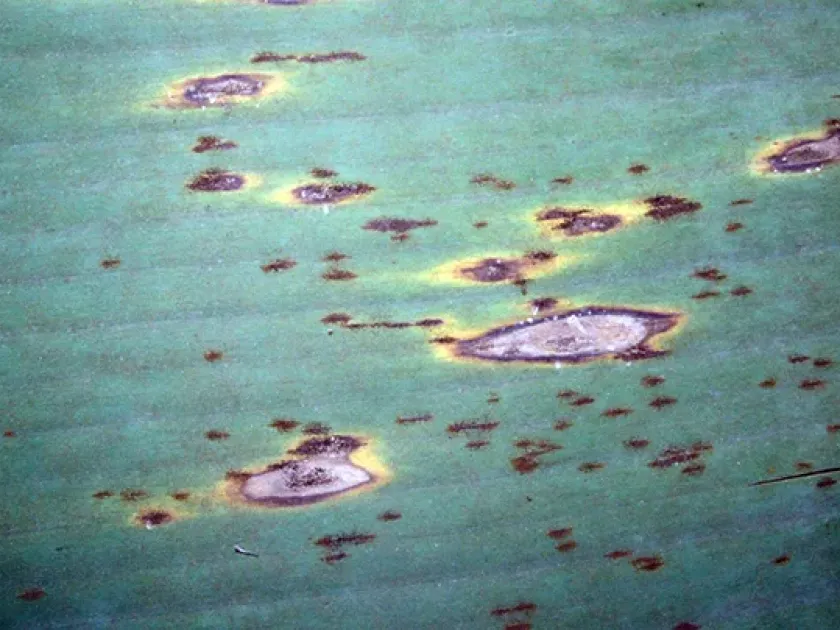
The diagnostic symptoms of Cordana leaf spot are oval-shaped or irregular spots that appear on the leaves. Initially, these spots are pale yellow or light brown in color.
As the infection progresses, the spots expand and develop distinct zones. These zones arise from the varying density of fungal mycelium and the progressive death of plant tissue within the spot.
A hallmark feature of this disease is the large, bright yellow chlorotic halo that surrounds each necrotic spot. This halo is highly visible and helps distinguish it from other fungal leaf spots.
Under conditions of high humidity, a greyish-brown fungal growth often appears on the underside of the affected leaf tissue. This corresponds to the sporulation stage of the fungus.
In severe cases, individual spots coalesce to cover large areas of the leaf blade. This results in significant tissue death, leading to premature yellowing and drying of the entire leaf.
Pathogen
Cordana leaf spot is caused by fungi of the genus Cordana, most notably Cordana musae. This pathogen belongs to the hyphomycetes group and specifically targets the foliage of banana plants.
The fungus reproduces through conidia, which are efficiently dispersed by wind and rain splashes across the plantation. This mechanism ensures rapid transmission of the pathogen to neighboring plants.
Upon landing on the leaf surface, spores germinate under favorable conditions and penetrate the host tissue. The fungus then establishes a mycelial network that draws nutrients from the leaf, causing chlorosis and necrosis.
Cordana musae is characterized by its ability to survive in decaying plant debris. This saprophytic capacity allows the fungus to persist in the environment even when live hosts are scarce.
The primary host for this fungus is the banana plant (Musa spp.). While it is typically secondary to other major leaf spot diseases, it can become a primary concern in specific humid climates.
Conditions for development
The development of Cordana leaf spot is heavily dependent on high relative humidity. Frequent rainfall, dew, and misty conditions are the primary drivers of spore germination and infection.
The optimal temperature range for the growth of Cordana musae is between 24 and 28 degrees Celsius. These temperatures are characteristic of the tropical regions where bananas are cultivated.
Poor plantation management, such as excessive plant density, creates a microclimate with stagnant air. This prevents leaves from drying out quickly, providing a prolonged window for fungal infection.
Nutritional stress can increase susceptibility to the disease. Plants grown in poorly managed soils with imbalanced fertilizer application show reduced natural defense mechanisms against fungal pathogens.
Infected plant debris left on the plantation floor acts as the primary inoculum source. This reservoir allows the disease to re-emerge at the start of every favorable growing season.
Why it matters
The main impact of Cordana leaf spot is the reduction of the plant's photosynthetic surface area. Healthy leaves are essential for producing the energy required for fruit development and filling.
Severe infections lead to a decrease in bunch weight and a significant decline in fruit quality. This can render the harvest unsuitable for premium export markets.
Chronic infection weakens the banana plant, making it more susceptible to more aggressive diseases like Sigatoka or Fusarium wilt. This complicates overall plantation management.
Plantations with visible leaf damage suffer from reduced marketability and potential losses in yield. Growers often face increased costs due to the need for fungicide applications and leaf pruning.
If left unmanaged, the cumulative stress of the infection can shorten the lifespan of the plantation, leading to the necessity of early replanting or extensive soil rehabilitation.
Protection
Sanitation is the cornerstone of control. Regularly removing and destroying severely infected leaves helps significantly reduce the amount of inoculum available to spread to healthy plants.
Proper plant spacing and weed management are crucial for enhancing airflow within the plantation. Improved ventilation helps leaves dry faster, disrupting the life cycle of the fungus.
Fungicides remain a vital tool in areas with high disease pressure. Copper-based sprays or systemic fungicides are typically employed to protect developing leaves from new infections.
Balanced nutrition, particularly adequate potassium and nitrogen, helps bolster the plant's immune system. Strong, well-nourished plants are better able to limit the spread of internal mycelium.
Regular monitoring allows for early detection of the disease. Implementing control measures at the first sign of symptoms is far more effective than trying to manage a full-blown outbreak.
Pathogens and affected parts
Affects crops · 1
Discussion
No discussions yet — be the first.