
Conocybe aeruginosa
Conocybe aeruginosa
Description
Symptoms
The primary symptom of infestation is the emergence of small, delicate mushrooms on the turf surface, often appearing in clusters or sporadic arcs following rainy weather.
In areas where the mycelium is most active, the grass may exhibit signs of chlorosis or thinning, as the underground fungal mats compete for soil moisture and oxygen.
A dense layer of white or gray mycelium can sometimes be found just beneath the soil surface, especially in the thatch layer, indicating a mature colony.
The texture of the soil might become slightly hydrophobic in spots where the mycelium mat is particularly dense, hindering water infiltration to the grass roots.
A faint, musty odor characteristic of decomposing organic matter often accompanies the mass appearance of these fungi during warm, wet periods.
Pathogen
Conocybe aeruginosa is a small saprophytic mushroom belonging to the Bolbitiaceae family. In agronomy, it is primarily viewed as a non-parasitic organism that thrives in soil rich in decomposing organic matter.
The fungus develops its mycelium within the topsoil, breaking down organic residues such as dead grass roots and organic thatch, which are abundant in neglected or aging lawns.
While not a direct threat to live plants, its presence is a clear biological indicator that the lawn's microenvironment is characterized by excess moisture and accumulated organic waste.
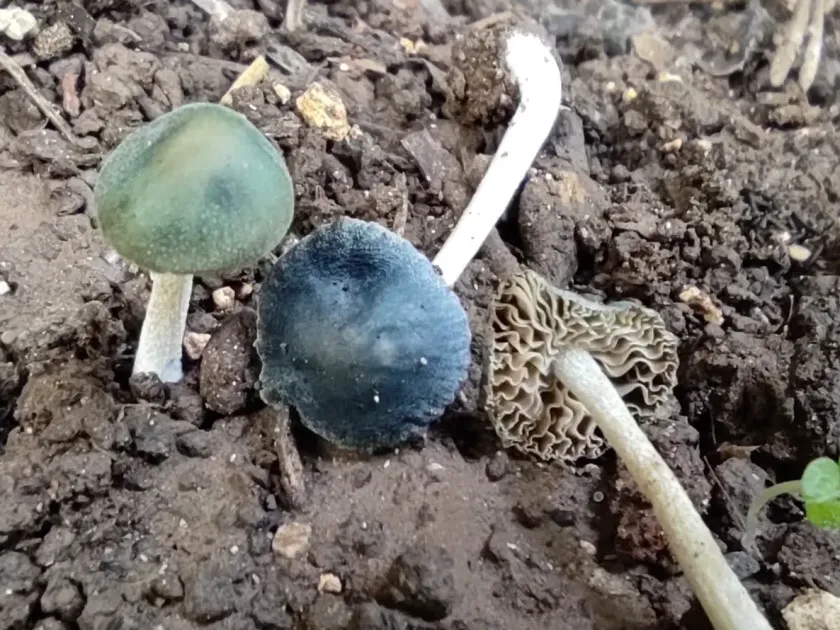
The fungus produces small, conical mushrooms with a distinct copper-green or rust-brown appearance, making them easily recognizable after periods of heavy rain.
Spore dispersal occurs mainly through wind and water, allowing the fungus to colonize new areas where environmental conditions remain favorable for saprophytic growth.
Conditions for development
High soil moisture levels are the most critical condition required for the development of Conocybe aeruginosa fruiting bodies.
The presence of a thick layer of thatch—dead plant material—provides the necessary food source for the fungal colonies to thrive.
Temperatures between 15°C and 22°C are ideal for the rapid vegetative growth of the mycelium and subsequent fruit formation.
Poor soil aeration and compaction prevent water from draining, creating the persistently damp environment that these fungi prefer.
Shaded lawn areas with limited airflow and poor sun exposure are significantly more susceptible to colonization compared to well-lit, dry areas.
Why it matters
The primary damage caused by Conocybe aeruginosa is aesthetic, as the sudden appearance of mushrooms diminishes the professional look of a manicured lawn.
While the fungus does not directly kill grass, the interference of mycelial mats with soil structure can weaken turf health, leading to sparse patches.
The presence of mushrooms may pose a safety risk, as many small species of the Bolbitiaceae family are potentially toxic and should not be ingested by children or pets.
Continued growth of the fungus points to an underlying problem of poor turf management, such as overwatering, which may eventually lead to root rot diseases.
Turf quality declines as the concentration of fungi increases, requiring corrective action to restore the balance of the soil microbiota.
Protection
Aerating the soil is the most effective management strategy, as it improves oxygen circulation and breaks up compacted areas, discouraging fungal growth.
Regular scarification is essential to remove the thatch layer, effectively eliminating the primary organic food source for the mushrooms.
Adjusting irrigation schedules to ensure the soil surface has time to dry out between watering sessions is vital for long-term control.
Hand-removal of fruiting bodies before they release their spores can help limit the spread of the fungus to other parts of the lawn.
- Top-dressing with sand to improve drainage and soil structure.
- Applying nitrogen fertilizers to accelerate the decomposition of organic matter.
- Improving site airflow and sun exposure by pruning surrounding trees or shrubs.
Discussion
No discussions yet — be the first.