

Description
Symptoms
Symptoms typically appear as small, oval-shaped lesions on the leaves, which are brown in color with yellow halos. In wet weather, black spots emerge in the center.
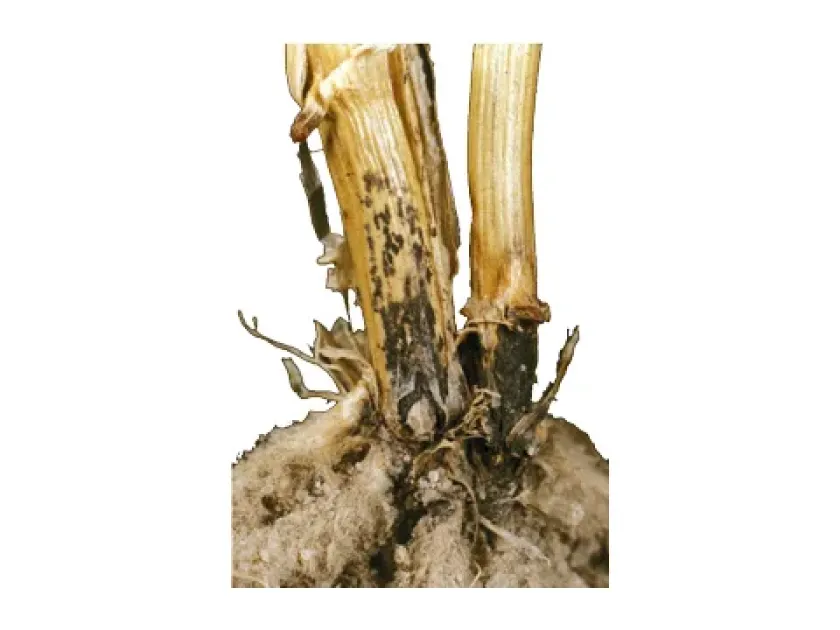
Stalk rot is the most severe phase of the disease. Symptoms include dark, shiny, and irregularly shaped lesions on the internodes of the corn stalk.
Internally, the stalk pith turns dark brown or black and disintegrates, significantly weakening the structural integrity of the plant.
Infected plants may exhibit premature leaf firing, where the upper leaves turn yellow and dry out while the rest of the plant appears green.
In severe cases, the ear shanks may be infected, leading to black discoloration of the husks and the development of black fungal growth on the kernels.
Pathogen
The causal agent of this disease is the fungus Colletotrichum graminicola. It is an obligate parasite capable of infecting corn plants at any growth stage.
The fungus survives the winter on infected crop residues left on the soil surface and can also be transmitted through infested seed lots.
Infection occurs when spores are splashed by rain or wind onto healthy plant tissue, where they penetrate the epidermis through stomata or physical wounds.
Once inside, the fungus colonizes the host tissue and starts producing acervuli, which are specialized structures containing masses of fungal spores.
The rapid reproduction cycle of this pathogen allows it to spread quickly through a field under favorable environmental conditions during the growing season.
Conditions for development
Corn anthracnose thrives in warm and humid climates. Optimal development occurs when temperatures range between 20°C and 28°C with frequent rainfall.
Poor drainage and high relative humidity levels significantly promote the spread and germination of spores throughout the corn canopy.
Continuous cropping of corn increases the inoculum density in the field, making the plants more susceptible to recurrent infections every season.
Mechanical damage caused by hail, heavy machinery, or insect feeding provides entry points that make infection much more likely to occur.
Nutrient deficiencies, particularly low potassium levels, reduce the plant's resistance to stalk rots, allowing the fungus to colonize more aggressively.
Why it matters
The primary economic impact of anthracnose is caused by reduced photosynthetic capacity, which directly results in lower grain yield and quality.
Stalk rot leads to significant lodging (falling over) of plants, making it extremely difficult or impossible to harvest the grain efficiently.
Infection of the ears can result in lighter kernels, lower grain weight, and potential contamination with fungal toxins, reducing market value.
Premature death of the plant due to systemic infection shortens the grain-filling period, leading to poorly developed and shriveled grains.
Field losses can range from minor to severe, with outbreaks in highly susceptible hybrids potentially causing yield reductions of 50% or more.
Protection
Selecting and planting genetically resistant or tolerant corn hybrids is the most effective and sustainable long-term strategy for managing anthracnose.
Crop rotation remains a fundamental practice to break the disease cycle and reduce the amount of pathogen inoculum persisting in the field soil.
Deep tillage to bury crop residues speeds up the decomposition process and prevents the fungus from surviving on surface debris until the next season.
Foliar fungicide applications during the vegetative stages can help suppress the disease if weather conditions are conducive to severe infection.
- Utilizing high-quality, fungicide-treated seeds to ensure healthy germination.
- Managing insect pests to minimize mechanical entry points for the fungus.
- Ensuring balanced soil fertility, especially adequate potassium application.
Reference
Connections · Corn anthracnose
Most often together:
Marketplace
Products · 1
Community
Discussion
No discussions yet — be the first.