
Camellia flower blight
Ciborinia camelliae
Description
Symptoms
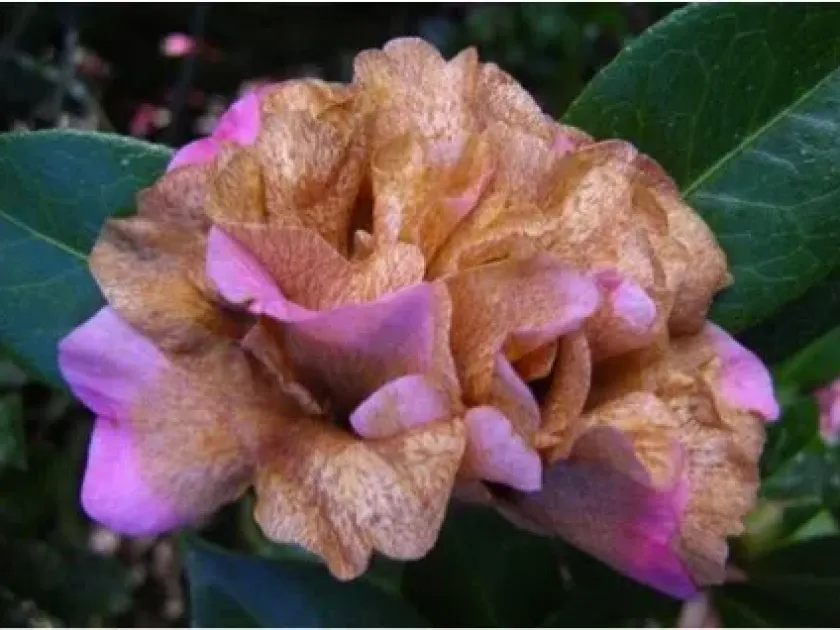
The first signs of infection appear as small, irregular brown spots on the petals, which expand rapidly as the disease progresses.
Within a few days, the entire flower turns brown and develops a leathery, blighted appearance, often leading to total flower collapse.
A key diagnostic feature is that the disease only affects the flowers; the leaves, stems, and buds remain completely healthy and green.
Under humid conditions, a white fungal mat or mycelium may appear on the decaying petals, which eventually darkens as new sclerotia form.
Infected flowers typically drop prematurely, leaving a carpet of blighted material around the base of the shrub, which fuels the disease cycle.
Pathogen
The disease is caused by the ascomycete fungus Ciborinia camelliae, which is a highly host-specific pathogen that targets only camellia species.
The fungus survives during the dormant season in the form of sclerotia, which are hard, black, fungal structures resembling small seeds, found in fallen flowers and soil.
When environmental conditions are right, these sclerotia produce small, tan-colored cup-shaped mushrooms called apothecia on the soil surface.
These apothecia release millions of microscopic ascospores, which are spread by wind currents to open or opening camellia flowers.
Once the spores land on a petal, they germinate and penetrate the tissue, eventually colonizing the entire flower and destroying it from within.
Conditions for development
Ciborinia camelliae thrives in cool, damp, and rainy weather, which is typical for the peak blooming season of many camellia varieties.
High relative humidity and consistent moisture are essential for the maturation of apothecia and the subsequent dispersal of airborne spores.
Dense shrubbery and thick foliage can create localized pockets of high humidity, providing an ideal environment for the pathogen to flourish.
The timing of the disease is strictly synchronized with the flowering period, making it a seasonal problem that vanishes once blooming ceases.
Poor soil hygiene, such as leaving old petals on the ground, significantly increases the pressure of the inoculum for the following year.
Why it matters
The primary damage is aesthetic, as the disease renders the beautiful camellia flowers unsightly and ruins the entire display of a shrub.
The rapid spread of the pathogen can lead to total crop failure for camellia growers, causing significant economic losses in nurseries.
Because the disease spreads through the air, it is highly contagious within a garden or a collection of camellias, making control difficult.
The persistence of sclerotia in the soil means that the pathogen remains a threat to future flowering seasons if no action is taken.
While the disease does not kill the shrub itself, it diminishes the health and vigor of the plant by affecting its reproductive success and beauty.
Protection
Rigorous sanitation is the most effective management strategy: collect and destroy all fallen blossoms promptly to prevent the formation of new sclerotia.
Applying a layer of mulch, such as wood chips or pine bark, under the camellias helps to prevent the apothecia from releasing spores into the air.
Removing the top layer of soil beneath the plants can help reduce the population of overwintering sclerotia, significantly lowering future infection risk.
Chemical control with fungicides is challenging due to the continuous blooming cycle, but systemic products may offer protection during high-risk periods.
- Monitor plants closely during the peak bloom.
- Sanitize tools regularly to prevent spread.
- Avoid overhead watering during the flowering season.
- Choose resistant varieties if available in your region.
Discussion
No discussions yet — be the first.