
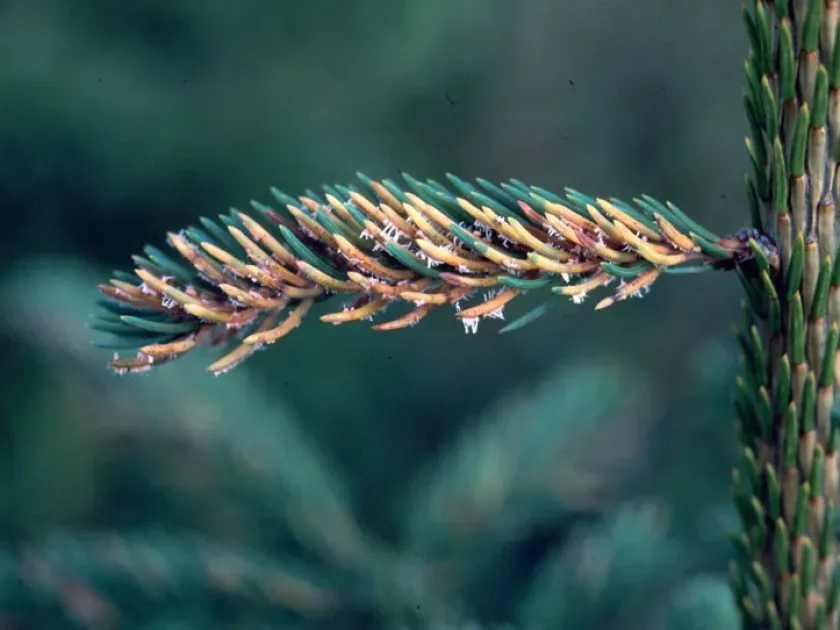
Description
Symptoms
The first noticeable sign of the disease is the appearance of small, distinct spots on the underside of the leaves. These spots are typically orange, yellow, or rusty-brown in color, often occurring in clusters.
As the disease progresses, these spots develop into raised pustules (aecia or uredinia), which break through the leaf epidermis. These pustules release a large number of spores, giving the area a powdery, rusty appearance.
On the upper surface of the leaf, corresponding to the infected areas underneath, chlorotic spots (yellowish discoloration) begin to appear. In severe cases, these areas may turn necrotic, leading to brown, dead tissue.
Heavy infections result in premature yellowing and dropping of the leaves, starting from the lower parts of the plant. This loss of foliage significantly reduces the plant's aesthetic value and photosynthetic capacity.
- Yellow or orange leaf spots
- Rusty powdery pustules on the underside
- Premature leaf drop
- Chlorosis on the upper leaf surface
- Overall growth decline
Pathogen
The causative agent of this disease is the fungus Chrysomyxa nagodhii, which belongs to the Basidiomycota division. It is a highly specialized parasite that affects various species and cultivars of rhododendrons.
The life cycle of this pathogen is closely linked to climatic conditions and the growth cycle of the host plant. The fungus produces various types of spores, which allows it to survive in plant debris throughout the year, ensuring local persistence of the infection.
Spores are dispersed by wind, splashing rain, and contact with contaminated tools. Once they land on a susceptible leaf, the spores germinate under favourable conditions and penetrate the plant tissue to begin the parasitic stage of their life cycle.
Chrysomyxa nagodhii is characterized by its complex sporulation process, which contributes to its ability to spread rapidly throughout a garden or nursery. Each stage of the fungus development is dedicated to colonizing new tissues of the host.
The infection disrupts fundamental physiological functions such as photosynthesis and transpiration. As the fungus consumes nutrients and destroys cells, the overall vigor of the infected rhododendron is significantly compromised.
Conditions for development
The disease thrives in environments with high humidity and moderate temperatures. Frequent rainfall, heavy dew, or overhead irrigation provide the moist conditions necessary for spore germination and infection.
Poor air circulation, often found in dense plantings or crowded garden beds, creates a favorable microclimate for the fungus. When foliage stays wet for extended periods, the risk of rust development increases exponentially.
Plants that are stressed due to poor soil drainage, improper fertilization, or incorrect planting depth are more susceptible to infection. Maintaining plant health is a key factor in reducing vulnerability to Chrysomyxa nagodhii.
The optimal temperature range for the development of most rust fungi is between 15°C and 22°C. During cool, wet seasons, the disease can spread rapidly, potentially affecting a large portion of the rhododendron population in a short time.
The presence of old, diseased leaf litter near the plants provides a ready source of inoculum, allowing the infection to flare up as soon as weather conditions become favorable in the spring and summer.
Why it matters
The primary harm of rhododendron rust is the substantial loss of photosynthetic area. Because the leaves are the plant's food-making factories, their destruction or premature loss leads to a reduction in carbohydrate storage.
Repeated yearly infections drain the plant's energy reserves, leading to stunted growth, reduced flower bud production, and general decline. A chronically infected shrub will eventually lose its ornamental charm.
The aesthetic impact is severe, as the presence of bright orange spots and necrotic leaves ruins the appearance of the garden. For rhododendrons valued for their foliage, the disease can be particularly devastating.
Weakened plants become increasingly susceptible to secondary opportunistic pathogens, such as stem rot or wood decay fungi, which can enter through the damaged leaf sites or exhausted tissue.
Without intervention, the cumulative effect of the disease can lead to the death of weaker specimens, particularly if the environmental factors continue to favor the pathogen over multiple growing seasons.
Protection
Effective control requires the application of fungicides, such as those containing copper compounds, mancozeb, or systemic triazoles. Treatments should be applied regularly to protect healthy foliage, especially during periods of high humidity.
Sanitation is a critical step; all fallen leaves and infected plant parts should be gathered and removed or burned. This reduces the primary inoculum and limits the spread of spores to healthy plant parts.
To prevent infection, avoid overhead irrigation and keep the foliage as dry as possible. Ensure proper spacing between plants to promote airflow, which helps foliage dry out quickly after rain.
Balanced fertilization, focusing on potassium and phosphorus, helps improve the plant's internal resistance. Avoid excessive nitrogen applications, as this promotes soft, succulent growth that is more easily penetrated by fungal hyphae.
When starting a new garden or replanting, select resistant cultivars if available and choose sites with good sunlight exposure and ventilation to create an environment where the fungus cannot easily establish itself.
Pathogens and affected parts
Affects crops · 1
Discussion
No discussions yet — be the first.