
Spruce broom rust
Chrysomyxa arctostaphyli
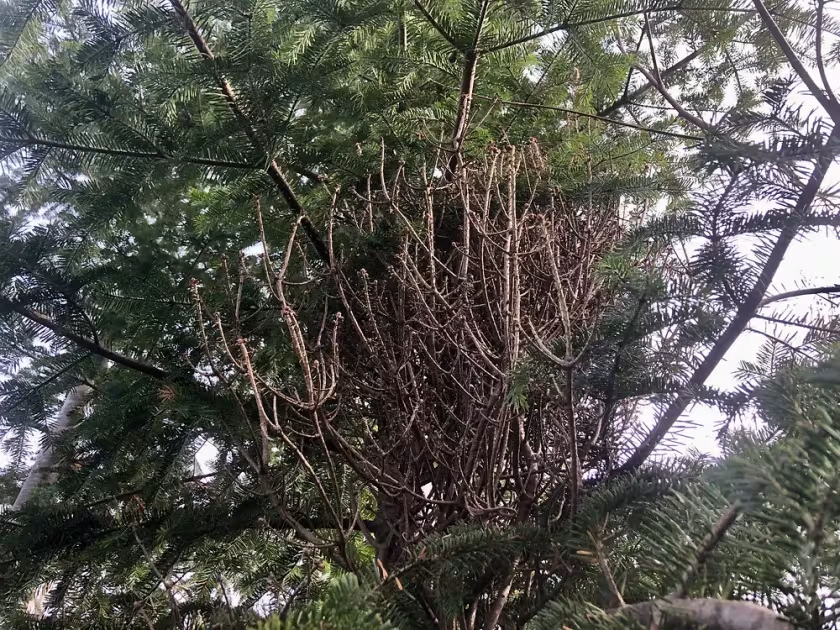
Description
Symptoms
The most diagnostic symptom of the disease is the "witches' broom," a dense mass of stunted, abnormally clustered twigs that grow from an infected branch or stem.
The needles within the broom often appear chlorotic, pale, or yellowish. In advanced stages, the needles may drop prematurely, leaving the twigs bare and brittle.
During the sporulation phase in spring, bright orange or yellow aeciospores become visible on the lower surfaces of the needles within the broom formation.
Affected branches display irregular growth patterns, becoming distorted and thickened at the point of infection due to the fungus stimulating host cell division.
Over time, the weight of the brooms and the weakening of the wood structure can lead to the breaking of branches under the stress of snow, ice, or wind.
Pathogen
The causal agent of spruce broom rust is the rust fungus Chrysomyxa arctostaphyli. It is a perennial obligate parasite that infects the branches and stems of spruce trees.
The fungus relies on a heteroecious life cycle, meaning it requires two different hosts to complete its development: spruce trees and the bearberry plant (Arctostaphylos uva-ursi).
The infection is systemic and perennial. Once established in the spruce tissue, the fungus grows internally, causing the tree to produce characteristic abnormal growths known as witches' brooms.
During the spring and summer, the fungus produces aecia on the needles of the infected broom. These spores are then wind-dispersed to infect the alternate host, the bearberry.
The mycelium persists within the host tree for many years, slowly draining resources and causing chronic physiological stress to the tree throughout its lifespan.
Conditions for development
Disease development is heavily dependent on the presence of both spruce and bearberry in the same geographic area to facilitate the completion of the fungal life cycle.
High humidity and moderate temperatures during the spring are critical for the successful germination of spores and the subsequent infection of host tissues.
The spread of the disease is primarily facilitated by wind currents that carry the spores from the bearberry back to the spruce or between different spruce trees.
Trees that are wounded or stressed due to environmental factors, insect damage, or poor site conditions are more susceptible to becoming established infection sites.
The incidence of the disease is often localized in forest environments where ecological conditions favor the dense growth of the alternate host, Arctostaphylos.
Why it matters
The primary impact of the disease is the reduction in tree vigor. The broom acts as a sink for nutrients, depriving the rest of the tree of essential carbohydrates.
The structural integrity of the spruce is compromised. The presence of large, heavy brooms makes the branches highly susceptible to breakage, creating open wounds.
In ornamental or forest settings, the disease causes significant aesthetic damage, ruining the symmetry and health of the spruce tree canopy.
Open wounds left by broken brooms serve as entry points for decay-causing fungi and wood-boring insects, further exacerbating the decline of the tree.
In timber production, systemic infection leads to reduced growth rates and wood defects, resulting in significant economic losses for forestry management.
Protection
Pruning is the most effective management strategy. Infected branches should be removed several inches below the broom to ensure the mycelium is fully eliminated.
Integrated pest management suggests that removing the alternate host (bearberry) from the immediate vicinity of high-value spruce trees can interrupt the disease cycle.
Chemical control with fungicides can be used in nursery or high-value landscape settings during the peak sporulation period, although its success is often limited.
Regular monitoring of the trees is essential to detect the early formation of brooms before they become major centers for spore production and secondary infection.
Promoting general tree health through adequate spacing, proper site selection, and fertilization helps the spruce maintain stronger defenses against pathogenic fungi.
Discussion
No discussions yet — be the first.