
Description
Symptoms
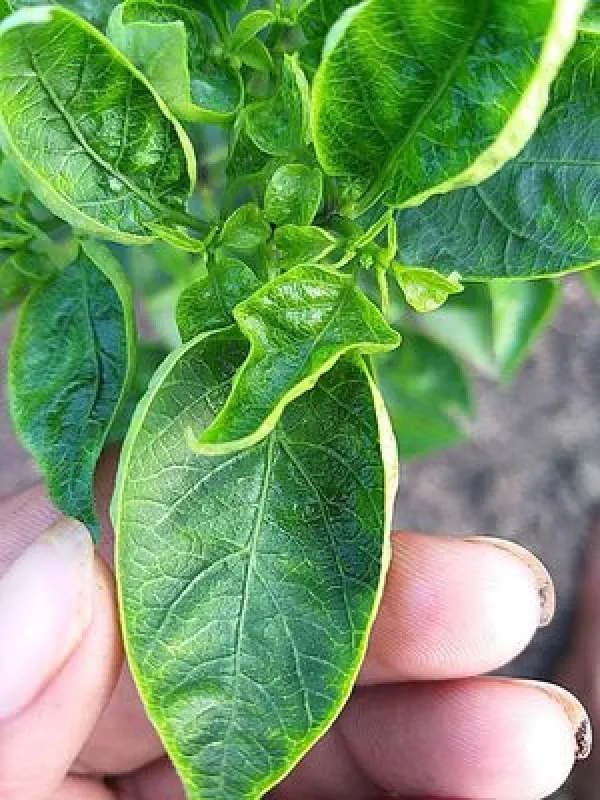
The earliest symptoms manifest as a mild chlorosis or clearing of the veins on the younger, upper leaves of the pepper plant.
As the infection progresses, a distinct light-green or yellow banding pattern develops along the veins, creating a characteristic mosaic or mottled appearance on the leaves.
Infected plants typically exhibit stunted growth, reduced internode length, and a generally weakened appearance compared to healthy plants in the same crop.
Severe infections may lead to leaf distortion, crinkling, or leaf curling, which significantly reduces the plant's photosynthetic capacity and physiological vigor.
Fruits produced by infected plants are often undersized, deformed, or show irregular patterns, leading to a significant loss in marketability and crop yield.
Pathogen
The disease is caused by the Chili vein-banding mild mottle virus (CVbMMV), a member of the genus Potyvirus, characterized by filamentous virions containing single-stranded RNA.
This pathogen has a relatively narrow host range, primarily affecting members of the Solanaceae family, with chili and bell peppers being the most economically significant hosts.
The virus persists in reservoir hosts, including various weeds and perennial solanaceous plants, which serve as primary sources of inoculum at the start of the season.
In the field and greenhouse, the virus is transmitted non-persistently by various aphid species, which pick up the virus from infected plants and quickly transfer it to healthy ones.
Mechanical transmission also plays a significant role in the spread of the disease, often occurring through contaminated tools during pruning, training, or harvesting.
Conditions for development
The development and spread of the virus are highly favored by warm weather conditions, which stimulate rapid aphid reproduction and increased activity of the vector population.
High planting density in greenhouses creates an ideal environment for the rapid transmission of the virus as insects move freely between closely packed plants.
Failure to implement effective weed management practices around growing areas allows the virus to persist in wild hosts and migrate into the main crop.
Intensive cultural operations conducted without proper sanitation of tools and equipment facilitate the mechanical spread of the pathogen throughout the facility.
Plants suffering from environmental stress, such as nutrient deficiencies or extreme temperatures, tend to show more rapid and severe symptom progression upon infection.
Why it matters
The primary economic impact stems from reduced fruit yield, caused by decreased plant vitality, poor flowering, and the premature shedding of blossoms and young fruit.
Market quality is severely impacted; deformed or mottled fruits are frequently rejected by consumers, leading to high percentages of unsalable produce.
The productive life cycle of the pepper plants is often shortened, preventing growers from achieving the full potential harvest duration and volume.
The plant's systemic compromise leaves it more susceptible to opportunistic fungal and bacterial pathogens, leading to further complex disease issues.
The necessity for ongoing management, including the rogueing of infected plants, adds significant labor and operational costs to the overall production process.
Protection
The foundational approach to management is the use of high-quality, virus-free planting stock and the selection of pepper cultivars with known tolerance or resistance.
Effective control of aphid populations using biological controls, reflective mulches, or appropriate insecticides is essential to break the transmission cycle.
Strict sanitation measures, including the regular disinfection of all pruning tools and hand-washing protocols for field staff, are critical to prevent mechanical spread.
Proactive weed control in and around the greenhouse or field is necessary to eliminate alternative hosts and reduce the primary source of infection.
- Routine inspection of the crop to identify and remove symptomatic plants immediately to prevent further spread.
- Implementing spatial isolation between new seedlings and older, potentially infected crops.
- Utilizing protective screens in greenhouses to minimize the entry of winged aphid vectors.
Pathogens and affected parts
Affects crops · 1
Discussion
No discussions yet — be the first.