
Description
Symptoms
Initial symptoms are characterized by small, yellowish-orange pustules forming on the upper surface of the leaves and on the leaf petioles during the spring.
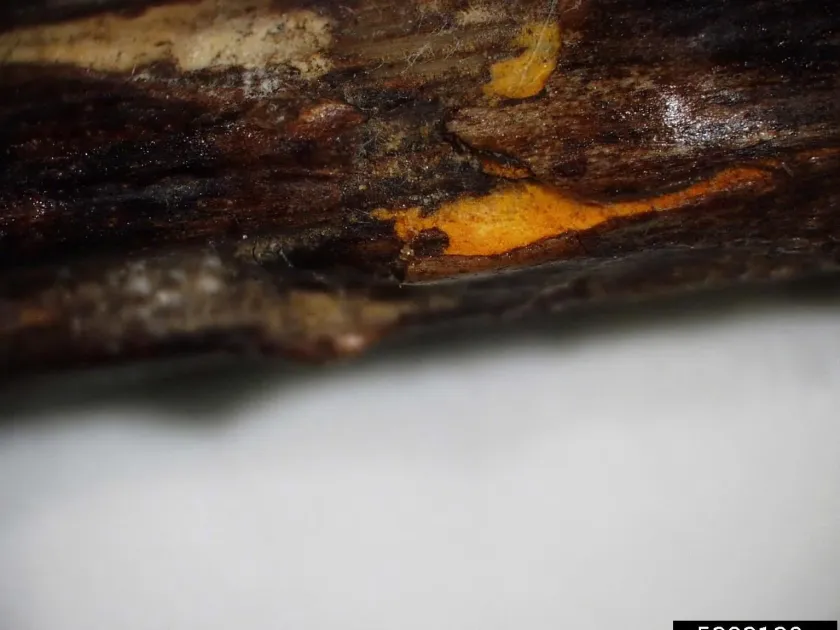
On the stems, the infection manifests as longitudinal cracks where bright orange powdery masses of spores break through the outer bark layer.
Infected leaves undergo chlorosis, turn yellow, and eventually drop prematurely, which significantly weakens the overall vigor of the raspberry plant.
The canes themselves may become brittle and deformed, often splitting open, which severely affects their structural integrity and ability to transport water.
- Bright orange sporulating pustules.
- Leaf yellowing and premature abscission.
- Cracks and fissures on the stems.
- Reduced vigor and stunted cane growth.
Pathogen
The disease is caused by the fungus Kuehneola uredinis, an obligate parasite that specifically targets members of the Rubus genus, including cultivated raspberries.
This pathogen belongs to the rust fungi family and has a complex biological life cycle involving the production of spores that can remain dormant in infected stems.
The fungus overwinters within the tissues of the canes, which serves as a primary inoculum source when environmental conditions become favorable in the spring.
It colonizes the intercellular spaces of the plant, extracting nutrients and disrupting the plant's metabolic functions, specifically reducing photosynthesis efficiency.
The long-term persistence of the pathogen in canes makes the infection a chronic problem if not addressed through rigorous sanitation practices.
Conditions for development
The development of Kuehneola uredinis is heavily reliant on high humidity levels, particularly during periods of frequent rainfall and morning dew.
Moderate temperatures ranging from 15°C to 20°C create an optimal environment for spore germination and rapid colonization of the host plant tissues.
Poor ventilation, caused by dense planting or failure to prune old canes, creates a stagnant, moist microclimate that encourages fungal spread.
Over-fertilization with nitrogen can lead to excessive succulent growth, which is significantly more susceptible to rust fungal attacks than hardened tissues.
Low-lying areas with poor air drainage or high soil moisture often experience higher incidences of raspberry rust outbreaks compared to well-drained sites.
Why it matters
The primary impact of the disease is a drastic reduction in berry yield due to the plant's inability to provide sufficient energy for fruit maturation.
Severe infections reduce the plant's winter hardiness, as the foliage is lost too early in the season, preventing the accumulation of reserves for winter survival.
The structural damage to canes often requires premature removal, leading to lower fruit production in subsequent growing seasons.
The quality of harvested raspberries suffers significantly, as they are often smaller, lack sweetness, and have a shortened shelf life due to plant stress.
Without intervention, the cumulative effect of the disease leads to a gradual decline of the entire raspberry plantation, making it commercially non-viable.
Protection
Cultural control is the most effective approach: immediate pruning and disposal of all infected canes through burning or deep burial is essential.
Maintaining proper plant spacing is crucial to improve air circulation and reduce the humidity levels that the pathogen requires to proliferate.
Preventative applications of copper-based fungicides early in the season can significantly reduce the potential for spore germination and initial infection.
Using systemic fungicides during the early stages of symptoms can help curb the infection, provided that chemical safety guidelines and waiting periods are strictly followed.
Implementing a balanced nutrition program focusing on potassium helps strengthen the plant's cell walls, making them more resilient to the invasion of rust fungi.
Pathogens and affected parts
Affects crops · 1
Discussion
No discussions yet — be the first.