
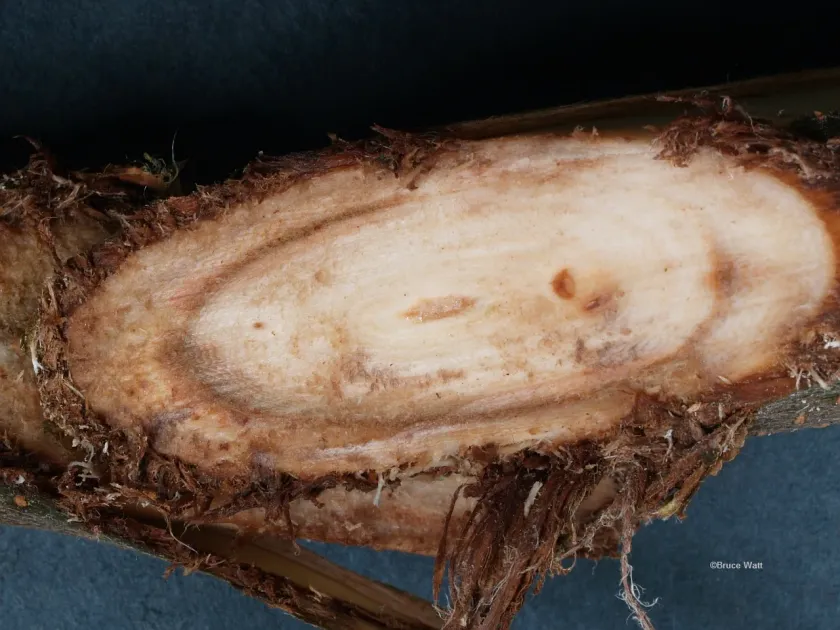
Description
Symptoms
The first clinical sign of bud rot is the yellowing and wilting of the spear leaf and the youngest leaves in the center of the crown. These leaves typically lose their turgidity and droop significantly.
As the infection advances, the young leaves become brownish or blackish. If examined closely, the affected tissues in the heart of the palm exhibit a wet, rotten appearance.
A distinctive symptom is the foul-smelling odor emitted by the rotting bud. This is often caused by secondary microbial invaders that colonize the decaying plant material alongside the primary fungal pathogen.
Eventually, the central bud completely collapses. The palm loses its ability to produce new leaves, and the entire crown may eventually shed or detach from the trunk.
In early stages, the older leaves lower down on the palm remain green and healthy. The contrast between the dying center and the outer healthy leaves is a key diagnostic feature.
Pathogen
The disease known as bud rot in coconut palms is caused by the fungus Graphium. This pathogen is a highly aggressive fungus capable of destroying the apical meristem of the palm, which is the plant's main growing point.
The fungus produces numerous conidia that serve as the primary source of infection. These spores are disseminated mainly by wind, splashing rain, and insect vectors that move across the palm canopy.
Once the spores land on susceptible tissues, they germinate and penetrate the plant through small wounds or natural openings in the crown. The fungus then colonizes the soft, tender tissues of the bud.
The biology of Graphium involves the secretion of enzymes that break down cell walls. This action rapidly destroys the structural integrity of the palm's center, leading to necrosis.
The speed with which the pathogen colonizes the tissue makes it a significant threat to palm health. The fungus thrives by consuming the living tissues required for the plant's upward growth.
Conditions for development
Bud rot flourishes in environments characterized by high humidity and frequent rainfall. These conditions are ideal for the germination of fungal spores on the surface of the palm canopy.
Tropical temperatures provide the optimal range for the metabolism and growth of Graphium. Warm nights and high daytime moisture levels significantly accelerate the infection rate.
Insect activity, especially by rhinoceros beetles or palm weevils, is a critical factor in the disease cycle. These insects wound the plant, providing perfect entry points for the fungal spores.
Overcrowded plantations reduce airflow and increase canopy moisture, creating a microenvironment that facilitates the spread of the pathogen between adjacent trees.
Poor sanitation within the plantation, such as leaving diseased plant debris on the ground, allows the fungus to persist and re-infect healthy palms during the next rainy season.
Why it matters
Bud rot is a devastating disease that frequently results in the death of the entire tree. Because the apical meristem is destroyed, there is no chance for recovery once the infection reaches the bud.
The disease can spread rapidly through a plantation, leading to significant economic losses for farmers. It threatens the sustainability of large-scale coconut production in affected regions.
The cost of managing the disease, including the removal and destruction of infected palms, is high. Furthermore, the land where affected palms grew may require long fallow periods.
The loss of mature, productive palms impacts the income of smallholder farmers and the broader agricultural industry, affecting both local and export markets.
Given the lack of effective curative treatments, bud rot is considered a top priority for disease surveillance and plant protection programs in tropical countries.
Protection
The primary control measure is the early detection and immediate removal of infected palms. The affected trees must be destroyed, preferably by burning, to eliminate the source of spores.
Preventive strategies must focus on effective pest management. Controlling insects that damage the palm crown is essential to prevent the entry of Graphium spores.
Proper plantation management, including adequate spacing between palms, is necessary to improve air circulation and reduce the humidity levels that favor fungal growth.
Fungicidal treatments may be used in nurseries or high-value plantations as a prophylactic measure, but their efficacy for curative purposes is limited.
- Implement routine monitoring for early symptoms.
- Maintain strict hygiene by disinfecting pruning tools.
- Utilize pheromone traps to manage beetle populations.
- Remove and burn all plant debris from the plantation floor.
Pathogens and affected parts
Affects crops · 1
Discussion
No discussions yet — be the first.