
Description
Symptoms
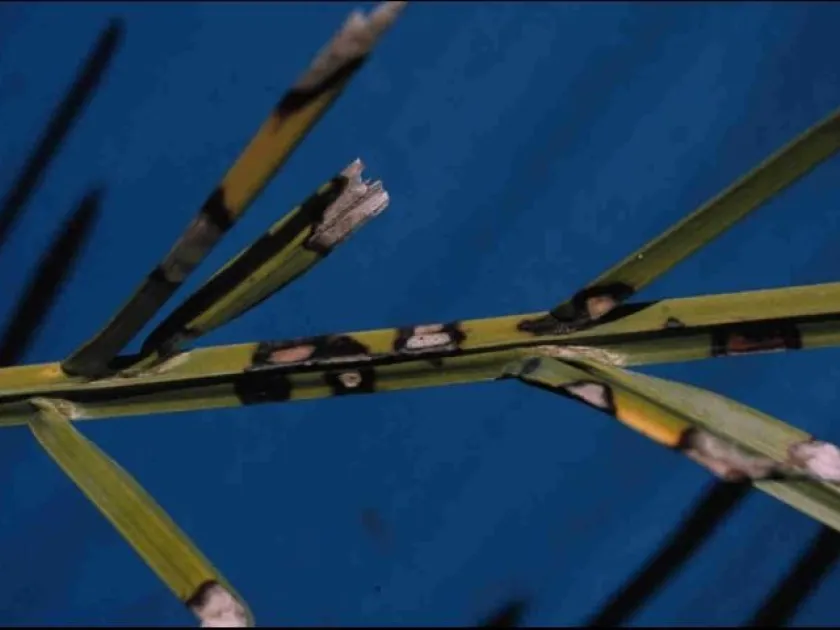
The first symptoms appear as small, pinpoint brown spots on the leaf blades. These lesions gradually expand, often forming irregular or elongated shapes as they follow leaf venation patterns.
A distinct feature of this disease is the development of a greyish or white powdery center within the necrotic spots, which indicates the formation of fungal sporulation structures.
As the infection progresses, affected tissues become brittle and prone to tearing. When conditions are favourable for the pathogen, numerous spots merge, leading to extensive leaf blight and premature death.
Severe infestations can also spread to the petioles, disrupting nutrient and water transport within the leaf. This significantly impairs the overall physiological performance of the plant.
- Development of brown, irregular necrotic spots.
- Presence of greyish sporulation in spot centers.
- Tissue brittleness and leaf shredding.
- Premature leaf senescence and reduced canopy vigor.
Pathogen
The disease is caused by the fungus Pestalotiopsis leprogena, a member of the fungi imperfecti group. It is a specialized pathogen that primarily targets the foliage of banana plants in humid climates.
The life cycle involves the production of conidia that are disseminated via wind, water splashes, and insects. The pathogen is capable of surviving for long periods on decaying plant debris, ensuring its persistence in the environment.
The fungal mycelium invades leaf tissue through stomata or mechanical wounds. Once inside, the fungus secretes enzymes and toxins that degrade cellular structures, resulting in characteristic necrotic lesions.
Taxonomically, Pestalotiopsis species are often opportunistic, yet P. leprogena is recognized for its specific impact on bananas. It functions as an aggressive parasite under high moisture conditions.
The fungus is highly adapted to tropical agricultural systems where environmental conditions remain relatively stable. Its rapid reproduction cycle allows it to establish significant infection levels within a single growing season.
Conditions for development
High relative humidity, typically exceeding 85%, is the primary requirement for the germination of fungal spores. Persistent rainfall creates a film of water on leaves, which is ideal for infection.
The optimal temperature range for the development of Pestalotiopsis leprogena is between 22°C and 28°C. In stagnant air conditions, the infection spreads much faster within a banana canopy.
Poor orchard management, such as high-density planting without proper thinning, inhibits airflow. This causes prolonged leaf wetness, which directly contributes to higher infection rates.
Plants under nutrient stress or those suffering from improper irrigation are significantly more susceptible. Healthy plants with strong defense mechanisms can often limit the spread of the fungus better than stressed ones.
Infected leaves left on the plantation floor act as a primary inoculum source. Due to the lack of cold winter seasons, the pathogen can remain active and infectious throughout the entire year.
Why it matters
The main impact of banana brown leaf spot is the severe reduction in the photosynthetic surface area. This results in decreased energy production, which is essential for proper fruit development.
Plants heavily affected by the fungus exhibit stunted growth and produce smaller, lower-quality banana bunches. This leads to substantial financial losses for commercial banana farmers.
The premature death of older leaves forces the banana plant to utilize reserved carbohydrates from the corm, weakening the plant's long-term productivity and structural integrity.
In cases of severe outbreaks, yield losses can range significantly. Beyond volume loss, the fruits may not meet export standards due to poor bunch maturation, further impacting profitability.
Increased expenditures on labor and chemical inputs for disease management significantly raise the cost of production, putting pressure on the economic viability of the plantation.
Protection
Integrated disease management begins with sanitation. Regularly removing and destroying infected leaves helps to drastically lower the primary inoculum pressure in the plantation.
Fungicide applications using copper-based products or systemic triazoles are effective if timed correctly. Preventive spraying is recommended during peak rainy seasons to suppress early infections.
Improving orchard air circulation through proper spacing and routine leaf pruning is vital. Minimizing leaf wetness duration is one of the most effective non-chemical strategies available.
Providing a balanced nutrient program, especially focusing on adequate potassium and silicon, strengthens the leaf cuticle and increases the plant's mechanical resistance to fungal penetration.
Long-term strategies involve selecting and breeding banana varieties that show natural resistance to Pestalotiopsis species. This remains the most sustainable approach for controlling the disease.
Pathogens and affected parts
Affects crops · 1
Discussion
No discussions yet — be the first.