
Description
Symptoms
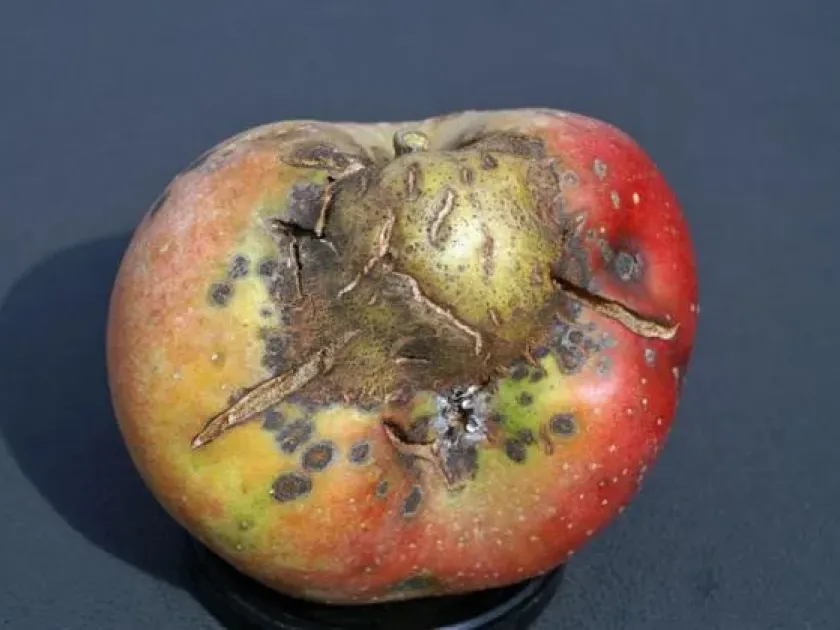
Brooks fruit spot is identified by the presence of small, circular, dark-colored lesions on the surface of maturing apple fruits.
The spots are usually 1 to 5 mm in diameter, with a dark brown or black appearance, often surrounded by a slightly reddish or purplish margin in some varieties.
As the infection progresses, tiny black fruiting bodies of the fungus may appear within the center of the spots, distinguishing this disease from other superficial skin blemishes.
The lesions remain primarily on the skin, but severe cases can lead to surface pitting or skin deformation, rendering the fruit aesthetically unappealing.
Unlike some other fungal infections, the spots do not usually cause deep rot, but they serve as entrance points for secondary pathogens during long-term storage.
Pathogen
The disease is caused by the fungus Mycosphaerella pomi (anamorph: Cylindrosporium pomi), an ascomycete responsible for fruit spotting in various apple cultivars.
The pathogen overwinters on fallen apple leaves and mummified fruits, producing perithecia that release ascospores during the spring and early summer rainfall events.
Infection occurs when spores land on the surface of young developing fruits, penetrating the skin through lenticels or small mechanical injuries under favorable moisture conditions.
After penetration, the mycelium colonizes the fruit tissue, eventually leading to the formation of visible necrotic lesions that characterize the disease.
The fungus is highly dependent on environmental cycles; its life history is tightly linked to the presence of humidity and temperatures suitable for spore germination and colonization.
Conditions for development
High humidity and frequent rainfall during the summer months are the primary environmental drivers for the rapid spread of Mycosphaerella pomi.
Orchards with poor air circulation, often caused by dense foliage or lack of pruning, maintain high local humidity levels that favor fungal spore germination.
Proximity to old, neglected orchards or accumulation of leaf litter provides a persistent source of inoculum that can infect healthy trees every season.
Warm and wet weather patterns immediately following fruit set create the highest susceptibility window for the initial infection of young apples.
In addition, trees with high populations of fruit-feeding insects are more prone to infection because the resulting skin punctures facilitate fungal entry.
Why it matters
The primary economic impact of Brooks fruit spot is the downgrading of fruit quality, which leads to significant losses for commercial growers during sorting and packing.
Visible spots make the fruit unsuitable for premium markets, as they are perceived as lower quality by consumers and may lead to market rejection.
During cold storage, the infected areas can become starting points for decay, reducing the shelf life and overall storage performance of the apple harvest.
Increased reliance on fungicide applications to manage the disease increases production costs and can lead to residues that require careful monitoring.
In severe years, the disease can significantly reduce the yield of marketable fruit, especially on susceptible varieties that lack strong genetic resistance.
Protection
Effective management begins with strict sanitation, including the removal and destruction of fallen leaves and mummified fruits to reduce the primary inoculum.
Pruning is essential to improve airflow throughout the canopy, allowing fruits to dry faster after rain and reducing the fungal infection window.
Fungicide programs should be timed to protect developing fruits, particularly during periods of frequent rainfall from late spring to mid-summer.
Integrated pest management strategies help maintain fruit skin integrity, which serves as a natural barrier against Mycosphaerella pomi.
- Choosing resistant apple cultivars for new planting projects.
- Applying preventive copper-based sprays in the dormant season.
- Maintaining balanced tree nutrition to avoid excessive vegetative growth that blocks airflow.
Pathogens and affected parts
Affects crops · 1
Discussion
No discussions yet — be the first.