
Description
Symptoms
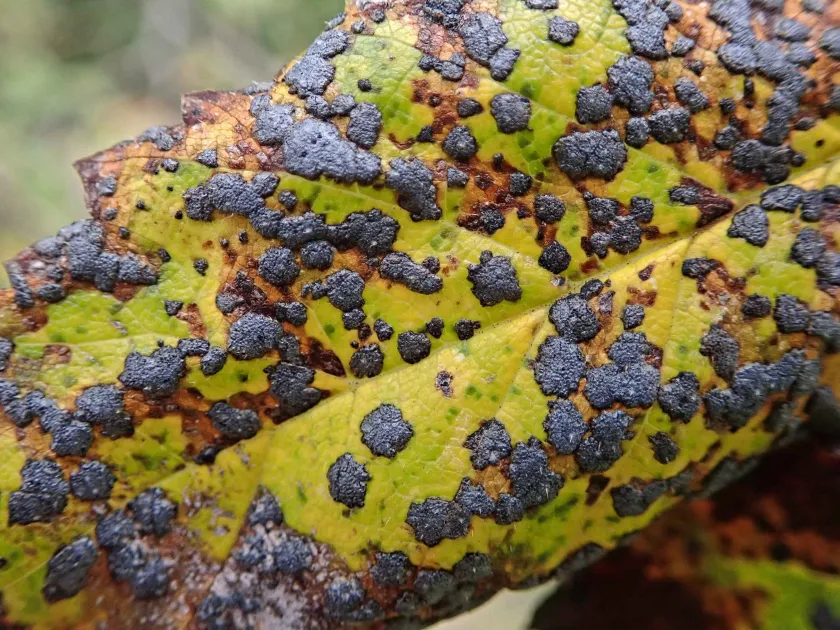
The first clinical signs typically appear in mid-summer, manifesting as numerous small, distinct, and roughly circular spots on the upper leaf surface.
Initially, these lesions are yellowish or light brown, but as the fungus colonizes more tissue, they turn dark brown or jet black, becoming highly conspicuous.
In the center of these black spots, tiny black fruiting bodies called apothecia develop, which are characteristic diagnostic features of this specific fungus.
Under heavy infection pressure, the individual spots often merge, covering large areas of the leaf blade, which leads to premature wilting and deformation.
Severely affected leaves often turn brown and undergo premature abscission, causing the tree to lose its canopy significantly earlier than expected.
Pathogen
The causative agent of this disease is the ascomycete fungus Dothidella ulmi (synonym Plasmopara ulmi), which is specifically adapted to infect various species of elm trees (genus Ulmus).
The fungal life cycle involves the formation of stromatic structures where spores develop, allowing the pathogen to overwinter effectively in fallen leaves.
During the spring, when environmental conditions become suitable, the mature ascospores are released and transmitted to the young, developing foliage of the host tree.
Once settled on the leaves, the fungal mycelium penetrates the leaf tissue, disrupting normal cellular functions and leading to localized necrosis.
The pathogen's development is synchronized with the growth cycle of the host tree, making the growing season the primary period for infection and disease spread.
Conditions for development
The proliferation of Dothidella ulmi is heavily dependent on high atmospheric humidity and warm temperatures, which are necessary for spore germination.
Dense tree stands or locations with poor air circulation create a stable microclimate that traps moisture, facilitating the rapid spread of the fungal infection.
Trees that are already under stress, whether due to drought, nutritional deficiencies, or soil compaction, show significantly higher susceptibility to the disease.
Debris such as fallen leaf litter is the primary reservoir for the pathogen, serving as the main source of primary inoculum for each new growing season.
Prolonged rainfall or persistent morning dew promotes the movement of spores across the canopy, leading to a rapid increase in the number of affected leaves.
Why it matters
Elm black spot causes premature leaf loss, which drastically reduces the photosynthetic capacity of the tree, leading to an overall decline in vigor.
Persistent infections over several consecutive seasons can lead to stunted shoot growth, branch dieback, and a general weakening of the tree's immune system.
Young trees in nurseries are particularly at risk, as heavy defoliation can lead to a significant loss of nursery stock or poor development of saplings.
Weakened trees become much more vulnerable to secondary infestation by bark beetles and other wood-boring insects, as well as lethal vascular diseases.
The disease negatively impacts the aesthetic and recreational value of urban forests and ornamental landscapes, requiring costly management interventions.
Protection
The most effective cultural practice for disease management is the thorough collection and destruction of fallen leaves during the autumn to remove inoculum sources.
In nursery or high-value landscape settings, fungicide applications during the early stages of symptom appearance can help suppress the spread of the fungus.
Proper pruning to increase airflow within the canopy is essential, as this helps dry out the foliage and creates an unfavorable environment for fungal growth.
Maintaining optimal tree health through regular irrigation and balanced fertilization helps the tree develop better resistance against such fungal pathogens.
- Removal and disposal of infected leaf litter to reduce the primary inoculum.
- Sanitary pruning of dead or severely affected branches to improve air circulation.
- Selecting and planting elm cultivars known to have resistance to local fungal diseases.
Pathogens and affected parts
Affects crops · 1
Discussion
No discussions yet — be the first.