
Description
Symptoms
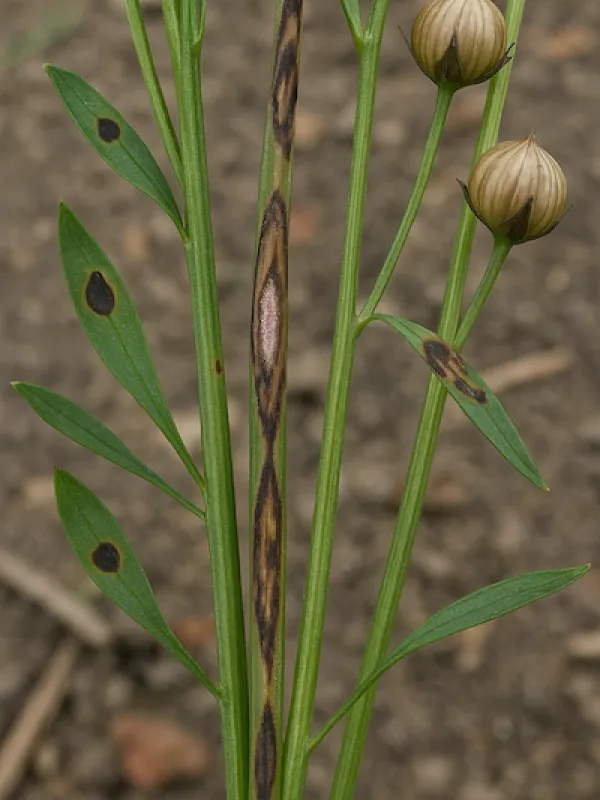
Symptoms initially appear on cotyledons and lower leaves as small, dark brown spots that gradually enlarge as the disease progresses.
On stems, the disease produces characteristic brown or black bands that wrap around the stem, leading to the "mottled" appearance from which the disease derives its name.
As the infection spreads, these bands merge, causing the stem tissue to become brittle, leading to significant lodging of the flax crop before harvest.
The foliage often turns yellow and falls off prematurely, while the infected bolls develop poorly, leading to shriveled or underdeveloped seeds with low germination rates.
In humid conditions, the pycnidia appear as dense clusters of black dots within the lesions, which are diagnostic indicators of the pathogen's presence.
Pathogen
Pasmo is caused by the fungus Boeremia linicola (formerly known as Septoria linicola). It is a serious fungal pathogen that affects the stems, leaves, and bolls of the flax plant.
The disease is characterized by necrotic lesions that develop throughout the plant's life cycle. The pathogen belongs to the class Ascomycetes and spreads through pycnidiospores.
These spores are primarily disseminated by water splash and wind, moving from infected plant debris or neighboring infected plants to healthy tissues.
The fungus is seed-borne, meaning that infected seeds can carry the pathogen into new, previously disease-free fields, making high-quality seed selection crucial.
Once inside the plant, the fungus grows intercellularly, colonizing the tissue and eventually forming pycnidia, which are tiny black fruiting bodies visible on the surface of the stem.
Conditions for development
Pasmo thrives in warm, humid weather. The optimal temperature range for the pathogen's development is between 18°C and 25°C, coupled with high moisture levels.
Frequent rainfall or heavy dews are the primary drivers for the infection cycle, as they facilitate the spread of spores and provide the necessary environment for them to germinate.
Dense plant canopies create a microclimate with high humidity and limited airflow, which significantly exacerbates the rapid spread of the fungus across a field.
Field history plays a vital role; continuous cropping of flax without adequate rotation allows the pathogen to survive in the soil and on crop residues for several years.
Imbalanced fertilization, particularly high nitrogen application, promotes lush growth that can become more susceptible to fungal entry during wet weather periods.
Why it matters
Pasmo causes severe economic losses by reducing both the quality and quantity of flax fiber and the yield of flaxseeds.
The weakening of stems leads to premature lodging, which makes harvesting extremely difficult and results in high losses of the seed crop during mechanical cutting.
Seed quality is significantly compromised; infected seeds often show reduced vigor, lower germination rates, and potential for carrying the fungus to future seasons.
The fungal infection disrupts the physiological processes of the flax plant, leading to stunted growth and, in severe cases, the death of the plant before maturity.
Because the fiber quality is degraded by the lesions and discoloration, the overall value of the crop in industrial processing is drastically diminished.
Protection
The most important control measure is the use of high-quality, certified, disease-free seed that has been professionally treated with fungicides.
Implementing a crop rotation cycle where flax is not grown on the same ground for at least 4 to 6 years helps break the pathogen's life cycle in the soil.
Proper soil management, including deep tillage to bury crop residues, helps speed up the decomposition of infected straw and reduces the primary inoculum source.
Fungicide applications during the flowering stage can be effective in preventing the spread of the disease if environmental conditions remain highly favorable for infection.
Selecting and planting resistant or tolerant flax varieties remains the cornerstone of long-term sustainable management of the Pasmo disease.
Content graph
Connections · Pasmo (flax)
Most often together:
Marketplace
Products · 13
Community
Discussion
No discussions yet — be the first.