
Description
Symptoms
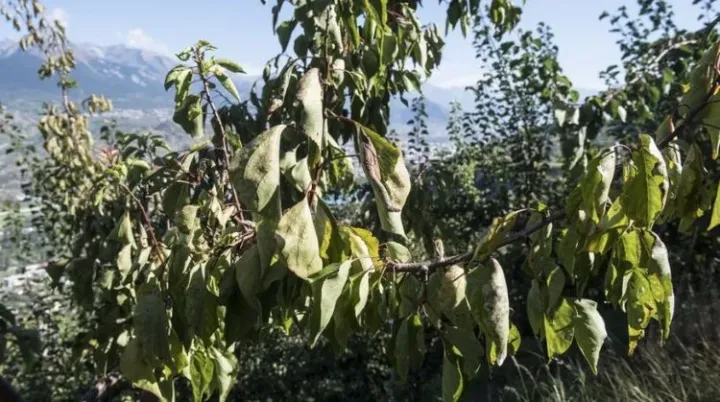
Early symptoms typically appear in spring, characterized by leaf chlorosis (yellowing) followed by a distinct inward curling of the leaves.
A notable sign is the premature leaf drop during the summer months, which leaves the branches exposed and weakens the tree's physiological processes.
The development of witches' brooms, which are clusters of thin, spindly, and upright shoots, is a common growth abnormality associated with this infection.
Trees show severe lack of vigor, stunted growth, and gradually succumb to limb dieback, often leading to the eventual death of the entire tree.
Fruit production is severely compromised; affected trees produce undersized, deformed, or poor-quality fruits that tend to drop well before maturity.
Pathogen
The causative agent of this disease is the phytoplasma Candidatus Phytoplasma prunorum, a microscopic organism that colonizes the phloem vessels of susceptible host plants.
This pathogen belongs to the group of phytoplasmas, which cause systemic disruption of the tree's vascular system, hindering the translocation of nutrients and water.
The disease primarily affects stone fruit species. Apricot and peach are highly susceptible, while plums and almonds can also act as hosts for the pathogen.
Natural transmission occurs through insect vectors, specifically leafhoppers like Cacopsylla pruni, which acquire the phytoplasma by feeding on infected phloem sap.
The pathogen is also widely spread through nursery practices when infected scions or rootstocks are used, leading to the dissemination of the disease into new orchards.
Conditions for development
The spread of the disease is heavily influenced by the population density of its insect vectors, which thrive in favorable climatic conditions.
Warmer spring temperatures promote the activity of Cacopsylla pruni, thereby increasing the probability of new infections within an orchard.
Orchards with poor sanitation, including weed-infested borders and alleys, provide secondary habitats for insect vectors, facilitating their movement into the fruit trees.
Lack of phytosanitary regulations in plant propagation often results in the introduction of infected nursery stock, which is the primary driver of geographic disease spread.
Host stress caused by drought or improper nutrition can exacerbate the expression of symptoms and reduce the tree's resilience against the pathogen.
Why it matters
The disease is considered highly destructive because it causes systemic damage that renders the affected tree incurable and eventually non-productive.
Economic impact is severe, as growers must face the loss of yields and the significant costs associated with removing and replacing infected orchard blocks.
The rapid decline of affected stone fruit trees limits the longevity of orchards, making long-term cultivation difficult in areas where the vector is prevalent.
The inability to treat infected trees requires strict quarantine measures, which can hinder the trade and movement of plant material across regions.
Total tree mortality in a short timeframe represents the greatest threat, as it leaves no room for restorative agricultural interventions.
Protection
The primary control strategy involves the exclusive use of certified, disease-free nursery stock to prevent the introduction of the pathogen into new areas.
Integrated pest management (IPM) should be employed to monitor and control vector populations, specifically using insecticides at appropriate times during the vector's life cycle.
Immediate removal and destruction (burning) of symptomatic trees are essential to eliminate the source of infection and protect surrounding healthy trees.
Orchard sanitation, including effective weed control in and around the orchard, is critical to reduce alternative breeding sites for insect vectors.
Strict disinfection protocols for pruning and grafting tools are necessary to prevent mechanical transmission of the phytoplasma between individual trees.
Pathogens and affected parts
Affects crops · 1
Discussion
No discussions yet — be the first.