
Description
Symptoms
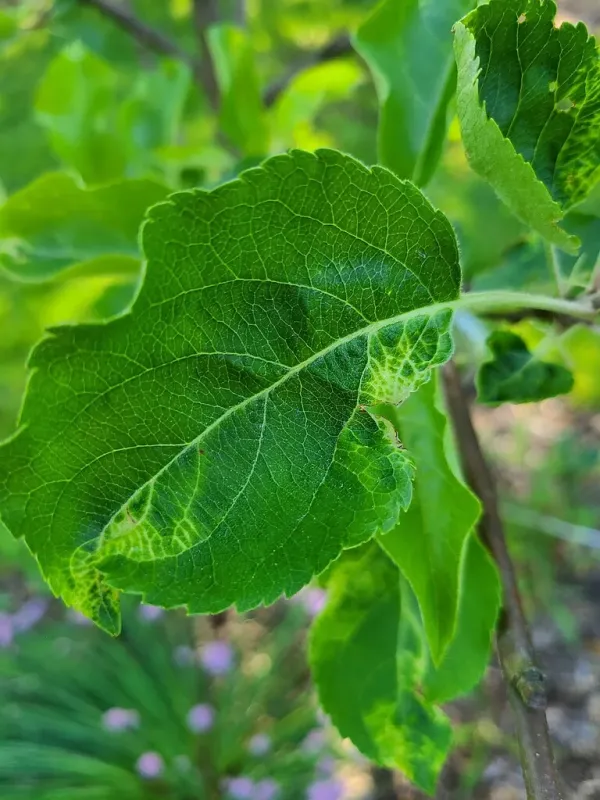
The primary symptom of apple mosaic is the appearance of irregular chlorotic spots, lines, or blotches on the leaves. These patterns often follow the leaf veins and can be yellow, cream, or light green in color.
In advanced stages, the foliage may exhibit a bright mosaic or mottle pattern. The severity of the symptoms can vary significantly depending on the apple tree variety and the specific viral strain.
Deformed leaves are commonly observed, showing crinkling or marginal necrosis. These symptoms frequently appear early in the spring as soon as the foliage emerges from the buds.
While leaf symptoms are the most diagnostic feature, affected trees may also show a reduction in vigor and stunted terminal growth compared to healthy trees in the same block.
In some cases, the fruit itself may develop skin blemishes or reduced size, although these symptoms are less consistent than those observed on the leaf tissue.
Pathogen
The disease is caused by the Apple mosaic virus (ApMV), which belongs to the genus Ilarvirus. It is an obligate parasite that relies entirely on its host for replication.
The virus is systemic, meaning it spreads throughout the entire vascular system of the apple tree. Once a tree is infected, it typically remains a carrier for the rest of its life.
Transmission primarily occurs through grafting and budding. Using scion wood or rootstock from an infected parent tree is the most common method of disease spread in nurseries.
Natural transmission can occur through pollen or through root grafts between adjacent trees in an orchard setting, though these methods are generally slower than human-assisted spread.
The virus particles are quite stable in plant sap, which facilitates mechanical transmission via tools such as pruning shears if they are not properly sanitized.
Conditions for development
Human activity is the most significant factor in the distribution of the virus. The use of contaminated tools during seasonal pruning is a major pathway for spreading the disease.
High-density orchard environments can facilitate the spread of the virus if root systems or branches of adjacent trees come into frequent contact, allowing for natural transmission.
Climate conditions do not directly dictate viral replication, but environmental stress can exacerbate the visible symptoms. Trees under nutrient deficiency or drought stress often show more pronounced mosaic patterns.
Poor nursery practices, including the lack of virus-indexing for mother trees, allow infected material to enter the commercial market, creating new infection hubs.
The virus can remain latent for extended periods. This means an infected tree might show no outward signs of illness for several seasons, masking the presence of the pathogen.
Why it matters
The primary economic harm caused by Apple mosaic is a reduction in yield and fruit quality. Infected trees produce fewer apples, and the fruit may be smaller and less marketable.
Photosynthetic efficiency is significantly impaired due to the chlorosis on leaves. This directly impacts the carbohydrate production needed for healthy fruit development and winter survival.
Over time, the cumulative effect of the virus leads to a decline in tree vitality. The orchard becomes less productive, and affected trees are more prone to secondary stressors.
Infections shorten the productive lifespan of an apple orchard. Growers are often forced to remove and replant entire sections, leading to substantial financial losses.
There is no known cure for the virus, making long-term management and early detection critical for maintaining the sustainability of an apple orchard.
Protection
The most effective management strategy is to ensure the use of virus-free, certified nursery stock. Purchasing trees from reputable suppliers is essential for prevention.
Strict sanitation protocols must be followed. All pruning tools and equipment should be disinfected after use on each tree to prevent mechanical transmission of the virus.
Regular orchard inspections are necessary to identify and rogue out infected trees. Removing the source of the virus helps to limit its spread to the rest of the planting.
Integrated pest management helps maintain overall tree vigor. While insects are not the primary vectors, keeping trees free from pests reduces systemic stress on the host.
Avoid taking budwood or cuttings from older trees that have not been tested for viruses. Always maintain clear records of the source of your propagation material.
Pathogens and affected parts
Affects crops · 1
Discussion
No discussions yet — be the first.