
Description
Symptoms
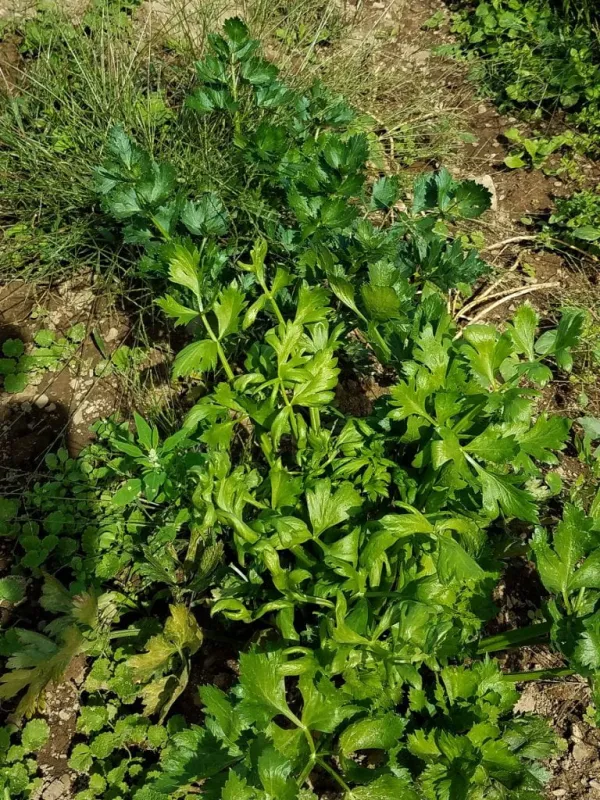
The initial signs of infection often include a noticeable mottling and chlorotic mosaic pattern on the youngest celery leaves. The tissue begins to lose its vibrant green pigment, resulting in light green or yellow blotches that distort the leaf's appearance.
As the infection progresses, leaf deformity becomes severe. Plants exhibit curling, puckering, and severe crinkling of the leaf margins, which significantly reduces the effective surface area available for photosynthesis, thereby stunting overall plant development.
Stunting is a classic hallmark of CeMV infection. Infected plants appear much smaller than their healthy counterparts, with shortened petioles and a compact, stunted growth habit that remains visible throughout the entire growing season.
For root celery varieties, the disease severely impacts root development. The roots often grow slowly, exhibit irregular shapes, or develop abnormal branching, rendering the final produce unfit for market sale due to poor quality and diminished taste.
In later stages of the disease, older leaves start to turn yellow and prematurely die off. The plant's weakened immune system makes it highly susceptible to secondary infections, often resulting in systemic decay and tissue necrosis across the entire plant.
Pathogen
The causal agent of this disease is the Celery mosaic virus (CeMV), which belongs to the Potyvirus genus. It is an obligate parasite that relies entirely on the host plant's cellular machinery to replicate and spread throughout the vascular system.
The virus persists in perennial weeds belonging to the Apiaceae family, such as wild carrot or hemlock. These plants serve as essential reservoirs, allowing the virus to survive throughout the year and infect new crops as they emerge in the field.
Transmission occurs primarily through non-persistent vectors, with aphids being the most significant culprits. Aphids pick up the virus by feeding on infected plants for a short period and then transmit it to healthy celery plants almost instantaneously during their next feeding bout.
CeMV is highly contagious and can sweep through entire fields very quickly if environmental conditions favor aphid activity. It affects all celery varieties, including stalk, leaf, and root celery, posing a systemic threat to the entire cultivation cycle.
Mechanical transmission is another potential risk factor during routine farming operations. The virus can be spread via pruning tools, harvesting equipment, or even human hands if they come into contact with sap from infected plants and subsequently touch healthy tissues.
Conditions for development
The disease thrives during warm and dry periods, which are optimal for aphid population growth. The migration of winged aphid forms is the primary driver of virus dissemination across large areas, making outbreaks difficult to manage without early intervention.
Proximity to wild Apiaceae weed species is a major risk factor for infection. These weeds act as local virus nurseries, and high aphid populations on these hosts facilitate the rapid spread of the virus to commercial celery fields.
High-density plantings that lack proper ventilation create an ideal microclimate for vectors to thrive. Furthermore, poor crop rotation practices, such as planting celery on the same land multiple years in a row, significantly increase the viral load in the surrounding area.
The absence of an effective insect management strategy during the plant's peak growth phases ensures rapid viral transmission. Typically, symptoms appear within two to three weeks of the initial aphid-mediated virus introduction.
Plant stress, caused by inconsistent irrigation or poor nutrient management, makes celery more susceptible to viral invasion. Weakened plants show more severe symptoms, indicating that maintaining optimal crop health is vital for reducing the impact of the disease.
Why it matters
The primary economic harm from Celery mosaic virus is a significant reduction in overall yield. Physiological disruptions caused by the virus prevent the plant from accumulating biomass effectively, leading to yield losses of 30–60% or more.
Marketable quality is severely degraded. Stalks become thin and bitter, while root celery often ends up misshapen and woody. Such produce is frequently rejected by wholesalers and consumers, leading to major financial losses for the grower.
Since there are no chemical cures for plant viral diseases, infected plants are essentially a total loss. They must be removed from the field to prevent further spreading, which adds significant labor costs to the farm's operating budget.
The presence of the virus in the soil or in neighboring wild plants poses a persistent threat to future crops. Growers in infected areas must invest in long-term containment strategies, which further erodes the profit margins of celery production.
Secondary costs include the need for constant crop monitoring and intensive insecticide programs to keep vector populations under control. These expenditures increase the cost of production while simultaneously lowering the reliability and quality of the final output.
Protection
Effective control centers on managing aphid populations. Growers should implement a robust integrated pest management (IPM) strategy that utilizes systemic insecticides early in the season to prevent the initial arrival of the virus into the field.
Rigorous weed control is essential, particularly for wild Apiaceae species that serve as virus reservoirs. Clearing weeds from field edges and surrounding buffer zones creates a significant barrier against vector-borne infections.
Strict crop rotation, with a minimum of three to four years between celery crops on the same plot, is required to break the disease cycle. Establishing spatial isolation between new celery fields and old, potentially infected areas further reduces transmission risks.
Using only high-quality, certified, and disease-free seeds is the most fundamental step in preventing primary infections. Seed treatments can provide additional protection, provided they are applied according to phytosanitary recommendations.
If infected plants are detected during field scouting, they must be rogue out immediately, including the roots, and burned or disposed of away from the fields. All tools should be disinfected frequently with alcohol-based solutions to prevent accidental mechanical spread.
Pathogens and affected parts
Affects crops · 1
Discussion
No discussions yet — be the first.