
Urochloa panicoides
Urochloa panicoides P. Beauv.
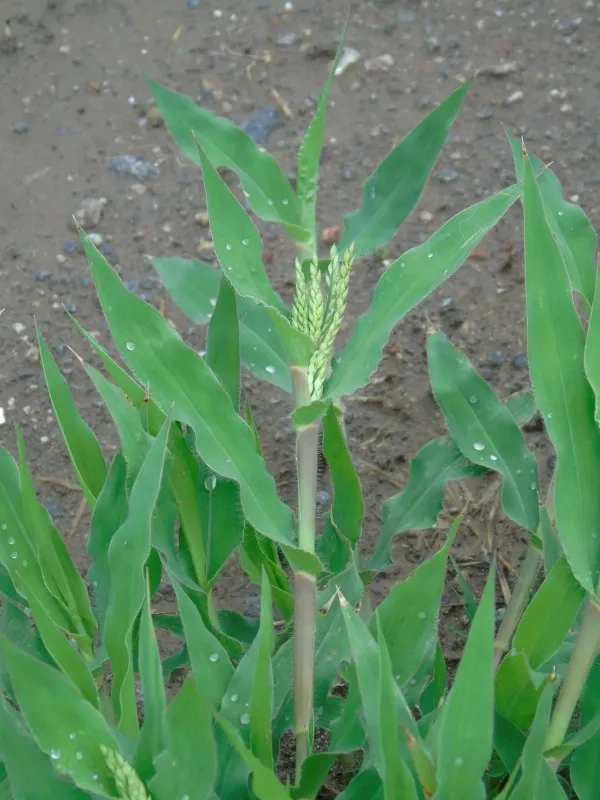
Description
Sowing dates
Sowing of Urochloa panicoides is typically carried out in spring when the soil temperature at seeding depth reaches at least 15–18 degrees Celsius. Adequate moisture in the seedbed is a critical factor, as the crop is sensitive to dehydration during its early developmental stages.
Seeds are sown in rows with spacing ranging from 15 to 30 centimeters. The planting depth should be shallow, between 1 and 3 centimeters, depending on soil texture and density, to ensure uniform and vigorous emergence.
The optimal seeding rate is calculated based on seed viability and the intended use—whether for green fodder or hay production. The crop is known for its rapid early growth, provided the temperature requirements are met, which allows it to successfully outcompete weed pressure.
In regions with prolonged spring weather, soil rolling after sowing is recommended to improve seed-to-soil contact. This practice promotes more efficient capillary water movement and accelerates the germination process even during periods of minor water deficit.
Successive sowings of Urochloa within a single season are possible under irrigation, allowing for multiple cuttings of green biomass. Integrating this crop into a rotation system requires careful management of its nutrient uptake, as it is an intensive user of soil minerals.
Growing requirements
Urochloa panicoides is a heat-loving annual grass that requires consistently high ambient temperatures throughout its growth cycle. The optimal temperature range for active vegetative development is between 25 and 32 degrees Celsius.
The plant exhibits high tolerance to short periods of drought; however, to achieve maximum biomass yield, sufficient moisture is necessary, particularly during the tillering and stem elongation phases.
The preferred soil types are well-drained loams, sandy loams, and chernozems with a neutral to slightly acidic pH. The crop does not tolerate waterlogging or marshy areas, making the selection of fields with good natural drainage a prerequisite for success.
The plant responds well to nitrogen fertilizers, which stimulate rapid vegetative biomass accumulation. Proper soil preparation is essential to create a fine-tilled structure, which facilitates better root system expansion and overall establishment.
Light intensity plays a key role in the accumulation of sugars and proteins in the stems. Urochloa requires full sunlight and is extremely sensitive to shading from taller crops or significant weed competition, both of which slow down its growth rate significantly.
Yield
Under optimal agronomic conditions, the biomass yield of Urochloa panicoides can reach 20–30 tons per hectare per growing season. Such high productivity is achieved due to the crop’s inherent ability for intensive tillering after each cut.
The level of yield is heavily dependent on the management of nitrogen fertilization and the irrigation schedule during critical plant growth stages. Regular harvesting stimulates secondary regrowth, which significantly increases total seasonal productivity.
Harvest quality is determined by the plant's growth stage at the time of cutting; the most valuable yield is obtained at the onset of the panicle emergence stage. At this point, a balanced ratio of biomass volume to nutritional value for livestock is achieved.
Seed yield for this crop requires special control measures, as shattering can occur if the harvest is delayed. Timely collection of the seed crop is a critical factor for maintaining profitability and securing planting material for the following season.
Nutritional analysis shows a high crude protein content, making the crop a promising source of forage. Intelligent management of nitrogen nutrition allows for further improvement of this indicator, resulting in a more balanced diet for livestock.
Main diseases and pests
Typical threats to Urochloa include fungal diseases such as leaf rust, which can significantly reduce photosynthetic activity and forage quality during periods of high humidity.
Root rots can affect stands if the water regime is disrupted or if soil compaction becomes excessive. Preventive measures include strict adherence to crop rotation and avoiding waterlogged soil conditions to limit pathogen development.
Among pests, cereal flies and aphids pose the greatest danger, as they damage young seedlings and sap the plant’s vitality. Monitoring fields during the germination period allows for timely implementation of chemical or biological control measures.
Locust swarms can also cause significant damage, especially in dry years. An integrated pest management system, including the use of biopesticides and the maintenance of buffer zones, helps to suppress harmful insect populations effectively.
Weeds are serious competitors during the crop's establishment phase. The use of effective selective herbicides or precise mechanical inter-row cultivation is necessary to ensure that Urochloa can fully realize its biological potential.
Harvesting
Harvesting for green fodder is carried out before the plants enter the coarse stem phase. This generally corresponds to the early flowering period, when nutrients in the plant are distributed most optimally for livestock digestion.
For hay production, standard mowing is followed by windrow drying. It is important to avoid prolonged exposure of the cut biomass to direct sunlight to preserve its vitamin profile and bright green color.
The harvest technique should take into account the cutting height; it is recommended to leave a stubble of 5–8 centimeters to stimulate faster regrowth. Cutting too low can damage the tillering node and reduce the yield of subsequent cuttings.
When producing silage, Urochloa can be effectively mixed with other components that have higher moisture or sugar levels. The use of specific silage additives can improve the fermentation process and the overall quality of the end-product feed.
Transporting fresh biomass must be done as quickly as possible, as the product is prone to rapid self-heating. Efficient logistics from the field to the storage site or feeding facility is key to preserving the nutritional integrity of the harvest.