
Ruzi grass
Urochloa ruziziensis (R. Germ. & C. M. Evrard) Crins
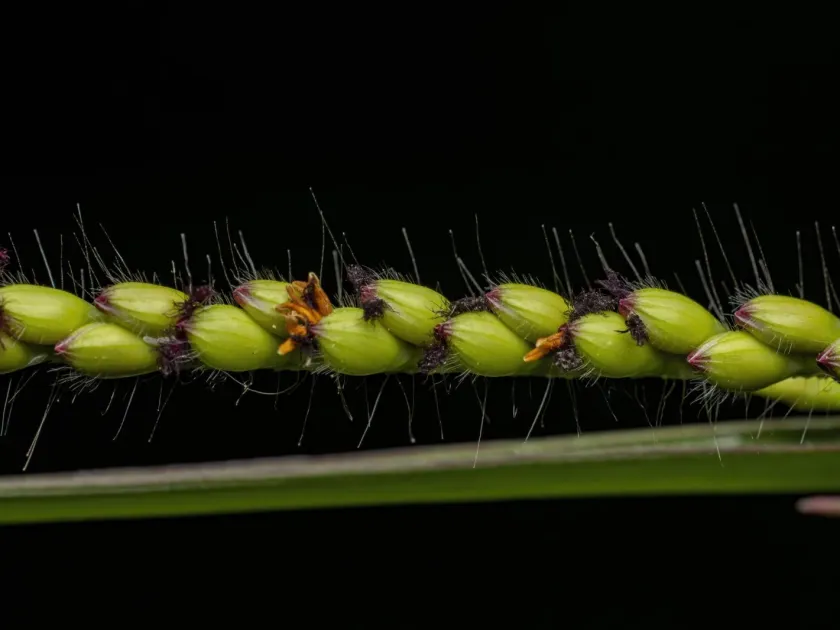
Description
Sowing dates
Ruzi grass is typically sown at the beginning of the rainy season to ensure optimal soil moisture and temperature for germination. Successful establishment requires a well-prepared seedbed, although the grass is increasingly used in no-till systems directly into crop residues.
The recommended seeding rate is usually between 5 to 10 kg per hectare, depending on the desired density and seed quality. It is crucial to cover the seeds lightly, with a depth of about 1 to 2 cm, as deeper placement significantly reduces emergence rates.
Seed scarification is often practiced to break dormancy and ensure uniform germination across the field. This uniformity is vital for creating a dense canopy that can quickly shade out competitive weed species.
Using a seed drill or broadcasting with subsequent light harrowing and rolling helps maximize seed-to-soil contact. Proper planting practices during the early monsoon stages are essential for the crop to establish a deep root system before any potential mid-season dry spells.
Once established, the grass demonstrates rapid growth. Within a few weeks after emergence, the seedlings enter an intensive tillering phase, forming a solid ground cover that protects the soil surface from high-intensity tropical rainfall and erosion.
Growing requirements
Urochloa ruziziensis belongs to the Poaceae family and is native to tropical Africa. It is highly adapted to tropical and subtropical climates where it benefits from consistent heat and moderate to high annual precipitation levels.
The plant performs best in well-drained, fertile soils but shows surprising tolerance for various soil types, provided they are not waterlogged for extended periods. It thrives in soils with a slightly acidic to neutral pH range.
As a warm-season grass, Ruzi grass is strictly frost-sensitive. Growth ceases immediately upon exposure to freezing temperatures, and extended frost will kill the above-ground biomass, limiting its commercial cultivation to frost-free regions.
Nitrogen fertilization is the primary factor for increasing biomass yields. Regular application of nitrogen, along with phosphorus on depleted soils, significantly improves leaf quality and overall plant vigor, ensuring higher nutritional density for livestock.
Ruzi grass also requires a high level of solar radiation to maximize photosynthetic activity. While it can tolerate partial shading, its peak productivity is achieved in full-sun conditions, which is typical for savanna-like environments where it naturally excels.
Yield
Ruzi grass is highly valued for its exceptional biomass production, often yielding 10 to 20 tons of dry matter per hectare annually under good management. Its high palatability makes it an excellent choice for rotational grazing systems.
Beyond its use as livestock feed, Ruzi grass is widely recognized as a superior cover crop. Its deep, fibrous root system improves soil structure, enhances water infiltration, and sequesters significant amounts of organic matter, benefiting subsequent cash crops.
When used in crop rotation, Ruzi grass contributes to nitrogen cycling, reducing the need for synthetic fertilizers for following crops like maize, soybean, or cotton. This is a core component of sustainable agricultural practices in tropical regions.
The plant exhibits excellent regrowth capabilities after being grazed or mowed. This resilience allows for multiple harvests per year, making it a reliable source of green fodder or hay even in fluctuating climate conditions.
Proper management of the grazing rotation is essential to prevent overgrazing. By allowing the grass to recover and replenish its carbohydrate reserves in the roots, farmers can maintain a productive pasture for several consecutive years.
Main diseases and pests
Fungal diseases are the primary threat to Ruzi grass, particularly under conditions of high humidity and poor airflow within the canopy. Leaf spot diseases can lead to significant biomass loss if not managed through proper field spacing.
Various insect pests, including spittlebugs and leafhoppers, can cause direct damage by feeding on plant sap. Furthermore, these pests often act as vectors for viral diseases that stunt growth and reduce the nutritional value of the grass.
Nematode infestations can occur in lighter, sandy soils, leading to weak patches in the field. Implementing diverse crop rotations helps mitigate this risk by disrupting the life cycles of these soil-borne parasites.
To keep the grass healthy, integrated pest management (IPM) strategies are recommended. These include encouraging natural predators and ensuring the grass is not over-stressed by excessive grazing, which makes it more susceptible to pathogen attacks.
- Bipolaris leaf spot, which reduces photosynthetic efficiency.
- Rust fungi, potentially affecting fodder palatability.
- Spittlebugs, causing wilting and stunted growth.
- Root-knot nematodes, reducing root vigor and nutrient uptake.