
Creeping signalgrass
Urochloa reptans (L.) Stapf
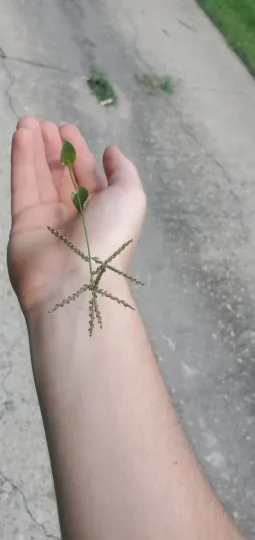
Description
Sowing dates
Seeds of creeping signalgrass exhibit high germination rates under conditions of sufficient soil warming. The optimal sowing period coincides with the beginning of the rainy season, when the topsoil is consistently moist.
In regions with distinct seasons, sowing is performed in prepared soil at a depth of no more than 1–2 centimeters. Surface sowing requires subsequent rolling to ensure firm contact between the seeds and the damp soil.
For pasture or hay production, row sowing with intervals of 20–30 centimeters is preferred. This approach allows the plants to establish a dense canopy rapidly, effectively suppressing weed growth.
When utilized as a ground cover, broadcast seeding followed by harrowing is a viable method. It is crucial to avoid overcrowding to ensure that seedlings have adequate access to sunlight.
Seedlings emerge uniformly within 7–10 days when the average daily temperature exceeds 20 degrees Celsius. Initial maintenance involves weed protection and monitoring soil moisture levels.
Growing requirements
Creeping signalgrass belongs to the Poaceae family and is a typical representative of tropical and subtropical flora. The plant prefers well-lit areas and is highly sensitive to shading.
The crop demonstrates high adaptability to various soil types, including loams and sandy soils. An optimal pH range for active growth is between 5.5 and 7.5, making it suitable for cultivation in diverse agricultural environments.
Moisture requirements are high: the plant thrives under regular rainfall or controlled irrigation. However, it can withstand short periods of drought due to its well-developed root system.
The plant features creeping stems that easily root at the nodes upon contact with moist soil. This botanical characteristic facilitates rapid vegetative reproduction and colonization of available spaces.
The optimal temperature range for the active growing season is between 25 and 35 degrees Celsius. Growth slows significantly below 10 degrees, and the aerial parts may die back completely in the event of frost.
Yield
The agricultural use of creeping signalgrass is primarily focused on livestock production. The crop is valued as a high-quality pasture grass characterized by excellent nutritional value and palatability for farm animals.
The green mass of the plant is rich in protein and minerals, which are essential for balanced livestock diets. Total yield of the green mass depends heavily on soil fertility and the application of mineral fertilizers.
Under rotational grazing, the plant recovers quickly due to its capacity for intensive tillering. Hay production requires timely harvesting, as overmature plants lose nutritional value and become coarse.
In growing regions, creeping signalgrass is often included in grass mixtures to increase the overall productivity of grazing lands. This is particularly relevant in areas where other grass species show poor performance.
The productive lifespan of a pasture can reach 3–5 years with proper management. Continued use requires periodic overseeding or the application of organic fertilizers to maintain sward density.
Main diseases and pests
Like many other members of the grass family, creeping signalgrass is susceptible to various specific diseases. Fungal infections, often triggered by excessive moisture and poor aeration, are the most common concerns.
Rust and smut infections can significantly damage yields during seasons with heavy rainfall. To prevent epiphytotics, it is recommended to practice crop rotation and utilize disease-resistant cultivars.
Among pests, insects that damage stems and root systems pose the greatest risk. These include wireworms and various cereal flies, which are capable of thinning out young stands significantly.
Nematodes may also attack the root system, reducing the overall resilience of the crop to adverse environmental factors. Preventive fungicide and insecticide treatments should be carried out according to phytosanitary standards.
- Regular inspection of fields for infection hot spots.
- Timely mowing to remove infected plant parts.
- Maintaining distance from fields with closely related botanical species.
Harvesting
Harvesting creeping signalgrass for hay is conducted at the onset of flowering, when nutrient content is at its peak. During this stage, stems remain relatively soft, and leaves retain maximum nutritional density.
For grazing purposes, a rotational grazing method is employed. This involves dividing the pasture into sections, which allows the vegetation to recover adequately after intense livestock grazing.
The cutting height during harvest should be at least 5–7 centimeters to ensure rapid regrowth from the tillering nodes. Using sharp mower blades prevents damage to the root system and avoids delaying subsequent vegetative cycles.
The harvested mass must be dried promptly under favorable weather conditions. High humidity during drying can lead to mold development and loss of feed quality, necessitating the use of active ventilation technologies.
Following harvest, the application of nitrogen fertilizers is recommended to stimulate further regrowth. This promotes second and third cuts, provided there is sufficient moisture during the growing season.