
Urochloa decumbens
Urochloa decumbens (Stapf) R. D. Webster
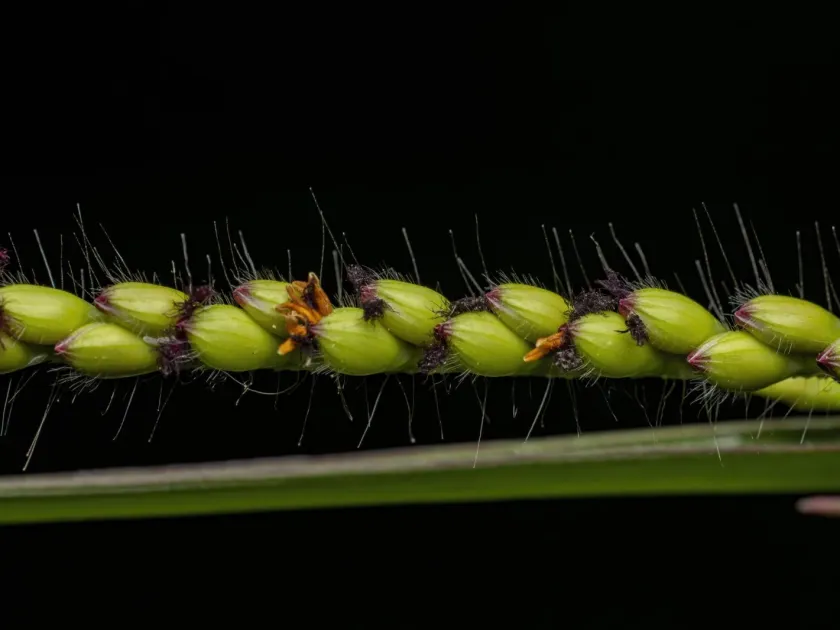
Description
Sowing dates
Planting Urochloa decumbens is typically performed at the onset of the rainy season to ensure sufficient moisture for germination and establishment. Proper soil moisture is critical for the initial growth phase of this tropical grass.
The recommended seeding rate is between 3 and 6 kg per hectare, depending on the purity and germination rate of the seeds. Seeds should be sown shallowly, ideally not more than 2 cm deep, to prevent emergence failure.
Preparation of the seedbed involves light tillage to create a fine tilth. Incorporating a small amount of phosphorus fertilizer at planting can significantly boost root development and seedling vigor.
Broadcast seeding is common in large pasture areas, often followed by light harrowing and rolling to ensure good seed-to-soil contact. This contact is vital for the small seeds of this species to access soil moisture.
Under optimal conditions, seedlings emerge quickly and begin to spread via stolons. This vegetative expansion is what allows the crop to establish a dense, resilient carpet that suppresses weeds effectively.
Growing requirements
Urochloa decumbens, commonly known as signal grass, belongs to the Poaceae family. It is a perennial grass species native to East Africa, widely introduced in tropical regions for its high forage value.
The plant thrives in regions with annual rainfall between 1000 and 1500 mm. It shows good drought tolerance, making it suitable for areas with a distinct dry season where other grasses might perish.
It prefers well-drained soils and shows remarkable adaptation to acidic, low-fertility soils. It can tolerate aluminum toxicity, which is a common characteristic of many tropical soils in Latin America.
Signal grass grows best at temperatures ranging from 20 to 35 degrees Celsius. It is highly sensitive to frost, which limits its commercial cultivation to tropical and subtropical latitudes.
The grass is well-regarded for its soil-binding capacity. Its stoloniferous nature and dense mat-forming habit make it a preferred species for reclaiming degraded lands and stabilizing steep slopes.
Yield
The dry matter yield of Urochloa decumbens typically ranges from 10 to 20 tons per hectare annually, provided that soil fertility is managed through periodic fertilization with nitrogen and phosphorus.
As a forage crop, it is highly palatable to cattle and sheep when maintained in a vegetative state. Its ability to regrow rapidly after grazing or cutting makes it a staple for rotational grazing systems.
- High crude protein content (up to 15% in young leaves).
- Excellent adaptability to continuous grazing if managed correctly.
- Good nutritive value for livestock weight gain.
Protein levels decrease as the plant matures and becomes stemmy. Therefore, farmers must balance grazing intensity to prevent the grass from entering the reproductive stage too quickly, which lowers quality.
In addition to its grazing value, signal grass can be harvested for hay, although it requires careful timing to ensure the grass is dried effectively in humid tropical climates.
Main diseases and pests
The most significant pathological threat to this crop is leaf spot, caused by various fungal pathogens like Cercospora. These infections are most severe in dense, poorly ventilated stands during high humidity.
Spittlebugs are the primary insect pests affecting signal grass. They feed on the xylem sap and can cause significant damage to the plant's vigor, leading to yellowing and widespread death of the pasture.
Root-feeding larvae, particularly those of certain beetle species, can cause severe damage. These pests often go unnoticed until large patches of the pasture begin to thin out and die off.
Overgrazing remains a major management threat. When the grass is grazed too short consistently, the stolons are depleted, and the pasture becomes prone to invasion by aggressive, less nutritious weeds.
Integrated pest management, including resistant cultivars and proper grazing pressure, is the most effective approach to mitigating these threats and ensuring the longevity of the pasture.