
Intermediate wheatgrass
Thinopyrum intermedium (Host) Barkworth & D. R. Dewey subsp. barbulatum (Schur) Barkworth & D. R. Dewey
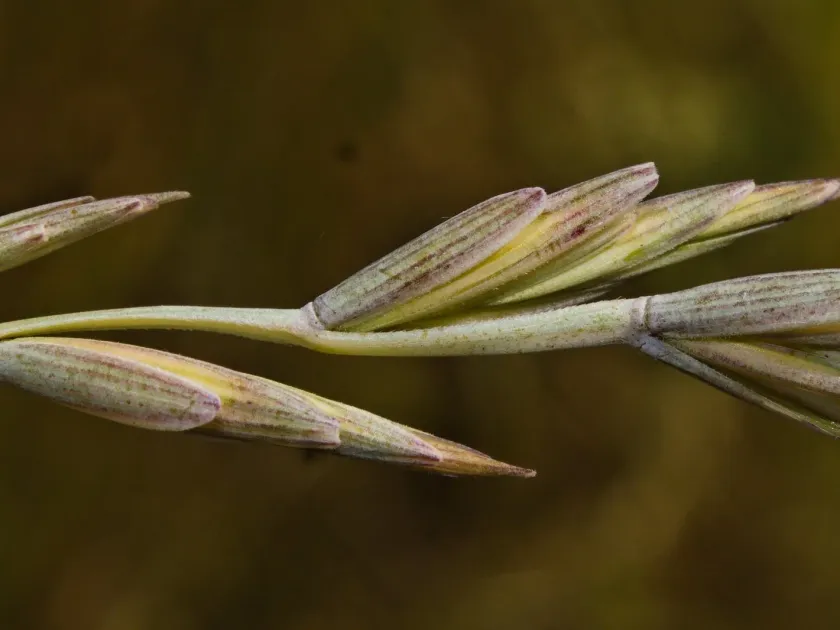
Description
Sowing dates
Intermediate wheatgrass is typically sown in early spring or late summer to ensure optimal moisture availability. Autumn sowing should be completed at least 45-50 days before the onset of hard frost to allow for adequate establishment.
For hay and pasture production, a row spacing of 15 cm is generally recommended. When grown for seed production, wider spacing between 45 and 60 cm is preferred to facilitate weed control and promote higher seed yields.
The seeding rate depends on the intended use: 12–16 kg/ha is used for forage production, while 6–8 kg/ha is sufficient for seed crops to ensure proper plant spacing and development.
Seeding depth should be adjusted according to soil texture. On sandy soils, seeds are planted at 3–4 cm, while on heavier clay or loam soils, a depth of 2–3 cm is ideal to encourage vigorous seedling emergence.
Field rolling after seeding is a critical step to ensure good seed-to-soil contact. This practice promotes moisture absorption, leading to uniform germination, which is particularly beneficial in regions prone to seasonal drought.
Growing requirements
Intermediate wheatgrass (family Poaceae) is a robust, perennial grass renowned for its exceptional drought tolerance. It is well-adapted to semi-arid regions and steppe environments where water availability is often the limiting factor for crop growth.
While it thrives on fertile chernozem soils, it is highly versatile and performs well on a variety of soil types, including slightly saline soils. Its ability to tolerate moderate salt stress makes it a valuable candidate for land reclamation.
The crop is extremely winter-hardy and can withstand severe fluctuations in temperature. Growth typically initiates very early in the spring, allowing the plant to capitalize on snowmelt and early seasonal moisture.
Proper drainage is essential, as the crop is sensitive to waterlogging. Prolonged periods of standing water will significantly reduce stand density and plant vigor, so site selection should prioritize well-drained slopes or upland areas.
The plant possesses a deep, extensive root system that effectively stabilizes soil, preventing erosion on slopes. This makes intermediate wheatgrass an excellent choice for conservation efforts and sustainable pasture management.
Yield
The forage yield of intermediate wheatgrass ranges between 15 and 25 tonnes of green mass per hectare under favorable conditions. With proper fertilization and optimal management, these yields can be consistently high.
Hay production typically yields 4 to 7 tonnes per hectare. The crop reaches its peak productive potential during the third and fourth years, providing high-quality feed that is both palatable and nutritious for livestock.
Seed production is also significant, with yields ranging from 300 to 600 kg/ha. Applying nitrogen fertilizer during the early spring is essential to boost the formation of fertile tillers and improve overall seed harvest.
The stand can remain productive for 6 to 10 years, making it an excellent investment for long-term pasture. Its rapid regrowth following grazing or mowing ensures consistent feed supply throughout the growing season.
Because it is highly palatable and tolerates trampling well, it is widely utilized for grazing. Its ability to provide green forage during mid-summer, when other grasses may enter dormancy, is a major economic advantage.
Main diseases and pests
The primary fungal threats to intermediate wheatgrass include stem and leaf rust, which can impact foliage health during humid weather. Monitoring for symptoms during the rainy season is recommended to prevent significant damage.
Powdery mildew can become a concern in dense, unmanaged stands with poor air circulation. Proper spacing and timely harvesting are effective management strategies to mitigate the spread of this pathogen.
Insect pests such as grass flies and bugs may damage the stems or seed heads, particularly in the reproductive stage. These pests require scouting and, in severe cases, the application of targeted insecticides.
Seed treatment before planting is highly effective in preventing damage from soil-dwelling pests. Ensuring that seeds are treated with appropriate fungicides and insecticides provides a solid foundation for a healthy crop.
Overall, intermediate wheatgrass is a resilient species with high natural resistance to many common diseases. Standard agricultural practices, such as crop rotation and proper harvesting schedules, are usually sufficient to maintain crop health.