
Intermediate wheatgrass
Thinopyrum intermedium (Host) Barkworth & D. R. Dewey subsp. intermedium
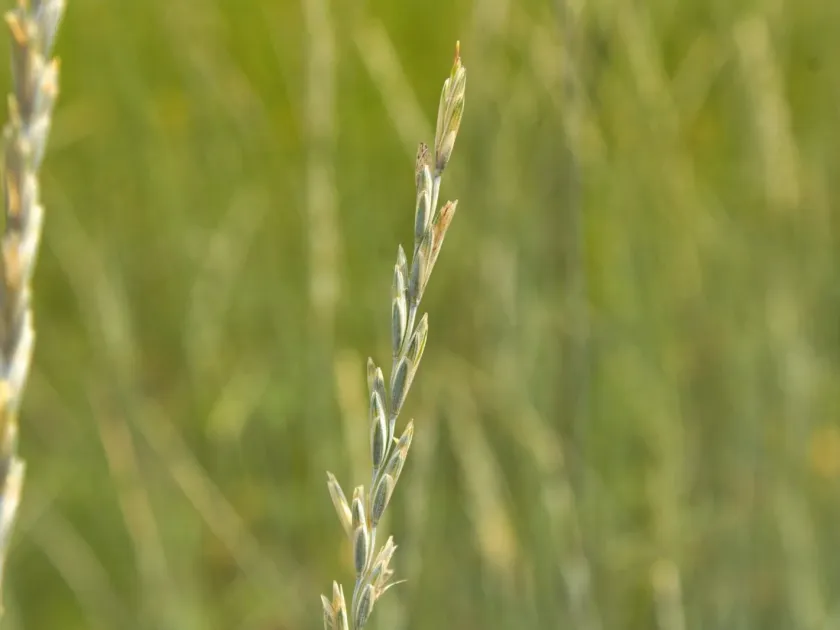
Description
Sowing dates
Intermediate wheatgrass (Thinopyrum intermedium) is a perennial cool-season grass species belonging to the Poaceae family, widely used for forage and erosion control.
The optimal planting time is early spring, which takes advantage of residual soil moisture and promotes vigorous root establishment before summer heat.
Late summer or early autumn seeding is also effective in regions with temperate climates, provided that sufficient moisture is available for germination.
Preparation of a firm and weed-free seedbed is essential for achieving uniform plant density and reducing competition during the early growth stages.
Seeds should be drilled at a depth of 1 to 2 centimeters depending on soil texture, with a typical seeding rate of 12 to 15 kilograms per hectare.
Growing requirements
This grass is highly drought-tolerant, making it an excellent choice for semi-arid environments where other cool-season species might fail.
It prefers well-drained loamy soils but displays strong adaptation to a wide range of soil types, including those with varying salinity levels.
Intermediate wheatgrass thrives in full sunlight and requires adequate space between rows if grown for seed production to ensure maximum yield.
While tolerant of low fertility, the grass responds positively to nitrogen fertilization, which significantly increases biomass production and forage quality.
It does not tolerate waterlogged or flooded conditions, so site selection should prioritize areas with good natural or artificial drainage.
Yield
The crop is known for its high forage production, providing reliable yields of palatable hay that is well-liked by cattle and other livestock.
When managed properly, it can provide multiple cuts per season, especially in irrigated systems or areas with well-distributed rainfall throughout the year.
The nutritional value is highest when harvested during the late vegetative or early heading stage, providing high levels of crude protein.
Longevity is a key feature of this species, with well-managed stands often remaining productive for seven years or more without needing reseeding.
Seed production yields vary based on climate and management but can reach up to 500-700 kilograms per hectare under optimal conditions.
Main diseases and pests
Diseases such as stem rust and powdery mildew are common in humid conditions and can reduce both the quantity and quality of the forage.
Root rot diseases may occur if the soil remains excessively moist, highlighting the importance of managing drainage within the cropping area.
Insect pests including grasshoppers and aphids can cause significant damage to young seedlings or foliage during peak vegetative growth periods.
Effective management includes integrated pest control strategies, such as crop rotation and the use of resistant cultivars to minimize chemical reliance.
- Use certified seeds to prevent the introduction of pathogens.
- Implement timely mowing to disrupt pest reproductive cycles.
- Maintain balanced soil fertility to boost plant defense mechanisms.
- Monitor stands regularly for early signs of fungal infections.
Harvesting
For high-quality hay, the crop should be harvested before full flowering, as nutritional quality decreases rapidly as the seed heads mature.
Swathing is often used to ensure even drying, which helps preserve the nutrient content and palatability of the hay for winter feeding.
Seed harvesting requires careful timing, typically when the seed heads turn golden, to avoid loss due to shattering as the seeds become mature.
Post-harvest management involves proper storage to protect the quality of the hay or seeds from moisture, mold, and damage by rodents.
The high resilience of the crop allows for mechanical harvesting techniques that are standard across modern agricultural operations.