
Yellow Paspalidium
Paspalidium flavidum (Retz.) A. Camus
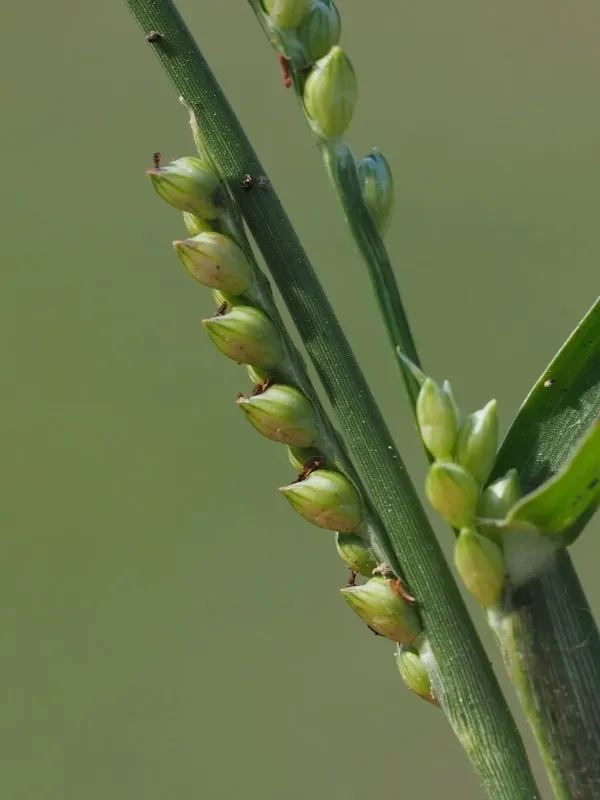
Description
Growing requirements
Yellow Paspalidium (Paspalidium flavidum) is a perennial grass species belonging to the Poaceae family. It is widely distributed across tropical and subtropical regions of Asia and Africa, thriving in diverse environmental settings.
This species is highly adapted to moist environments, frequently appearing along water margins, paddy fields, and wetlands. Its ability to tolerate periodic waterlogging makes it a valuable plant for hydromorphic soil management.
Regarding soil requirements, the plant prefers fertile, silt-rich substrates that maintain high moisture levels throughout the growing season. While it is adaptable, productivity increases significantly in well-drained but humid conditions.
Botanically, Paspalidium flavidum features erect or decumbent culms that can reach up to 90 cm in height. The leaves are narrow and lanceolate, with a distinctive grayish-green color that identifies the species in the field.
Climatic preferences are centered on tropical heat and reliable rainfall. The species is highly sensitive to frost, making its cultivation restricted to frost-free zones where the growing season extends throughout the year.
Yield
The primary economic use of Yellow Paspalidium is as a forage crop. It is highly palatable to livestock, including cattle and sheep, providing a nutritious source of fiber and essential nutrients for herd maintenance.
The plant is valued for its excellent regrowth potential, allowing for multiple harvests per year. When managed correctly, it provides a consistent supply of green biomass, which is crucial for sustainment during dry periods.
Beyond its value as animal feed, the species serves as a soil stabilizer. Its deep, fibrous root system is effective in anchoring soil, thereby preventing erosion in areas prone to seasonal flooding.
In some agricultural systems, it is grown as a cover crop to enrich soil health. Its rapid biomass accumulation helps improve soil structure through the addition of organic matter upon decomposition.
While primarily a forage grass, research into its potential as a supplementary seed source is ongoing, although it is not currently harvested on an industrial scale for commercial grain production.
Main diseases and pests
Fungal diseases are the primary threat to Yellow Paspalidium, particularly in high-humidity environments. Leaf spot and rust pathogens can cause significant damage if ventilation in the crop canopy is poor.
Insect pests, such as aphids and various lepidopteran larvae, often feed on the succulent leaves. Integrated pest management (IPM) strategies, including biological control, are recommended to minimize chemical use.
Competition from invasive weeds can be intense during the establishment phase. Ensuring a clean seedbed and using proper planting densities helps the crop outcompete opportunistic vegetation early in development.
Soil salinity can adversely affect the plant's physiological development. Producers should monitor the salt content of the soil, especially in irrigated fields, to avoid yield suppression and chlorosis.
Inappropriate grazing intensity can lead to the exhaustion of root energy reserves. Proper pasture management and rotational grazing are essential to ensure the long-term survival and vigor of the stand.