
Giant foxtail
Setaria faberi R. A. W. Herrm.
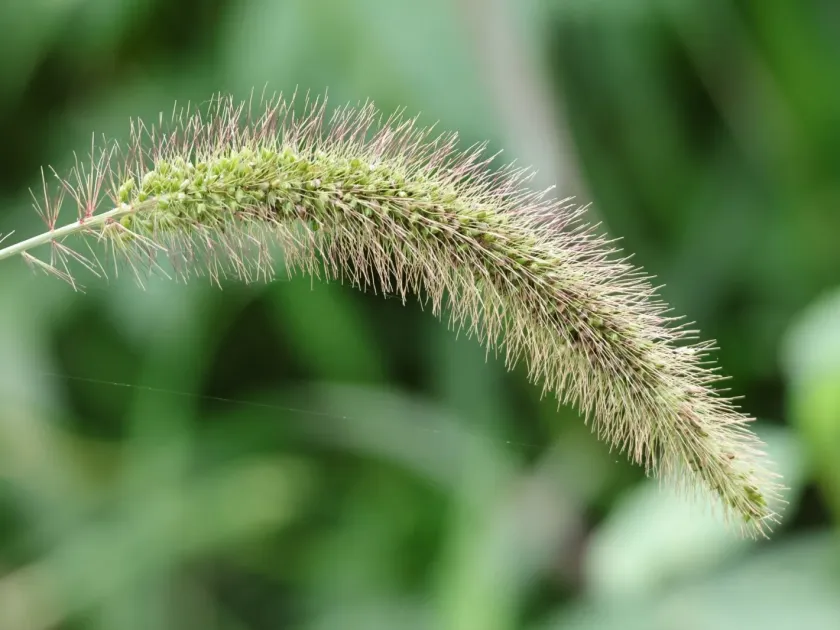
Description
Sowing dates
Giant foxtail is a warm-season annual grass belonging to the Poaceae family. Under natural conditions, seeds begin to germinate when topsoil temperatures reach 10–12°C, which typically occurs in late spring.
Mass emergence of the plant is observed from late May to mid-June when stable warm weather sets in. In agricultural practice, planting crops susceptible to this weed infestation should be scheduled to account for this period to ensure effective early-season control.
The seeds remain viable in the soil for several years, making pre-sowing soil management strategies critical. Optimal planting depth for seeds under favorable conditions ranges from 1 to 5 centimeters.
The biological development cycle from emergence to seed set takes about 90–120 days, depending on regional temperature regimes. In intensive farming, giant foxtail shows high competitiveness against spring cereal crops.
Effective control methods involve promoting germination with subsequent mechanical removal, which requires meticulous planning before the main cropping season begins.
Growing requirements
The plant has moderate soil fertility requirements but prefers well-aerated, nitrogen-rich loams. Giant foxtail is capable of thriving on various soil types, demonstrating remarkable ecological plasticity.
It is a classic warm-season plant requiring sufficient active temperatures throughout the growing season. While growth slows under low light or cool temperatures, the plant recovers quickly once favorable conditions return.
Classified as a drought-tolerant species, it can withstand brief periods of water deficit. However, peak development is observed with sufficient soil moisture during the tillering and jointing phases.
The plant is highly demanding of light and does not tolerate shading by crop canopies or other weeds. Consequently, control is most effective in crops with high planting densities.
The optimal soil pH range for giant foxtail growth is between 5.5 and 7.5. This allows the plant to actively colonize almost any agricultural land subject to intensive management.
Main diseases and pests
Like many members of the Poaceae family, giant foxtail is susceptible to smut fungi, which infect the panicles. This significantly reduces seed viability and the spread of spores.
The plant often serves as a reservoir for viral diseases in cereals, such as the barley yellow dwarf virus. Insects, particularly aphids, act as the primary vectors for these infections.
Various leaf beetles and cereal flies are among the insect pests that feed on the vegetative mass. However, damage by these insects is usually limited and rarely kills the plant due to its strong compensatory growth.
In field conditions, nematodes attacking the root system pose a significant threat. This can lead to a reduction in overall biomass and stunted growth in monoculture settings.
Despite natural enemies, giant foxtail possesses a robust immunity to most standard agricultural pathogens. Its survival is primarily ensured by a powerful root system and efficient nutrient accumulation.