
Vavilov rye
Secale vavilovii Grossh.
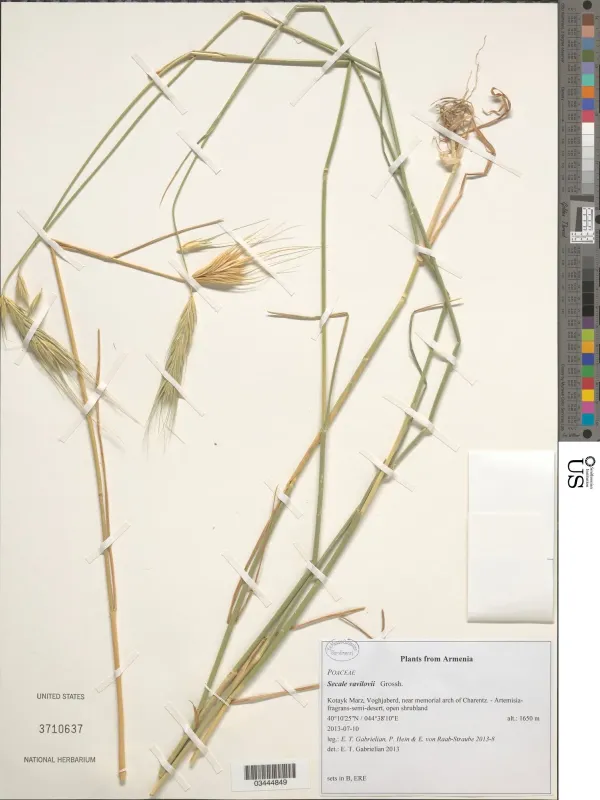
Description
Sowing dates
Vavilov rye is a wild species and is not grown on an industrial scale as a commercial grain crop. For breeding purposes, seeds are sown in controlled nursery or botanical garden conditions during the autumn, following the onset of steady cooling temperatures.
The seeding depth is approximately 3–4 cm, depending on the soil substrate type. It is crucial to maintain optimal stand density to ensure proper ventilation and the development of the plant root system during the initial vegetative stage.
Sufficient soil moisture is required for germination, although the seeds possess high germination energy, which serves as an adaptive survival mechanism in the arid conditions of their natural habitat.
In experimental field stations, sowing is often performed using row methods with wide spacing, which facilitates monitoring of morphological characteristics and detailed scientific study of the samples.
Because the species is open-pollinated, strict spatial isolation must be maintained during seed multiplication in germplasm collections to prevent unwanted cross-pollination with other rye species.
Growing requirements
This species is an endemic to the Armenian Highlands and adjacent regions, which dictates its preference for arid, rocky, and semi-desert growing environments.
The plant exhibits exceptional tolerance to soil moisture deficiency and high air temperatures during the grain maturation period.
Vavilov rye is undemanding regarding soil quality, successfully growing on poor, skeletal, and eroded soils where other cereal crop species would fail to thrive.
Biologically, the culture is adapted to a harsh continental climate characterized by extreme diurnal temperature fluctuations and significant summer drought.
In modern plant breeding, this species is highly valued as a source of genes for environmental stress tolerance and as a donor of resistance to various cereal pathogens.
Main diseases and pests
In its natural habitat, Vavilov rye demonstrates high field resistance to diseases common in cultivated rye varieties, owing to its primitive genetic background.
However, when introduced and grown in high-humidity areas, the plant may become susceptible to brown rust, especially during seasons with weather conditions favorable to fungal development.
Powdery mildew represents a potential threat only when agronomic practices are neglected, specifically in cases of excessive planting density and high relative humidity in the lower crop canopy.
Insect damage in natural habitats is generally low, as the plant has developed effective defense mechanisms through evolutionary processes in harsh mountainous terrains.
A critical risk factor is stem lodging caused by excessive nitrogen fertilization, which makes the plant more vulnerable to fungal infections during the grain filling phase.