
Mountain rye
Secale montanum Guss.
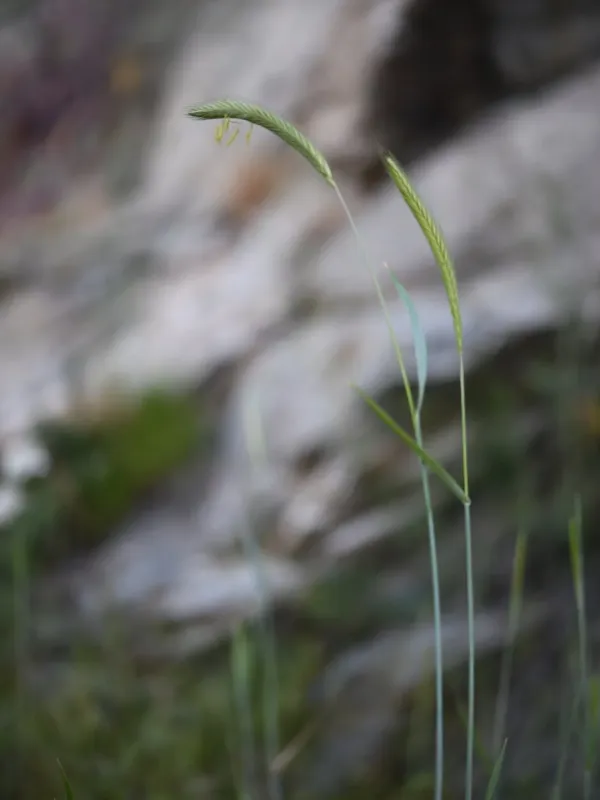
Description
Sowing dates
Mountain rye (Secale montanum) is a perennial grass species belonging to the Poaceae family. Unlike common rye (Secale cereale), this species is characterized by its ability to persist for several years, making it an object of great interest in forage development and breeding.
Sowing should take place in early autumn or early spring. Because it is a wild-type species, the seeds benefit from specific environmental triggers, such as the cooling temperatures of autumn, which help ensure uniform germination and establishment.
The seeds should be sown at a shallow depth of 2–3 cm. Planting too deep can hinder the emergence of the seedlings, as the energy reserves in the seed are adapted for rapid surface-level development in natural rocky habitats.
Spacing is essential for this plant to reach its full tillering potential. It forms dense clumps over time, so providing sufficient space between rows during the initial planting phase prevents competition for light and nutrients.
It is crucial to prepare the soil by removing competing weeds before sowing. Since mountain rye is a perennial, establishing a clean field at the start will significantly enhance its longevity and productivity in subsequent years.
Growing requirements
Mountain rye is native to mountainous regions of Southern Europe, the Caucasus, and Central Asia. It is highly adapted to harsh environments and is particularly valued for its exceptional drought and cold tolerance.
The plant thrives in poor, rocky, and well-drained soils. While it does not require high levels of fertilization, occasional mineral supplementation can improve the biomass output, especially in fields intended for hay production.
It possesses a deep and efficient root system, allowing it to extract water from significant depths. This makes it an ideal candidate for soil stabilization and cover cropping in arid or semi-arid regions where other cereals would fail.
Sunlight is a primary requirement for the plant. It does not perform well in shaded areas, as low light intensity leads to weakened stems, increased risk of lodging, and a reduction in seed head density.
Extreme winter temperatures are not a limiting factor for this species, as it is biologically hard-wired to survive freezing conditions. It remains dormant through the winter and initiates rapid growth as soon as the soil begins to warm.
Main diseases and pests
Like many grasses, mountain rye is susceptible to rusts (Puccinia species) and powdery mildew. These diseases are most prevalent during humid, stagnant periods where airflow between the plants is restricted.
Leaf rust can significantly reduce the photosynthetic surface area of the plant, potentially weakening it over several seasons. Effective management includes ensuring optimal planting density and avoiding excessive nitrogen fertilization that can promote soft, disease-prone tissue.
Pests such as cereal flies can damage the stems during the tillering stage. Furthermore, various beetles may target the developing spikes, potentially reducing the overall seed yield if the crop is being harvested for propagation.
Integrated pest management, including crop rotation and monitoring, is the preferred method for managing threats in this crop. Chemical interventions are generally avoided unless the infestation levels pose a threat to the plant’s survival.
Ensuring the field is kept free of excessive moisture and promoting strong, healthy growth through balanced nutrient management are the best preventative measures against the typical pathogens that affect this robust grass.