
Narrow-leaved meadow-grass
Poa pratensis L. subsp. angustifolia (L.) Dumort.
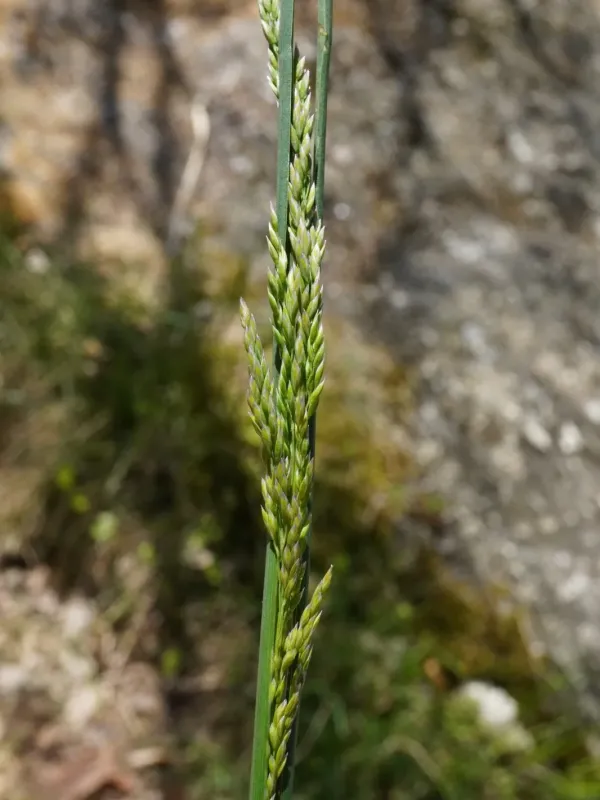
Description
Growing requirements
Narrow-leaved meadow-grass (Poa pratensis L. subsp. angustifolia) is a perennial grass species belonging to the Poaceae family. It is a specialized subspecies adapted to dryer environments compared to the common bluegrass.
Morphologically, it is defined by its slender, narrow leaves and an extensive rhizomatous root system. This structure allows the plant to form a dense, resilient sod that withstands intensive grazing.
The plant thrives in temperate climates and is highly tolerant of drought. It prefers well-drained, nutrient-rich soils but shows remarkable adaptability to various soil types across its native range.
Effective establishment requires firm seedbeds and shallow sowing depth. Early growth is slow, so weed control during the seedling stage is critical for future productivity.
In agriculture, it is utilized for permanent pastures and hayfields. Its high protein content and early spring growth make it an essential component of quality forage for livestock.
Main diseases and pests
Common diseases affecting this species include rust fungi, powdery mildew, and leaf spots, which are more prevalent in high-humidity conditions or poor air circulation.
Pests such as grass bugs, stem borers, and wireworms can damage root and stem tissues, especially in newly established stands that have not yet reached maturity.
Management strategies involve selecting disease-resistant genotypes and ensuring balanced nutrient application to prevent tissue weakening.
Integrated pest management, including crop rotation and proper timing of grazing, is recommended to reduce the incidence of harmful insect populations.
Monitoring the fields during high-risk seasons is essential to apply timely interventions and protect the integrity of the grassland sward.