
Phleum phleoides
Phleum phleoides (L.) H. Karst.
Description
Growing requirements
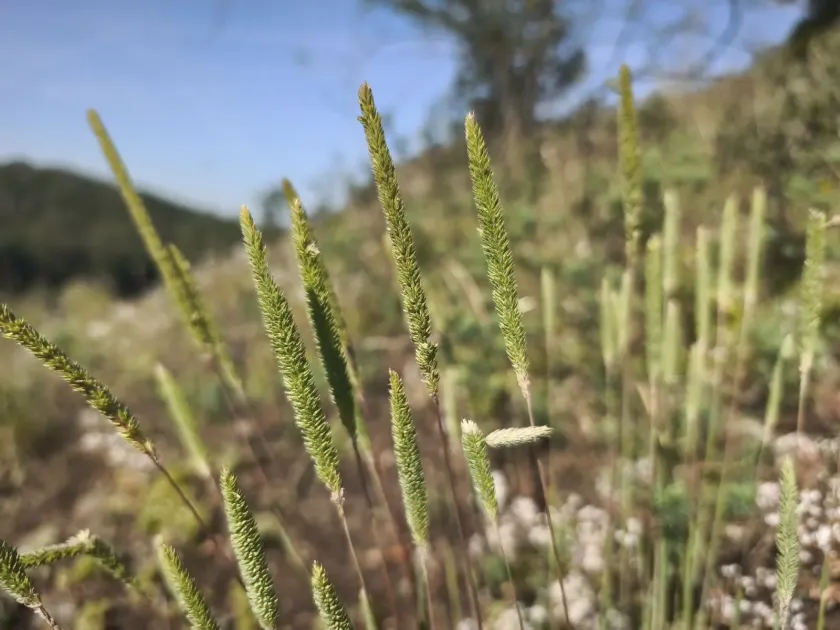
Phleum phleoides, commonly known as steppic timothy, is a perennial grass belonging to the Poaceae family. Unlike its relative Phleum pratense, this species is highly adapted to dry, steppe-like conditions, making it an essential plant for restoration and fodder production in arid environments.
Native to vast regions of Eurasia, it thrives in dry meadows, rocky slopes, and sandy soils. It has evolved to cope with high levels of insolation and periodic water scarcity, maintaining growth where more sensitive grasses fail.
The plant demonstrates low soil fertility requirements. It grows well in nutrient-poor or gravelly substrates, showing significant resilience to environmental stress while maintaining its structural integrity throughout the growing season.
Its botanical structure includes a dense, cylindrical spike-like inflorescence and a robust root system. This morphology allows for efficient nutrient uptake and deep water foraging, which is critical for survival in unstable climate zones.
In agricultural practice, it is utilized for creating sustainable long-term pastures and erosion control on vulnerable sloped lands, providing a reliable source of forage for livestock even during hot, dry summer months.
Main diseases and pests
Phleum phleoides is generally hardy, but it can be susceptible to common fungal pathogens such as rust (Puccinia spp.) and powdery mildew, particularly in conditions of high humidity or poor air circulation within the canopy.
Insect pests, including cereal aphids and various types of flies, may occasionally infest the plants. These pests can reduce the nutritional quality and biomass output if populations reach economic damage thresholds.
Management of these threats is best achieved through integrated pest management (IPM) strategies, which prioritize regular mowing or grazing to maintain a young, vigorous stand and minimize disease buildup.
Soil aeration and preventing overgrazing are fundamental cultural practices that help preserve the health of the stand, reducing the plant's susceptibility to biotic stress factors over time.
While chemical interventions are possible, they are rarely needed if the stand is managed correctly, allowing for a more sustainable approach to grass cultivation in natural and agricultural landscapes.