
Pinnate bird's-foot
Ornithopus pinnatus (Mill.) Druce
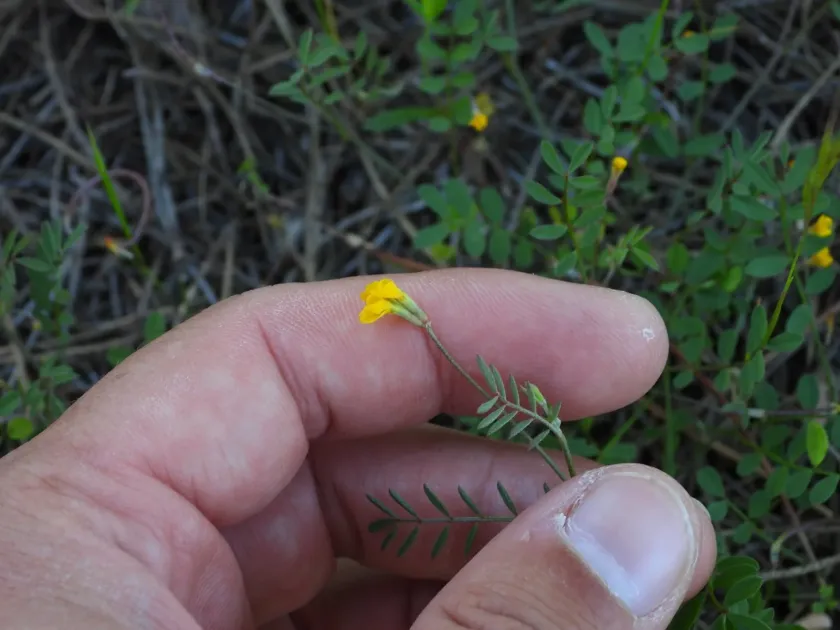
Description
Sowing dates
Pinnate bird's-foot (Ornithopus pinnatus) is an annual legume species known for its remarkable adaptability to nutrient-poor and acidic soils. It plays a significant role in agricultural systems as a forage crop capable of thriving where other legumes struggle to establish.
The optimal time for sowing is during early spring once soil temperatures reach 8–10 degrees Celsius. Successful germination depends heavily on adequate soil moisture, which ensures the plant establishes a strong taproot early in its development.
It is commonly cultivated in mixtures with various grasses to provide high-quality forage. The seeding rate should be carefully adjusted based on the intended land use, whether for hay production or direct livestock grazing in pasture settings.
As a legume, it forms beneficial symbiotic relationships with nitrogen-fixing bacteria. This biological process enriches the soil with nitrogen, significantly improving the fertility profile of fields used in rotation with demanding grain crops.
The nutritional profile of pinnate bird's-foot is characterized by high protein content and essential vitamins. This makes it a preferred choice for producers aiming to improve the quality of livestock feed without excessive reliance on synthetic nitrogen fertilizers.
Growing requirements
This species thrives in light, sandy, and well-drained soils. Its tolerance for acidity and low-nutrient conditions makes it an ideal candidate for reclaiming marginal land that is otherwise unsuitable for more sensitive agricultural commodities.
Climate-wise, it requires moderate temperatures and consistent rainfall throughout the growing season. It performs best in temperate environments and is generally sensitive to extreme frost, which defines its management as a spring-sown annual in colder regions.
Good soil aeration is critical, as the species is highly susceptible to waterlogging. Planting in heavy clay soils or areas with poor drainage often leads to root rot and diminished yield potential compared to well-drained sandy sites.
Preparation of the seedbed should be focused on achieving a fine, firm surface for sowing. Due to the small size of the seeds, they should be placed at a shallow depth of 1–2 centimeters to ensure effective emergence and access to sunlight.
Minimal input requirements are a hallmark of this crop. While phosphorus and potassium fertilizers may be applied to boost initial growth on very depleted soils, nitrogen supplementation is rarely needed due to the plant's natural nitrogen-fixing capabilities.
Main diseases and pests
Fungal pathogens such as powdery mildew represent the primary biological threat to the crop, especially in conditions characterized by high humidity and poor airflow. These infections can severely impact the biomass production and forage quality.
Pests, particularly pea leaf weevils, can cause significant damage during the early vegetative stages by feeding on tender leaves and shoots. Severe infestations can necessitate intervention to prevent thinning of the crop stand.
Aphids may also pose a risk during the flowering phase, feeding on sap and potentially transmitting viral diseases. Management strategies should focus on biological control and maintaining crop vigor to help plants withstand these pressures.
Preventative agronomic practices are the cornerstone of disease management. Proper crop rotation, avoiding monoculture practices, and ensuring adequate plant spacing help to reduce the buildup of pathogens and insect populations within the field.
While chemical options exist, their use is often limited by the role of pinnate bird's-foot in sustainable grazing systems. Integrated pest management (IPM) techniques are preferred to ensure the environmental safety and quality of the resulting fodder.
Harvesting
The optimal harvest timing for hay occurs during the full bloom phase, which represents the peak in nutrient density. Cutting during this period ensures that the foliage is rich in proteins while maintaining manageable stem fiber content.
In grazing applications, rotational management is essential to prevent overgrazing and allow for regrowth. Given its ability to recover after mowing or grazing, it can provide multiple cuts throughout the season if moisture is sufficient.
Seed harvesting requires careful monitoring, as the pods are prone to shattering as they mature. The crop should be harvested once the majority of the pods have turned color but before significant seed dispersal occurs in the field.
Post-harvest, seeds must be dried thoroughly to a moisture content of 12–14 percent to prevent heating and fungal spoilage in storage. Cool, dry, and well-ventilated storage conditions are required to maintain long-term seed viability.
The remaining stubble and root biomass contribute significantly to soil structure and organic matter content. Incorporating these residues into the soil after harvest helps to sustain soil fertility for subsequent crops in the rotation cycle.