
Sand sainfoin
Onobrychis arenaria (Kit.) DC.
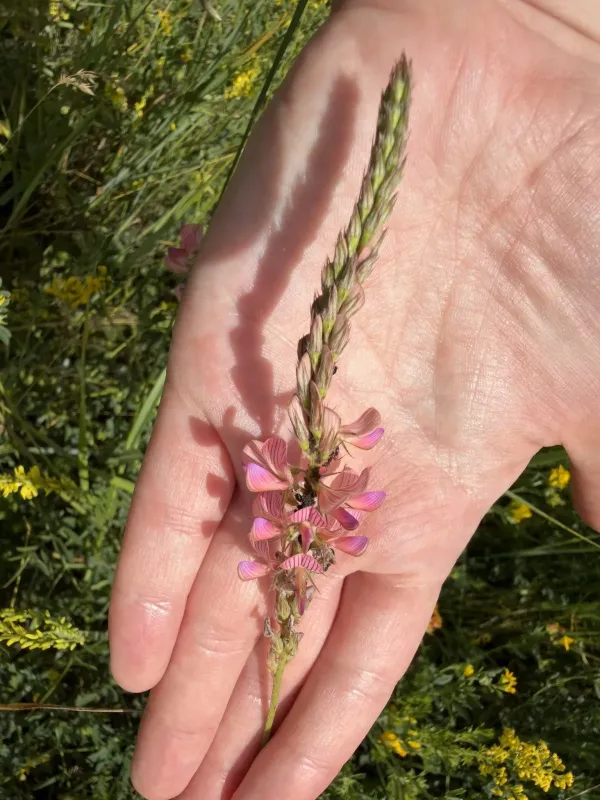
Description
Sowing dates
Sand sainfoin (Onobrychis arenaria) is a valuable perennial legume known for its exceptional drought tolerance and ability to improve soil health. Planting is best carried out in early spring, as soon as the soil reaches workable conditions, to take advantage of soil moisture.
The seeding rate typically ranges from 60 to 100 kilograms per hectare depending on the soil type and intended use. Precision in seeding depth is critical; it should be planted no deeper than 2–3 centimeters to ensure rapid germination of the seeds.
In regions prone to severe drought, sainfoin is often intercropped with small grain cereals. This method protects the young, delicate sainfoin seedlings from intense sunlight and weed competition during the establishment phase.
Inoculation of seeds with appropriate rhizobium bacteria is a standard practice that significantly enhances nitrogen fixation. This natural biological process reduces the need for nitrogen fertilizers and promotes vigorous crop growth.
Post-planting field rolling is highly recommended. This operation ensures optimal seed-to-soil contact, which is essential for uniform emergence and promotes capillary water movement to the seed zone.
Growing requirements
This crop thrives in diverse environments but is particularly well-suited to steppe and forest-steppe regions. It is highly resistant to both cold winters and hot, dry summers, making it a reliable forage source in semi-arid climates.
Sand sainfoin prefers well-drained, fertile soils with a neutral or slightly alkaline pH. It is sensitive to soil acidity and high water tables, which can inhibit root development and cause winter damage due to ice formation around the crown.
As a light-loving plant, sainfoin requires open conditions to maintain high productivity. It does not perform well under shade or when competing with taller, more aggressive grasses, which can lead to rapid stand thinning.
The crop is highly effective at exploring deep soil layers for water and minerals due to its robust taproot system. It is significantly more capable of surviving in poor or eroded soils compared to alfalfa or other common forage legumes.
Nutrient management should focus on phosphorus and potassium, which help the plant withstand environmental stress and encourage root development, ensuring longevity of the stand over several years.
Yield
The yield of Sand sainfoin is highly dependent on rainfall and site fertility. Under optimal conditions, the crop can produce two robust harvests (cuttings) per growing season, providing high-quality forage for livestock.
When harvested for hay, producers can expect yields ranging from 4 to 7 tonnes of dry matter per hectare. The nutritional profile remains high even as the plant matures, which provides a longer window for the harvesting operation.
Stand productivity usually peaks in the second and third year of growth. With proper care and fertility management, a healthy sainfoin stand can remain productive and profitable for 5 to 7 years before needing to be rotated.
Seed production is a lucrative secondary objective for many growers. A well-managed seed crop can yield between 300 and 600 kilograms of high-quality seed per hectare, depending on pollinator activity during the blooming phase.
Regular applications of micronutrients like boron can substantially improve seed set and overall stand health, contributing to more consistent yields across different seasons and environmental challenges.
Main diseases and pests
Powdery mildew is the most common fungal disease affecting Sand sainfoin, particularly in seasons with high humidity. It appears as a white dust on the leaves, which can negatively impact the palatability and nutritional value of the forage.
Ascochyta leaf spot is another frequent threat that can cause premature leaf drop. This reduces the total biomass production and decreases the protein content of the hay, potentially leading to quality issues for animal feeding.
Insect pests, such as weevils, can cause significant damage to both the foliage and the reproductive parts of the plant. Monitoring of the field is crucial during the budding stage to prevent heavy losses of the seed yield.
Sainfoin seed chalcids are specialized pests that develop within the seed pods. Management involves timely harvesting to minimize the duration of vulnerability and using approved treatment methods for the stored seeds.
Strategic crop rotation and the selection of disease-resistant varieties are the best defenses against widespread infections. Proper management of field edges and control of volunteer host plants also help reduce pest pressure.
Harvesting
The optimal stage for harvesting Sand sainfoin for high-quality hay is at the beginning of the mass flowering period. Harvesting at this time ensures the best balance of protein, energy, and dry matter digestibility.
Care must be taken during the curing process, as the leaves are delicate and can shatter easily if handled too roughly. Using mowers with conditioning rollers can help dry the stems faster while preserving the leaf quality.
For seed harvesting, a two-step method is preferred. The crop is cut and swathed when the pods turn brownish-gray, allowed to dry, and then threshed with a combine. This prevents excessive seed shatter in the field.
The cutting height should be maintained at roughly 7–10 centimeters. Cutting too close to the ground can damage the crown of the plant, which is vital for the regrowth of the next cutting and long-term stand survival.
Post-harvest processing involves immediate cleaning and drying of the seeds to reach a moisture level below 14 percent. This prevents fungal growth and ensures the seeds remain viable for planting in the subsequent season.