
Spanish nigella
Nigella hispanica L.
Description
Sowing dates
Spanish nigella is an annual herbaceous plant belonging to the Ranunculaceae family. Sowing seeds directly into the open ground is best performed in early spring as soon as the soil warms up to 10-12 degrees Celsius.
The optimal sowing time is mid-April. Seeds are sown in rows with spacing of about 25–30 centimeters, burying them at a depth of no more than 1–2 centimeters to ensure successful germination.
For earlier flowering, it is possible to start seeds indoors in greenhouse conditions. Sowing in individual pots during March is recommended, as this species does not tolerate transplantation well due to its taproot system.
Transplanting hardened seedlings into the field is carried out in late May once the threat of late frosts has passed. The spacing between plants should be at least 15 centimeters to allow for full development.
Spanish nigella thrives best when sown directly in its permanent location, as this encourages the development of a strong root system, which positively impacts the quality of the subsequent flowering.
Growing requirements
This crop is light-loving and heat-demanding. To achieve prolific flowering and high-quality seed production, the plants require open, sun-drenched locations that are protected from strong winds.
Soil requirements include light, well-drained, and fertile soils with a neutral pH. Heavy clay soils that tend to trap water are detrimental to the root system of the nigella plant.
During the active growth phase, the crop requires moderate watering. Excessive soil moisture often leads to the development of fungal infections, so it is essential to ensure proper drainage after rainfall.
The plant responds well to mineral fertilizers. At the beginning of the vegetative period, nitrogen fertilizers are beneficial, while complex potassium-phosphorus compounds are recommended during budding to improve bloom quality.
Agrotechnical practices include regular inter-row cultivation and weed control, which can suppress young seedlings. Maintaining clean rows is a prerequisite for high decorative value and overall crop productivity.
Yield
The yield of Spanish nigella is measured by the total weight of harvested seeds or the volume of cut flower production. With correct agricultural practices, one hectare can produce a stable crop of seed material used in food and cosmetic industries.
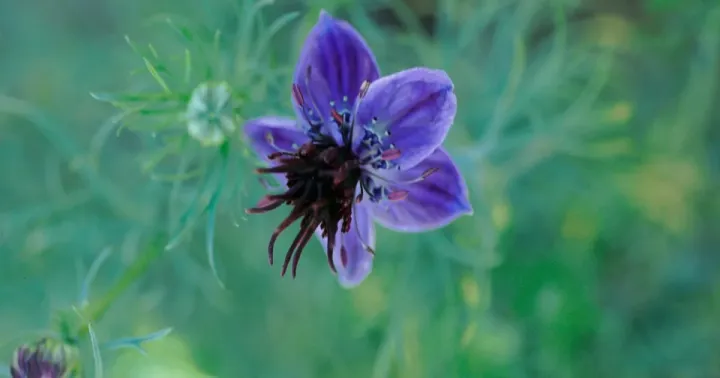
Beyond seeds, the decorative seed pods are also of commercial value. When grown for cutting, maintaining proper planting density is critical to produce marketable stems with large blue-violet flowers.
Productivity is highly dependent on weather conditions during flowering. In dry, hot seasons with adequate irrigation, seeds ripen faster and show higher quality than during periods of prolonged rainy weather.
In ornamental gardening, yield is determined by the duration of the flowering period. Proper care can extend this phase up to 6–8 weeks, ensuring a consistent supply of product for the market.
Seed harvesting should be performed when the pods reach full technical maturity, turning a brownish hue. It is important to prevent self-seeding, as this significantly reduces the overall harvest volume.
Main diseases and pests
The main threats to Spanish nigella include root rot, which typically occurs during periods of excessive soil moisture. Pathogenic fungi attack the root crown, leading to rapid wilting of the entire plant.
Pests such as spider mites can cause significant damage during dry spells. Regular monitoring of the plantings is recommended, and the use of biological control agents is advised if necessary.
Aphids frequently attack young shoots and buds, sucking juices and deforming the inflorescences. For control, insecticidal soaps or specific insecticides are used when pest populations are high.
Powdery mildew may occur during sharp temperature fluctuations and high humidity. It is vital to ensure good air circulation between plants by maintaining optimal planting schemes.
Adhering to crop rotation is the best protection against the accumulation of specific soil-borne pathogens. It is not recommended to plant nigella after other members of the Ranunculaceae family for several seasons.
Harvesting
Harvesting for seeds begins when the majority of the pods change from green to brown. The stems are cut in whole, tied into sheaves, and hung in a dry, well-ventilated area for final ripening.
For decorative purposes, the pods are harvested earlier, during the phase of maximum ornamental appeal, before the seeds are fully mature. This allows them to be used in dried floral arrangements.
After ripening, the sheaves are threshed. The seeds are cleaned of plant debris through winnowing or sieving to ensure high quality and purity of the planting material.
Cleaned seeds must be stored in paper bags or cloth pouches in a dry environment. Under proper conditions, Spanish nigella seeds maintain their germination capacity for 2–3 years.
Harvesting operations should be carried out in dry weather to prevent mold growth on the raw material. Timely execution minimizes harvest losses caused by seeds falling to the ground.