
Nigella damascena
Nigella damascena L.
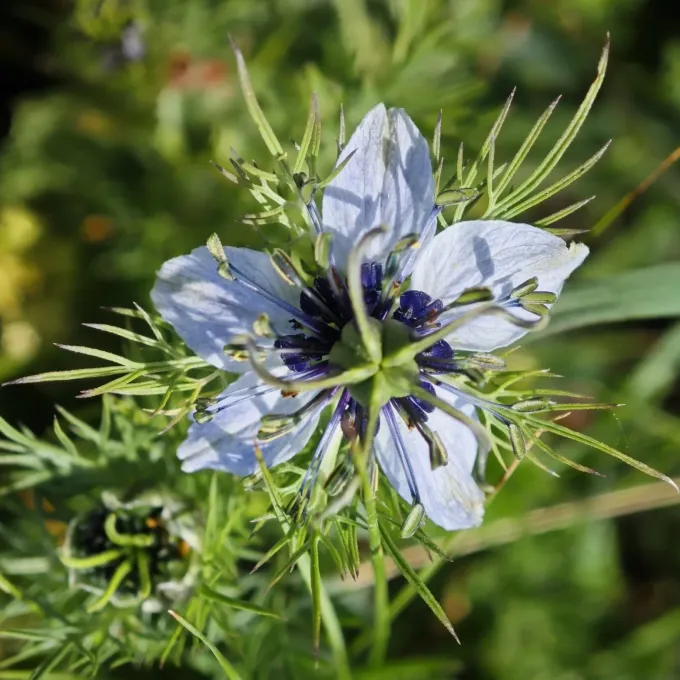
Description
Sowing dates
Nigella damascena is a hardy annual crop, making it suitable for early spring sowing directly into open soil as soon as the ground is workable and soil temperatures rise.
Fall sowing is also a viable option in milder climates, as it encourages earlier germination and more robust development when the spring temperatures arrive.
Seeds should be sown in rows spaced approximately 20–30 cm apart, covered with a thin layer of soil, no more than 2 cm deep, as they require some light exposure to germinate efficiently.
To ensure a continuous supply of flowers or seeds throughout the season, successive sowing every two to three weeks is highly recommended.
Direct field seeding is strongly preferred over transplanting because Nigella develops a deep taproot that is highly sensitive to root disturbance during handling.
Growing requirements
As a member of the Ranunculaceae family, this crop thrives in open, full-sun locations; partial shade may cause the stems to stretch and bloom density to decrease significantly.
The plant prefers light, well-draining, and nutrient-rich sandy loam or loamy soils, maintaining a neutral pH for optimal physiological activity.
Water management is critical; while the crop is relatively drought-tolerant once established, it cannot withstand waterlogged conditions which often lead to root decay.
The ideal temperature range for vegetative growth is between +18 and +25 degrees Celsius, though the plant is resilient enough to endure minor spring frosts.
Excessive nitrogen application should be avoided, as it tends to promote excessive foliage growth at the expense of seed production and the formation of characteristic decorative capsules.
Yield
The economic value of Nigella damascena is primarily derived from its seeds, which are harvested for essential oil production and pharmaceutical applications.
Yields are optimized through regular weeding and maintaining proper plant spacing to ensure that each individual specimen receives enough light and air circulation.
Well-managed crops can produce substantial amounts of seed material per hectare, provided that pollination conditions are favorable during the flowering period.
The crop maturation cycle from sowing to harvest typically spans 90 to 110 days, depending heavily on the specific environmental conditions and the intensity of solar radiation.
Consistent irrigation during the seed capsule filling stage can significantly increase the final dry seed yield by preventing premature senescence of the plants.
Main diseases and pests
Nigella damascena possesses strong phytoncide properties, providing natural resistance against most common pests and fungal diseases found in typical agricultural settings.
In humid climates or poorly drained fields, powdery mildew may occasionally appear, manifested as a white dusty coating on the leaves and stems.
Root rot is the most significant threat, occurring almost exclusively in stagnant water or overly dense, clay-heavy soils that impede healthy root development.
While aphids can occasionally colonize the plants, infestations are rarely severe enough to cause economic damage or warrant the use of chemical pesticides.
The main agronomic challenge remains competitive pressure from weeds during the seedling emergence phase, necessitating mechanical or manual weed control measures early on.
Harvesting
Seed harvest commences when the capsules turn from green to a brownish hue, indicating that the seeds inside have reached their mature, hard, and black state.
Plants are cut and tied into small bundles, then placed in a well-ventilated, shaded area to allow for natural drying without the risk of mold formation.
Once dried, the capsules are threshed to release the seeds, which are then cleaned by winnowing to remove chaff and other organic debris effectively.
For ornamental purposes, the capsules should be harvested earlier, while they are still firm and attractive, to be preserved for use in dried floral arrangements.
Properly dried seeds should be stored in paper containers in a cool, dry environment to maintain maximum viability and oil quality for up to three years.