
Mimosa scabrella
Mimosa scabrella Benth.
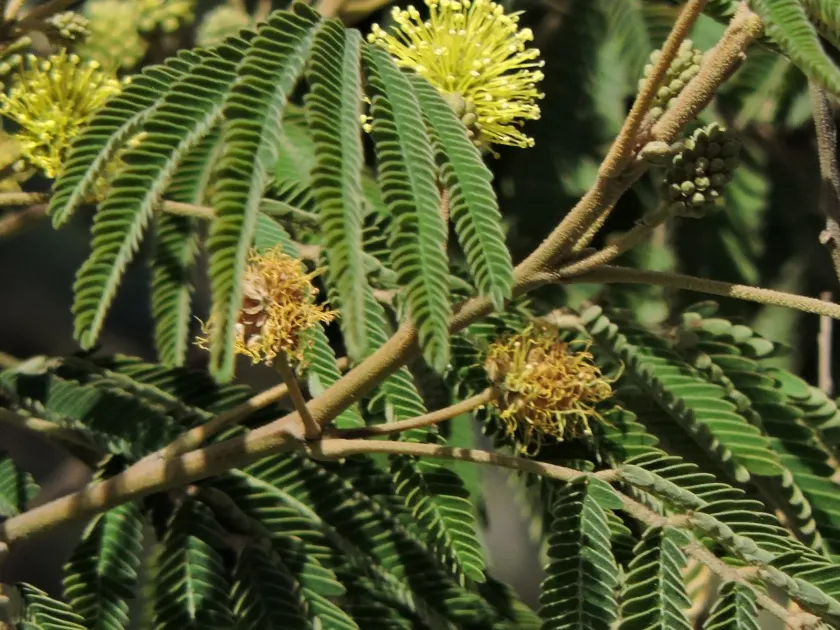
Description
Sowing dates
Propagation of Mimosa scabrella is typically achieved through seeds. The seeds possess a hard, water-impermeable seed coat, necessitating pre-sowing treatment such as hot water immersion or mechanical scarification to ensure uniform germination.
Sowing should be synchronized with the start of the rainy season to provide consistent soil moisture. In commercial operations, seeds are often germinated in nursery containers until the saplings reach an ideal size for field transplantation.
Planting density varies according to the intended product. For charcoal or firewood production, denser spacings are common to maximize biomass per hectare, while timber production requires thinning to allow for adequate canopy development.
During the establishment phase, site preparation is essential to reduce weed competition. Mimosa scabrella grows aggressively, but during the first year, it remains vulnerable to invasive grasses and weeds that can stunt its early growth.
Ongoing maintenance involves selective pruning to ensure a straight trunk and reduce branchiness in timber-focused plantations. This management practice enhances the final grade and market value of the harvested wood.
Growing requirements
Mimosa scabrella Benth., commonly known as "bracatinga" in its native Brazil, is a fast-growing leguminous tree species. It belongs to the Fabaceae family and is highly valued for its rapid biomass accumulation and soil-enriching properties.
The species is naturally found in the highlands of southern Brazil. It is particularly well-adapted to cooler subtropical climates, demonstrating a level of frost tolerance that distinguishes it from many other tropical Mimosa species.
Mimosa scabrella thrives in deep, well-drained soils but is remarkably resilient to acidic and nutrient-poor sites. Its ability to form a symbiotic relationship with nitrogen-fixing bacteria allows it to prosper where other species might struggle.
This tree requires significant sunlight for optimal growth. In agroforestry systems, it is often utilized for its ability to cycle nutrients efficiently, as the heavy leaf litter significantly improves soil quality and structure over time.
Economically, it is cultivated primarily for timber, firewood, and charcoal production. Its high growth rate makes it an excellent choice for short-rotation forestry, pulpwood production, and ecological restoration projects in degraded areas.
Main diseases and pests
The health of Mimosa scabrella plantations is largely dependent on soil drainage. Excessive moisture or waterlogged conditions are the primary catalysts for root rot diseases, which can cause significant mortality in young stands.
Pest pressures primarily include leaf-eating insects and certain types of borers that target the stem. While mature, vigorous trees often tolerate moderate defoliation, young plantations may require interventions if infestation levels spike.
Biological threats can be mitigated by ensuring genetic diversity within the plantation. Establishing monocultures increases vulnerability, so integrating Mimosa scabrella into diverse agroforestry models is often the most effective pest management strategy.
Fungal pathogens associated with damp environments can be controlled through proper site selection and spacing. Air circulation is vital to prevent the build-up of spores that thrive in the dense, moist canopy of rapidly growing trees.
Regular monitoring for symptoms such as wilting or discoloration of leaves is recommended. Early detection of pathological issues allows for rapid removal of infected specimens, preventing the spread of diseases throughout the forest crop.