
Mimosa pigra
Mimosa pigra L.
Description
Growing requirements
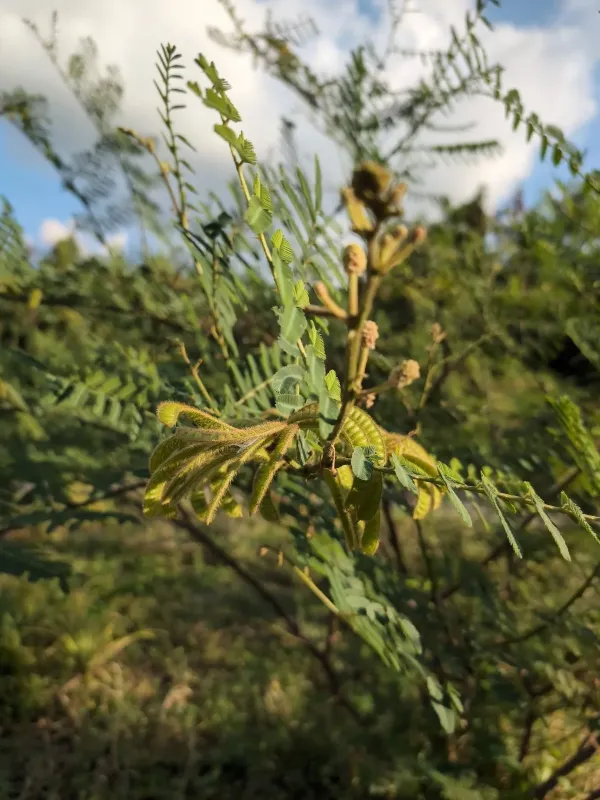
Mimosa pigra L., commonly known as the giant sensitive plant, belongs to the Fabaceae family. It is a perennial woody shrub characterized by pinnate leaves that close upon touch and stems protected by sharp, hooked prickles, making the plant physically challenging to handle.
Native to Central and South America, the species has successfully colonized various tropical regions worldwide. It is specifically adapted to wet, riparian habitats where it can thrive in nutrient-rich soils that remain consistently moist throughout the growing season.
The plant demands high temperatures and abundant water to sustain its vigorous growth rate. It is considered an aggressive colonizer that prefers floodplains and wetland environments, where it creates dense, impenetrable thickets that disrupt local drainage and land use.
From an agronomic perspective, Mimosa pigra is treated strictly as an invasive weed rather than a crop. Management involves intense physical clearing and the targeted application of herbicides, though the resilience of its root system often leads to regrowth if not completely eradicated.
Agricultural utility is non-existent as the plant poses a severe threat to food security by competing with native vegetation and essential crops. It is widely classified as a major invasive species that requires systemic control programs to prevent it from outcompeting indigenous flora and agricultural products.
Main diseases and pests
The primary threat posed by Mimosa pigra is its prolific seed production. A single plant can disperse thousands of seeds annually, which are highly buoyant and easily spread via irrigation systems, flooding, or movement of contaminated soil during agricultural operations.
The plant suffers from few diseases in its invasive ranges, primarily because it is not native to those regions and lacks co-evolved pests. The absence of natural biological controls allows the species to dominate large areas unchecked, necessitating heavy human intervention to mitigate its expansion.