
Yellow alfalfa
Medicago sativa L. subsp. falcata (L.) Arcang.
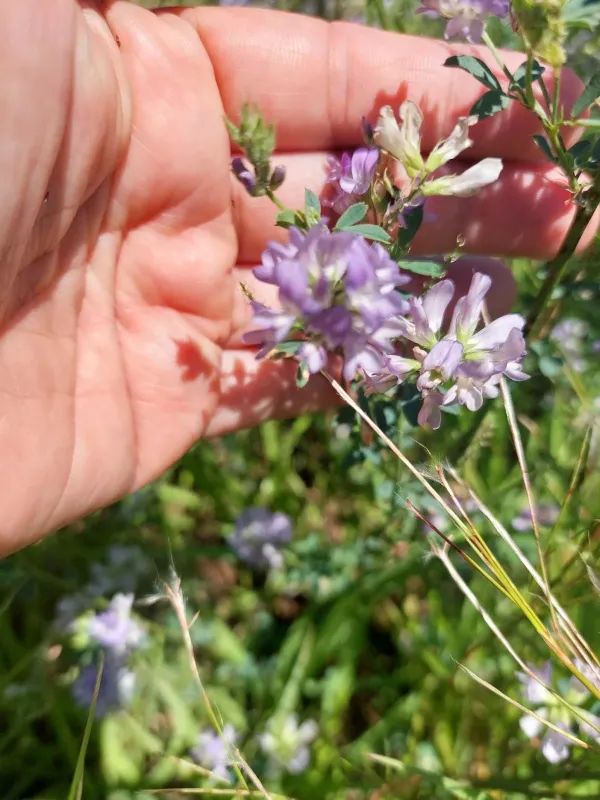
Description
Sowing dates
Yellow alfalfa is typically sown in the spring as soon as soil temperatures reach 6–8°C, allowing the plants to effectively utilize stored moisture. In regions with milder climates, late summer sowing is possible, provided there is adequate irrigation during the initial growth stage.
Seeding rates depend on the sowing method: for solid drilling, approximately 10–12 kg/ha is required, whereas row spacing methods utilize 4–6 kg/ha. Seeds should be planted at a depth of 1.5–3 cm, depending on soil texture and moisture content.
Preparation of a fine, firm seedbed through cultivation and rolling is essential for uniform germination. Proper soil contact is a key factor in establishing a successful stand in the field.
The species exhibits a slow early growth habit, making weed control in the seedling stage critical. Selective herbicides may be utilized if weed pressure exceeds economic thresholds.
Inoculation of seeds with appropriate Rhizobium strains prior to sowing significantly enhances nitrogen fixation, contributing to both higher yields and improved soil fertility over time.
Growing requirements
Yellow alfalfa (Medicago falcata) is a legume species renowned for its extreme winter hardiness and drought tolerance. Unlike its relative, Medicago sativa, it thrives in harsh environments where moisture is limited.
It prefers well-drained chernozem, chestnut, or alluvial soils. It does not tolerate waterlogging and performs poorly in acidic soils with a pH below 6.0, often requiring lime amendments for optimal development.
This crop is highly light-demanding, necessitating adequate spacing. Overshadowing by other species or overly dense stands can lead to early thinning and reduced plant vigor.
Its deep root system allows it to access water and minerals from lower soil horizons, making it an excellent candidate for soil stabilization and erosion control on sloped terrains.
While tolerant of low temperatures during establishment, the crop thrives in mean daily temperatures between 20–25°C for rapid vegetative biomass accumulation.
Yield
The productivity of yellow alfalfa is determined by environmental conditions and harvesting frequency. In favorable settings, it can produce two to three full cuts per growing season.
Average green biomass yields range from 15 to 25 tonnes per hectare, while hay production typically fluctuates between 4 and 7 tonnes per hectare, depending on soil fertility and moisture availability.
On high-fertility soils and under irrigated conditions, yields can significantly exceed standard values. Peak productivity is generally observed between the second and fourth years of the stand.
The biological seed yield potential is approximately 200–500 kg per hectare. For seed production, lower plant densities are recommended to facilitate proper insect pollination.
Longevity is a major economic advantage; with proper management, a stand can maintain stable and productive yields for a decade or more.
Main diseases and pests
The main pests affecting yellow alfalfa include the alfalfa weevil, which causes damage to buds and foliage, and various species of plant bugs that can significantly reduce seed set.
Diseases are often observed as leaf spots, including Ascochyta, Cercospora, and Downy Mildew, which thrive in high humidity conditions and are exacerbated by poor canopy management.
Root rot becomes a significant threat during periods of soil saturation or if the crown is damaged during mechanical harvesting, leading to gradual stand decline.
Integrated pest management strategies include crop rotation, timely harvesting to break pest cycles, and the judicious use of registered insecticides and fungicides during disease outbreaks.
- Alfalfa weevil
- Powdery mildew
- Leaf spot (Ascochyta)
- Alfalfa aphids
Harvesting
The optimal harvest time for green mass or hay is the bud stage. At this phenological phase, the protein content and nutrient digestibility of the plant are at their peak.
Delaying harvest until the flowering stage significantly reduces nutritional quality, as stems become woody and fiber content increases, ultimately decreasing animal feed intake.
Efficient haymaking requires rapid wilting in windrows to preserve leaves, which contain up to 70% of the plant's total nutrients.
For seed crops, harvest should occur when 60–70% of the pods turn brown. Desiccants are often employed to ensure uniform maturity and improve combine performance during unfavorable weather.
The final cut must be completed at least 30–40 days before the first frost, allowing the plants to accumulate sufficient carbohydrate reserves in the root system for winter survival.