
Button medick
Medicago orbicularis (L.) Bartal.
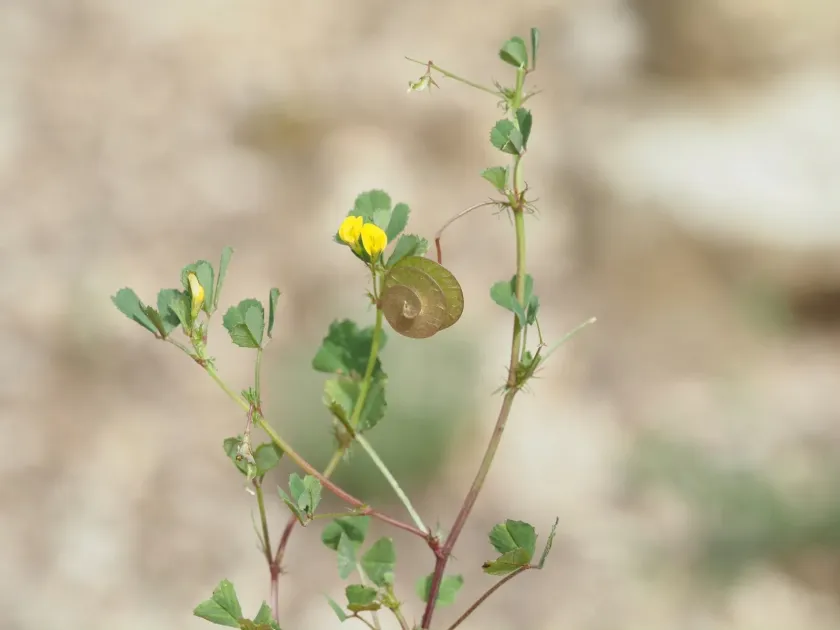
Description
Sowing dates
Button medick (Medicago orbicularis) is an annual legume valued for its nutritional profile in livestock feed. Planting is typically scheduled for early spring, once soil temperatures are sufficient to promote reliable and rapid seed germination.
Seeds should be sown at a depth of 1-2 cm into a well-prepared seedbed. Given their small size, proper soil contact is vital for moisture uptake. Using a precision seeder can help maintain uniform plant density across the field.
Seeding rates generally range from 10 to 15 kg per hectare, depending on local soil quality and the desired density. Drilling the seeds in rows helps minimize weed competition during the critical early stages of crop development.
After sowing, firming the soil with a light roller is highly recommended to improve capillary moisture movement to the seeds. This step significantly increases the uniformity of emergence in various soil types.
Early sowing allows the crop to establish a robust root system before the onset of high summer temperatures. This proactive approach ensures better drought tolerance and overall performance throughout the growing season.
Growing requirements
This species thrives in open, sunny environments where it is free from shading. It is highly adaptable to various conditions but performs best in well-drained, light-textured soils that are neutral to slightly alkaline in pH.
One of its most notable traits is excellent drought resistance, which makes it ideal for Mediterranean-like climates. The plant develops a deep taproot that allows it to access moisture reserves deep within the soil profile.
Button medick is known for its ability to grow in saline soils, providing a valuable option for farmers working in degraded or challenging agricultural environments. It also functions effectively in low-fertility soils by fixing atmospheric nitrogen.
While it does not require nitrogen fertilization, the plant benefits from available phosphorus and potassium. These nutrients support root expansion and the overall vigor of the crop, leading to higher biomass production.
Proper field drainage is essential. While the plant is hardy, it is susceptible to root rot if subjected to waterlogging for extended periods. Choosing the right landscape slope is a key component of successful cultivation.
Yield
The biomass yield of Button medick depends heavily on seasonal rainfall and soil fertility. In ideal conditions, it provides a highly palatable forage source that is rich in protein for both sheep and cattle.
As a pasture plant, it exhibits vigorous regrowth capabilities, allowing for multiple grazing cycles within a single season. This makes it an efficient and cost-effective choice for small-scale and commercial livestock operations.
Beyond its value as fodder, Button medick acts as a natural soil improver. It fixes nitrogen through symbiotic bacteria, leaving the soil enriched and better prepared for subsequent crops in a standard rotational sequence.
Seed production is generally reliable, and farmers can save seeds for future seasons. Harvesting the coiled pods at the correct stage ensures a high supply of viable seeds for the next year.
Incorporating the plant as a green manure crop is an excellent practice for restoring degraded soils. It adds substantial organic matter and nutrients back into the dirt, promoting long-term sustainability on the farm.
Main diseases and pests
Powdery mildew is a common concern, particularly in high-humidity periods. Regular scouting and maintaining proper plant spacing are the primary methods for managing this fungal issue before it spreads significantly.
Insect pests, including aphids and various weevils, can target the foliage and flowers. Integrated pest management strategies, such as biological control and timely monitoring, are effective at keeping populations below damaging thresholds.
Root rot diseases are primarily associated with poor drainage. By avoiding waterlogged conditions and following recommended crop rotation practices, farmers can effectively mitigate the risk of these soil-borne pathogens.
Weed control is critical during the initial weeks of growth. Using inter-row cultivation or competitive planting density allows the Button medick to dominate the space, reducing the need for chemical intervention.
The overall resilience of the species makes it a low-maintenance crop. However, keeping a close eye on the crop during the spring helps identify and address any localized issues before they expand to the entire field.
Harvesting
For hay production, the optimal harvest time is during the full bloom stage. At this point, the plant contains the highest concentration of essential nutrients, providing the best quality feed for livestock.
Careful drying techniques are necessary to preserve the leaves, which contain the majority of the nutrients. Over-drying or harsh mechanical handling can lead to leaf loss, significantly reducing the nutritional value of the final hay bale.
When harvesting for grazing or biomass, leaving a stubble height of at least 5-7 cm is advisable. This ensures the crown of the plant remains intact, facilitating faster regrowth and higher total seasonal yields.
Seed harvesting should occur just before the pods turn completely brown and brittle to prevent shattering. Using proper threshing equipment minimizes seed damage and maintains high germination rates for future planting.
Storage of the harvested seeds requires a cool, dry, and well-ventilated space. Keeping the moisture content at 12-14% is vital to prevent fungal growth and ensure the longevity of the seed batch over the winter months.