
Murex medic
Medicago murex Willd.
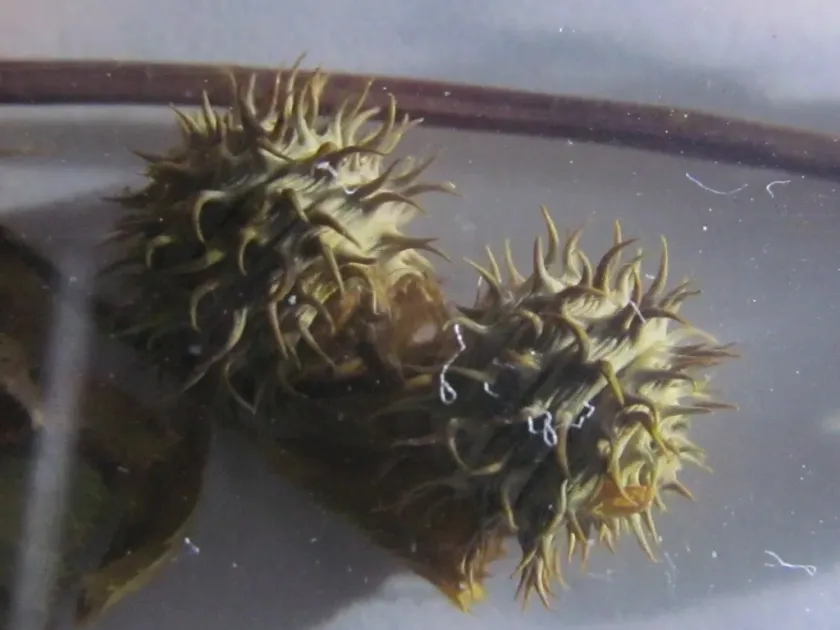
Description
Sowing dates
Murex medic is an annual legume that is typically sown in early spring, once the soil has warmed up sufficiently to ensure uniform germination.
Proper seedbed preparation is vital, as the small seeds require a fine, firm tilth to establish deep contact with the soil moisture for successful emergence.
The seeding rate is adjusted according to the intended use; higher densities are used for forage production to suppress weeds and maximize total biomass.
Seed depth should be carefully controlled, ideally placed at about 1 to 2 centimeters below the surface to prevent the seedling from exhausting its reserves before emergence.
In regions with mild winter climates, sowing in late autumn can be beneficial to encourage early spring growth and maximize production before the onset of summer drought.
Growing requirements
As a Mediterranean species, Medicago murex thrives in environments with high light intensity and moderate temperature regimes.
It performs exceptionally well on calcareous soils with a neutral to slightly alkaline pH, which facilitates the optimal functioning of nitrogen-fixing bacteria.
The plant demonstrates good tolerance to dry conditions, making it an excellent candidate for inclusion in pasture systems in water-limited areas.
Good soil drainage is essential for this species, as it is highly susceptible to root damage when subjected to waterlogged conditions for extended periods.
While the plant is hardy, it requires adequate levels of phosphorus and potassium to support vigorous root development and successful nodulation in the early growth stages.
Yield
The economic value of this crop is primarily derived from its high protein content, which provides an excellent nutritional source for livestock.
Yield potential is maximized when the crop is managed to minimize weed competition, as Murex medic is sensitive to shading by faster-growing species.
Beyond its value as animal feed, this legume plays a crucial role in soil enrichment through atmospheric nitrogen fixation, which benefits subsequent crops in a rotation.
Seed harvesting requires precision timing to ensure the pods are fully mature, preventing shatter loss during the mechanical threshing process.
Improved cultivars, when provided with adequate moisture and fertility, can provide multiple grazings or high-quality hay cuts during a single growing season.
Main diseases and pests
The most common disease threats include fungal infections such as root rot and powdery mildew, which thrive in humid and poorly ventilated microclimates.
Insect pests, including aphids and various species of weevils, can cause significant damage by feeding on the tender stems and foliage during the vegetative stage.
Integrated pest management strategies, such as crop rotation and the use of resistant varieties, are essential to mitigate the risk of severe infestations.
Weed control is critical during the initial weeks of growth to ensure the plants have sufficient access to light, nutrients, and moisture for optimal development.
Regular field scouting is recommended to identify potential outbreaks of pests or diseases before they reach economic injury levels that require chemical control.
Harvesting
For high-quality hay production, harvesting should be performed at the early flowering stage to achieve the best balance of protein, energy, and biomass yield.
Using specialized equipment like mower-conditioners can help speed up the drying process, preserving the leafy parts of the plant that contain the most nutrients.
When harvesting for seeds, it is important to avoid excessive mechanical handling of the dry pods to prevent loss of seeds due to pod shattering.
Proper storage of the harvested forage in dry, well-ventilated conditions is necessary to maintain quality and prevent the growth of harmful molds.
The incorporation of crop residues into the soil after harvest provides an organic matter boost, contributing to the overall sustainability of the farm ecosystem.