
Toothed medick
Medicago hispida Gaertn.
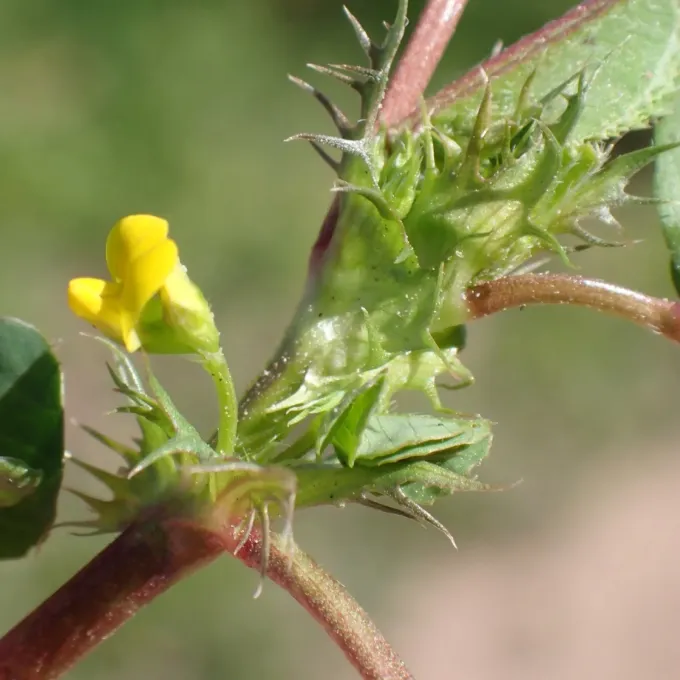
Description
Sowing dates
Toothed medick (Medicago hispida Gaertn.) is an annual leguminous plant that plays a role in forage production and soil improvement due to its biological characteristics.
Sowing typically takes place in early spring, allowing the plant to utilize soil moisture before the onset of summer heat, which is critical for successful establishment.
The seeds should be sown at a shallow depth of 1 to 2 cm, ensuring adequate contact with the soil to promote uniform and rapid germination across the entire field.
A sowing rate that ensures sufficient plant density is important, as the plant needs enough space to develop its root system and effectively fix atmospheric nitrogen.
Because the plant can easily self-seed, farmers should consider the impact on future crops in the rotation to ensure the land remains clear of excessive volunteer plants.
Growing requirements
The plant thrives in open, sunny locations where it can access full sunlight, which is necessary for optimal development and higher biomass yield.
Toothed medick prefers well-drained soils, ideally loams or sandy loams, and is highly sensitive to waterlogging, which can cause root decay and plant loss.
It is characterized by excellent drought tolerance, making it a valuable option for cultivation in semi-arid environments where other forage crops might fail.
The temperature range of 20–25 degrees Celsius is ideal for active vegetative growth, though the plant is resilient to fluctuations throughout the growing season.
Soil pH should ideally be neutral or slightly alkaline, as these conditions favor the activity of nitrogen-fixing bacteria that form a symbiotic relationship with the plant roots.
Main diseases and pests
Powdery mildew is a significant threat to the foliage of toothed medick, particularly under high humidity or poor ventilation conditions within a dense plant canopy.
Root rot remains a concern if the soil is poorly drained or if the plant is grown in unfavorable physical conditions, hindering the efficiency of the root system.
Pests such as weevils or various bugs may target the leaves and reproductive organs, which necessitates regular scouting during the growing season.
Effective pest management relies on balanced nitrogen and phosphorus levels, combined with crop rotation, to prevent the buildup of soil-borne pathogens and insect populations.
Proactive management of weeds is also essential, as competition for light and nutrients can severely stunt the growth of young medick plants during the early stages.
Harvesting
For high-quality forage, harvesting should occur at the start of the flowering stage, ensuring the plant mass contains the highest levels of proteins and digestible nutrients.
If producing seeds, the harvest timing is critical; wait until the pods turn brown, but be careful not to leave them too long to avoid excessive shattering in the field.
The unique structure of the pods, which are often spiny, requires specific attention during mechanical harvesting to ensure clean collection and minimal damage to machinery.
Once harvested, the green mass must be dried quickly to prevent spoilage and ensure the final product retains its nutritional value for livestock feeding purposes.
Depending on the climatic conditions and annual rainfall, multiple cuts per year are possible, making it a flexible component in sustainable forage management systems.