
Medicago doliata
Medicago doliata Carmign.
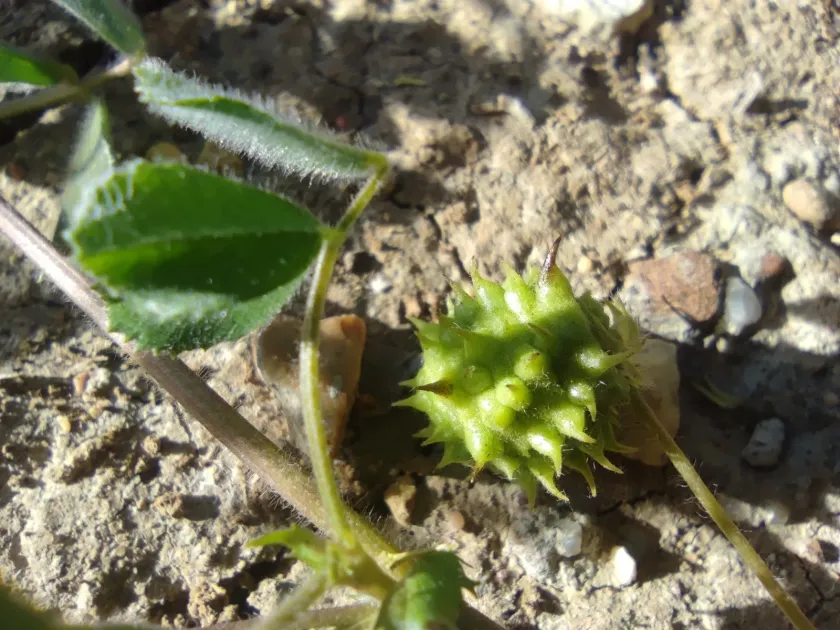
Description
Sowing dates
Medicago doliata is an annual legume species that requires precise timing for sowing to ensure successful establishment within the growing season.
The ideal sowing window typically opens in early spring, once soil temperatures have consistently risen above the threshold required for seed germination.
Before planting, seeds should undergo scarification to break physical dormancy, which significantly improves the uniformity of plant emergence in the field.
Seeds are drilled at a shallow depth of 2 to 3 centimeters, utilizing standard seeding equipment calibrated for small-seeded legume varieties to ensure proper contact.
Choosing an appropriate seeding rate is vital for managing competition and maximizing the biomass yield of the stand during the peak of its vegetative cycle.
Growing requirements
As a member of the Fabaceae family, this crop thrives in Mediterranean-type climates, favoring areas with ample solar radiation and well-drained soil conditions.
Medicago doliata performs best in light to medium-textured soils with a neutral or slightly alkaline pH, which promotes optimal symbiotic nitrogen fixation.
While the plant exhibits notable drought tolerance, access to adequate soil moisture during the seedling stage is critical for developing a robust root system.
Applying potassium and phosphorus-based fertilizers can enhance the crop's resilience, especially when grown in soils with low nutrient availability or poor structure.
Waterlogged or highly acidic environments should be avoided, as these conditions inhibit the development of root nodules and reduce the plant's overall productivity.
Main diseases and pests
The crop is susceptible to various fungal pathogens, such as root rot and leaf spot diseases, which are often exacerbated by humid weather conditions.
Pests including aphids and various species of weevils can cause significant damage by feeding on foliage, necessitating a proactive monitoring strategy for the field.
Cultural control measures, such as implementing a diverse crop rotation, are essential for reducing the carry-over of soil-borne pathogens and insect populations.
When chemical intervention is required, products must be selected carefully to align with integrated pest management (IPM) guidelines to ensure field safety.
Early detection of infestations or disease symptoms is key to maintaining a healthy crop and preventing widespread loss of plant vigor during the vegetative phase.
Harvesting
Harvesting Medicago doliata should ideally occur during the flowering stage, as this is when the plant's nutritional profile, including protein content, is peaked.
Mowing at a height of 5 to 7 centimeters is recommended to protect the crown of the plant and ensure the potential for recovery if environmental conditions allow.
Post-harvest handling involves drying the forage in swaths or using mechanical driers to preserve the quality of the hay for long-term storage and winter feeding.
If utilized as green manure, the biomass should be incorporated into the soil before the pods fully mature to maximize the nitrogen contribution to the soil.
Effective harvest management not only provides high-quality forage but also contributes to improved soil fertility and structure for subsequent planting seasons.