
Medicago sphaerocarpos
Medicago sphaerocarpos Bertol.
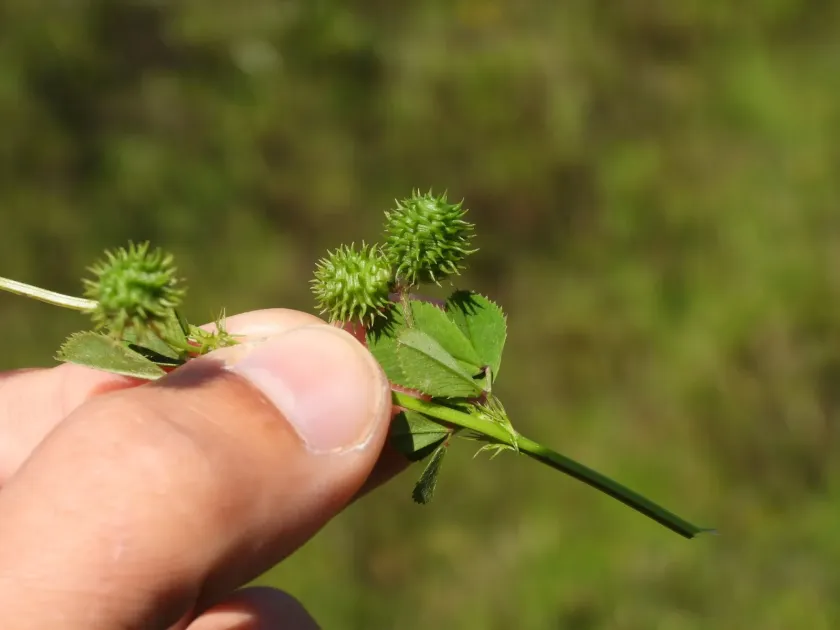
Description
Sowing dates
The sowing of Medicago sphaerocarpos is typically initiated in early spring when soil temperatures reach 8–10 degrees Celsius. Achieving an optimal stand density requires careful preparation of the seedbed to ensure a fine-textured soil structure for uniform germination.
Seeds should be planted at a shallow depth of 1–2 centimeters, as deeper burial can significantly reduce emergence rates. Precise calibration of seed drills is essential to maintain consistent spacing and avoid competition between emerging seedlings.
To enhance initial establishment, especially in fields where legumes have not been grown recently, seed inoculation with specific rhizobia bacteria is highly recommended. This practice maximizes nitrogen fixation capacity from the very beginning of plant growth.
Post-sowing compaction using a roller is a crucial agronomic step. This action ensures optimal soil-to-seed contact, promoting faster moisture absorption and a more uniform emergence of seedlings across the field.
Early season weed control is vital for the survival of the young crop. Since Medicago species grow relatively slowly in the first few weeks, keeping the area free from aggressive weeds allows the crop to establish a robust root system.
Growing requirements
Medicago sphaerocarpos is a legume species that thrives in various ecological conditions, showing high resilience to environmental stressors. It performs best in well-drained, fertile soils with a neutral or slightly alkaline pH range.
One of the defining features of this species is its notable drought tolerance. The plant develops a deep, extensive root system that allows it to access subsoil moisture, making it a reliable forage crop in arid and semi-arid regions.
The crop requires full sun exposure for maximum photosynthetic activity. Shading by surrounding vegetation or high-density weed pressure negatively impacts biomass production and the overall nutritional value of the forage.
While the plant is capable of fixing atmospheric nitrogen, a balanced supply of phosphorus and potassium is essential to support the high metabolic demands of the plant and to strengthen stem structure against lodging.
It is important to avoid soils prone to waterlogging or high water tables. Excess soil moisture can lead to root rot and other physiological disorders, which significantly reduce the longevity and productivity of the perennial stand.
Yield
The primary agricultural utility of this crop lies in the production of high-protein forage, suitable for hay, silage, or grazing. It serves as an essential source of nutrients for livestock, including cattle and sheep, throughout the production cycle.
Crop yields vary depending on local rainfall, fertility levels, and management practices. Under intensive management, several cuts per season can be achieved, ensuring a consistent and high-quality feed supply for the farm.
As a legume, it plays a critical role in agricultural sustainability by naturally enriching the soil with nitrogen. Rotating this crop with cereals often leads to significant yield increases in the following seasons due to improved soil health.
Productive longevity typically spans 3 to 5 years, after which the stand may begin to thin out. Proper management, including avoiding overgrazing and allowing adequate recovery time between cuts, can help maintain high yields throughout this period.
The highest nutrient density is achieved when harvesting occurs at the onset of the flowering phase. Delaying the harvest beyond this stage results in a higher fiber content and a reduction in the overall digestibility of the forage.
Main diseases and pests
Fungal diseases, such as various leaf spots and powdery mildew, represent common threats to the health of the stand. These pathogens are most prevalent under conditions of high humidity or poor air circulation within the canopy.
Insect pests, including aphids and various types of weevils, can cause significant damage by attacking foliage and root nodules. Early detection through regular field scouting is essential to mitigate the risk of severe infestations.
Management strategies should focus on integrated pest management (IPM) practices. This includes the use of certified disease-free seeds and maintaining appropriate spatial distance between new and established fields to prevent the spread of diseases.
Chemical intervention should be used judiciously, strictly adhering to the economic injury level for each specific pest. Always check safety intervals for pesticide application to ensure the harvested forage remains safe for livestock consumption.
Timely harvest also acts as an effective cultural control for many pathogens. Removing the biomass from the field helps to break the life cycle of pests and diseases that overwinter in plant debris.
Harvesting
Harvesting is ideally conducted during the early flowering phase to ensure the best balance between biomass quantity and nutritional quality. Using a mower-conditioner helps to accelerate the drying process, reducing the risk of weather-related losses.
When producing hay, monitoring moisture levels is essential. Aim for a moisture content below 17% to prevent the formation of mold and the risks associated with spontaneous combustion during storage.
For seed production, a two-stage harvest method is preferred. Cutting the crop into windrows allows the seeds to reach full maturity and dry naturally, which minimizes shattering losses during the final threshing process.
Proper cleaning of the harvesting equipment between fields is important to prevent the spread of weeds or unwanted pathogens. High-quality harvest practices directly influence the seed purity and the long-term viability of the stand.
Following the final harvest of the season, a light harrowing may be beneficial to remove dead stalks and stimulate regrowth. This prepares the plant for winter dormancy and ensures a strong start in the upcoming spring season.