
Snail medic
Medicago scutellata (L.) Mill.
Description
Sowing dates
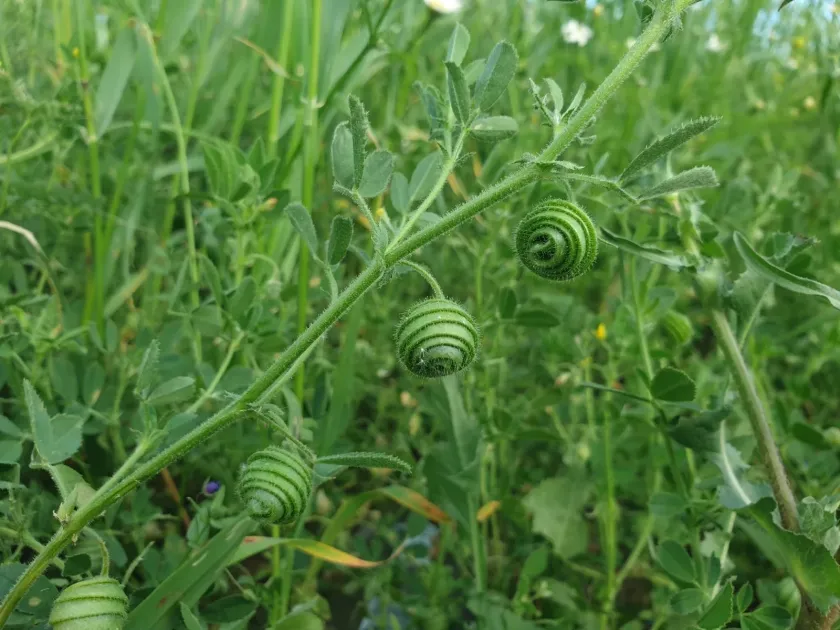
Snail medic is a valuable annual legume known for its unique shield-shaped pods and nitrogen-fixing capabilities. Sowing should ideally take place in early spring once the risk of severe frost has passed and soil temperature is stable.
The seeds require a well-prepared seedbed that is fine and firm to ensure good soil contact. Drilling is the preferred method, with rows spaced at approximately 15 to 20 centimeters to allow for adequate plant development.
Depth of planting is crucial for successful establishment, generally ranging between 1 and 2 centimeters. Sowing too deep may delay germination, leading to uneven emergence and reduced competition against weeds.
Seed inoculation with specific rhizobia strains is highly recommended, especially in fields where legumes have not been grown recently. This ensures effective nitrogen fixation from the start of the season.
After sowing, rolling the field can assist in moisture retention and better seed-to-soil contact. This practice is particularly beneficial in drier regions or during seasons with lower rainfall levels.
Growing requirements
This species thrives in temperate climates with mild winters and warm summers. It requires full sun exposure to achieve maximum photosynthetic activity and biomass production throughout the growing cycle.
Snail medic performs best in neutral to slightly alkaline soil conditions. It is moderately tolerant of various soil types but struggles in acidic soils, which can inhibit nodulation and overall plant vigor.
Adequate drainage is essential as the plant is sensitive to waterlogging. Sites prone to standing water or flooding should be avoided to prevent root rot and ensure healthy development of the taproot system.
While the plant is drought-tolerant once established, supplemental irrigation during dry spells can significantly improve forage yield. Efficient water management helps maintain high quality of the harvested biomass.
Soil fertility management, particularly the availability of phosphorus and potassium, plays a key role in the crop's success. Soil testing prior to planting is recommended to determine the necessary fertilization levels.
Yield
The biomass yield of Snail medic is influenced by the density of the stand and local environmental factors. When managed properly, it can provide significant amounts of high-protein forage for livestock.
Harvesting for hay should be timed before the plants become too woody or the pods begin to dry out. Early cutting ensures a higher concentration of nutrients, making it ideal for high-quality animal feed.
Seed production is another potential economic avenue, with harvests occurring once the pods turn brown and dry. Careful handling is required during threshing to avoid mechanical damage to the seeds.
Beyond animal nutrition, the crop serves as an excellent green manure. Incorporating the biomass into the soil returns nitrogen and organic matter, creating a beneficial cycle for following grain crops.
Ongoing research into improved varieties focuses on increasing both seed yields and total dry matter production. These efforts aim to make the species even more competitive in modern agricultural rotations.
Main diseases and pests
Common diseases affecting this legume include powdery mildew and various leaf spot fungi. These are often triggered by high humidity levels or poor air circulation within the dense crop canopy.
Pests such as aphids and clover root weevils can cause damage, particularly during the early vegetative stages. Scouting regularly is essential for implementing timely and effective control measures.
Root rot, often caused by poor drainage, remains a significant threat to stand longevity. Maintaining proper soil structure and rotating crops are fundamental strategies for reducing disease pressure.
Competition from weeds can be intense during the seedling stage. Mechanical cultivation and integrated weed management techniques are crucial to allow the crop to establish dominance early on.
Biological control methods and resistant cultivars offer sustainable ways to manage pests and diseases without heavy reliance on synthetic pesticides, aligning with modern ecological farming standards.