
Spotted medic
Medicago arabica (L.) Huds.
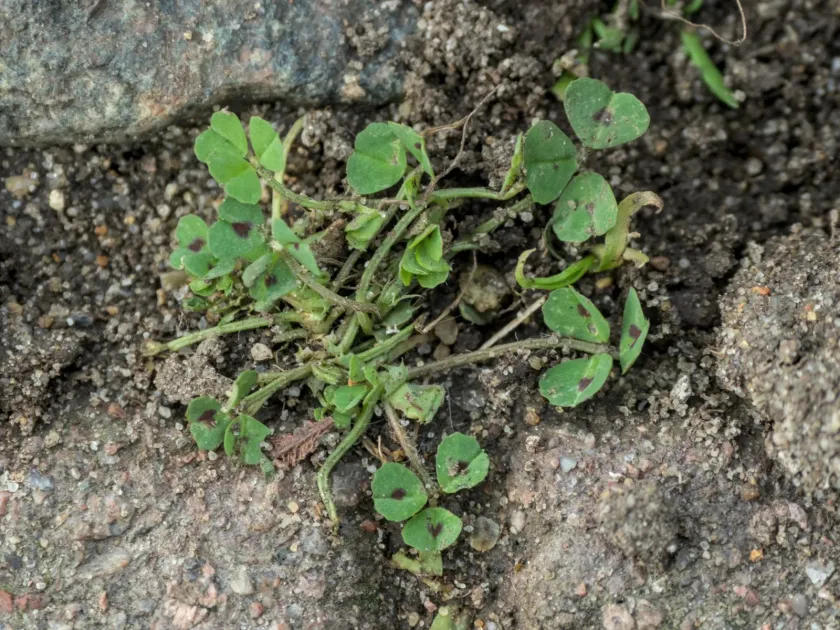
Description
Growing requirements
Spotted medic (Medicago arabica) is a species of the legume family (Fabaceae). It is an annual plant known for its distinctive dark spots on the leaflets and high nutritional value for livestock.
Originating from the Mediterranean region, this plant has spread widely across various temperate climates, establishing itself as a useful component in pastures.
It thrives best in well-drained, fertile soils with a neutral or slightly alkaline pH. The plant is particularly appreciated for its ability to fix atmospheric nitrogen via symbiotic bacteria.
The culture requires sufficient sunlight for vigorous development. It is moderately tolerant to cool weather but can be damaged by severe frosts during the early stages of growth.
Good agricultural management involves ensuring balanced soil fertility, with particular attention to phosphorus and potassium levels, which are critical for optimal biomass production.
Main diseases and pests
Powdery mildew represents a significant fungal threat to the crop, especially in humid conditions where poor ventilation encourages the rapid spread of spores.
Root rot diseases are common in heavy soils with poor drainage. These pathogens can significantly reduce plant vigor and lead to complete loss of stands if not managed.
Insect pests, including various species of weevils, pose a risk as they feed on roots and leaves, thereby inhibiting the plant's capacity for photosynthesis.
Aphid infestations are frequently observed on the succulent parts of the plant, potentially acting as vectors for viral diseases that can affect the entire crop.
Integrated pest management strategies, such as crop rotation and the selection of resistant cultivars, are essential to maintain the health and longevity of the forage stand.