
Button Medick
Medicago tornata (L.) Mill.
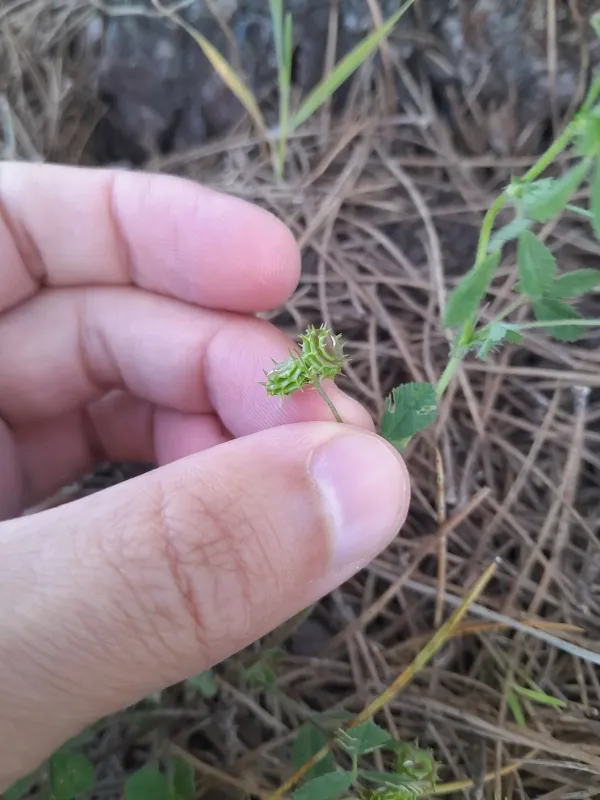
Description
Sowing dates
Button Medick is an annual plant, and therefore, its sowing period falls in early spring, as soon as the soil warms up to 8–10 degrees Celsius. It is essential to sow the seeds before the onset of persistent heat so that the seedlings can utilize the moisture from the late winter and early spring period for uniform emergence.
For high-quality planting, a standard row seeding method with 15 cm spacing or a narrow-row method is typically used. The seeding depth depends on the soil texture and usually ranges from 1.5 to 3 cm. In lighter and drier soils, seeds should be placed slightly deeper to ensure contact with the moist soil layer.
The seeding rate is calculated based on the purity and germination capacity of the seed material. Typically, 10 to 15 kilograms of seeds are required per hectare. Before sowing, seeds are often scarified, as hard-seededness is a common biological trait among many species of the Medicago genus.
Optimal sowing timing allows the crop to quickly progress through the rosette stage and actively accumulate vegetative biomass before the start of the summer heat. In regions with a mild climate, late-autumn sowing is possible, allowing plants to use early spring thaw moisture for a rapid start.
After sowing, it is recommended to roll the field to improve capillary water rise and ensure uniform germination. Early agronomic care includes weed control during the initial stages, before the crop closes the rows and begins to compete effectively with unwanted vegetation.
Growing requirements
Button Medick prefers well-drained, fertile loamy and sandy soils. It demonstrates high resistance to saline soils, making it a promising crop for the reclamation of degraded lands in arid regions.
The plant is a xerophyte and is well-adapted to the Mediterranean climate, characterized by hot, dry summers and mild, wet winters. It effectively utilizes available moisture to form biomass, after which it transitions into the seed maturation phase before the onset of critical drought.
Optimal soil pH levels for this crop are in the slightly alkaline or neutral range. The plant reacts extremely negatively to stagnant water and waterlogged soils; therefore, selecting sites with deep groundwater levels is a critical factor for success.
Light levels play a decisive role in the development of Button Medick. As a light-loving plant, it does not tolerate shading, so the fields must be located in open, well-illuminated areas. Even minor shading from weeds or neighboring crops leads to stem stretching and a reduction in overall productivity.
Applying mineral fertilizers, especially phosphorus and potassium, significantly increases the yield of green mass. Nitrogen fertilizers are usually required in minimal doses only at the beginning of the vegetation period, as the plant is capable of forming symbiosis with nitrogen-fixing bacteria, providing itself with the necessary nitrogen from the air.
Yield
The yield of Button Medick depends on the climatic conditions of the specific season and soil fertility. Under optimal conditions, it is capable of forming a significant volume of nutritious green mass, suitable for use as fresh forage or for hay production in early harvest windows.
Maximum productivity is reached during the flowering stage, when the plant contains the highest amount of protein and essential micronutrients. In agricultural practice, the yield of green mass can range from 15 to 25 tons per hectare, depending on the agricultural background and soil quality.
In addition to green mass, the crop is valuable for its seed potential. Button Medick is characterized by good seed setting, which allows it to be used not only as a forage crop but also as a green manure, contributing to soil enrichment with organic matter and biological nitrogen.
When used as a pasture crop, it is important to monitor grazing intensity. Regular but moderate grazing promotes better plant tillering, although overgrazing can lead to the disappearance of the crop from the pasture due to its annual life cycle.
The final economic effect depends on the efficiency of harvesting seeds or biomass. Thanks to its high nutritional value, even a moderate yield provides a balanced feed for ruminants, especially in conditions of scarcity of high-quality perennial legume grasses.
Main diseases and pests
Typical diseases for this crop include various types of powdery mildew and rust, which affect the leaves and stems during periods of high air humidity. Prevention consists of selecting resistant varieties and adhering to crop rotation, which excludes continuous cultivation of legumes.
Root rots can occur if the drainage system is inadequate or if there is excessive soil moisture. This disease leads to damage to the root system and premature wilting of plants, which significantly reduces the yield of marketable products per hectare.
Among pests, the alfalfa weevil and various types of aphids pose the greatest danger. These insects damage both generative organs and vegetative parts of the plant, which can lead to significant losses in seed yield and green mass if not properly controlled.
To prevent the spread of pests, timely treatment of the crops with insecticides during periods of mass infestation is recommended. However, when grown for forage purposes, preference is given to biological control methods and adhering to optimal mowing schedules.
Weeds are serious competitors at the early stages of development. Special attention should be paid to the control of broad-leaved and grass weeds, which can suppress young Button Medick seedlings, reducing overall stand density and potential yield.
Harvesting
Harvesting Button Medick for green mass is carried out in the early flowering stage. It is during this period that the plant reaches the optimal balance between biomass volume and nutritional composition, which is critical for preparing high-quality feed.
For seed production, harvesting is performed when the pods mature and acquire a characteristic brown color. It is important to avoid over-ripening, as the pods can shatter, leading to significant seed losses directly on the field.
Harvesting technology includes mowing with specialized equipment followed by wilting in swaths. In the case of hay production, it is important to ensure uniform drying of the mass to prevent mold growth and the loss of nutritional value, especially carotene, under the influence of direct sunlight.
For seed harvest, the crops are threshed using combine harvesters with appropriate adjustments to the threshing mechanism. Reducing the drum speed is necessary to prevent mechanical damage to the seeds, which directly affects their subsequent germination capacity and vigor.
Post-harvest seed processing includes cleaning impurities and drying to a moisture content of 12–14%. Properly dried seeds can be stored in cool, dry conditions, which allows for the maintenance of high seed viability until the next growing season.