
Tuberculate medic
Medicago polymorpha L. var. brevispina (Benth.) Heyn
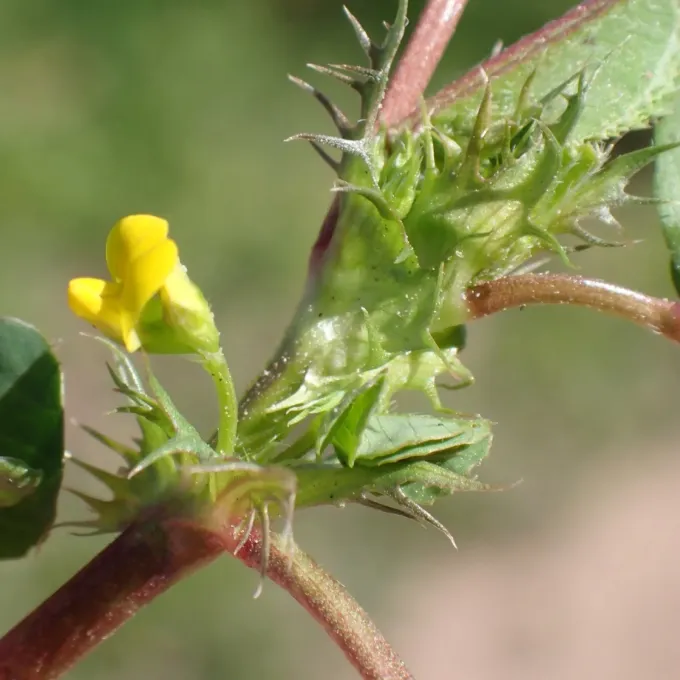
Description
Sowing dates
Tuberculate medic is an annual legume crop, and planting is typically scheduled for early spring. The soil should ideally reach temperatures between 8 and 10 degrees Celsius.
In warmer regions, autumn sowing is an option, allowing plants to leverage winter moisture. Early establishment is crucial for developing a strong root system before the onset of summer heat.
Seeding rates should be determined based on germination percentage and seedbed condition. Drills with a row spacing of 15 to 20 centimeters are generally used to ensure optimal nutrient access.
The planting depth is critical, ranging from 1 to 2 centimeters. Maintaining sufficient moisture levels in the topsoil is essential for uniform emergence of seedlings.
Post-seeding rolling is highly recommended to firm the soil surface. This process improves soil-to-seed contact and encourages capillary water movement for rapid germination.
Growing requirements
The crop is known for its ecological plasticity, thriving in temperate climates. It exhibits significant drought tolerance once established due to its extensive taproot system.
Fertile loamy soils with a neutral or slightly alkaline pH are preferred. The plant performs poorly in highly acidic soils, which often require liming for successful growth.
Full sun exposure is necessary for healthy development. Shading caused by weeds or canopy closure from other crops can stunt growth and significantly reduce biomass production.
While somewhat tolerant to saline conditions, high salinity levels will inevitably decrease the forage yield. The plant acts as a beneficial rotational crop by improving soil structure.
Tuberculate medic fixes atmospheric nitrogen through symbiotic bacteria in its root nodules. This process naturally increases soil fertility for subsequent crops in the rotation.
Main diseases and pests
Common diseases affecting this medic include powdery mildew and rust, which primarily impact leaf health. These fungal issues flourish in humid and stagnant air conditions.
Insects like the alfalfa weevil and aphids pose the greatest threat to biomass and seed yield. They feed on foliage and reproductive parts, weakening the plant's vigor.
Integrated pest management, including crop rotation and field sanitation, is the best defense. Maintaining healthy, vigorous stands helps the crop withstand pest pressure.
Chemical control should only be used as a last resort, strictly adhering to safety intervals. Environmental impacts must be considered when treating fields intended for animal grazing.
Proactive management of weeds is essential, as many common weeds serve as secondary hosts for both fungal pathogens and insect pests that plague medic crops.
Harvesting
For forage production, the crop should be harvested at the bud to early flowering stage. This timing captures the peak nutritional value and protein content of the plants.
When making hay, mechanical conditioning is used to accelerate the drying process. This ensures that leaves, which are the most nutritious parts, remain intact during the curing.
Seed harvest is initiated when the majority of the seed pods have turned dark and matured. Early harvesting is critical to prevent shattering and loss of seeds in the field.
Harvesting during early morning hours, when dew is present, can reduce seed shattering. Gentle machinery operation is required to maximize the recovery of the seed crop.
Post-harvest, seeds must be cleaned and dried to appropriate moisture levels. Proper storage conditions are vital to maintaining the viability of seeds for future planting.