
Variegated alfalfa
Medicago sativa L. nothosubsp. varia (Martyn) Arcang.
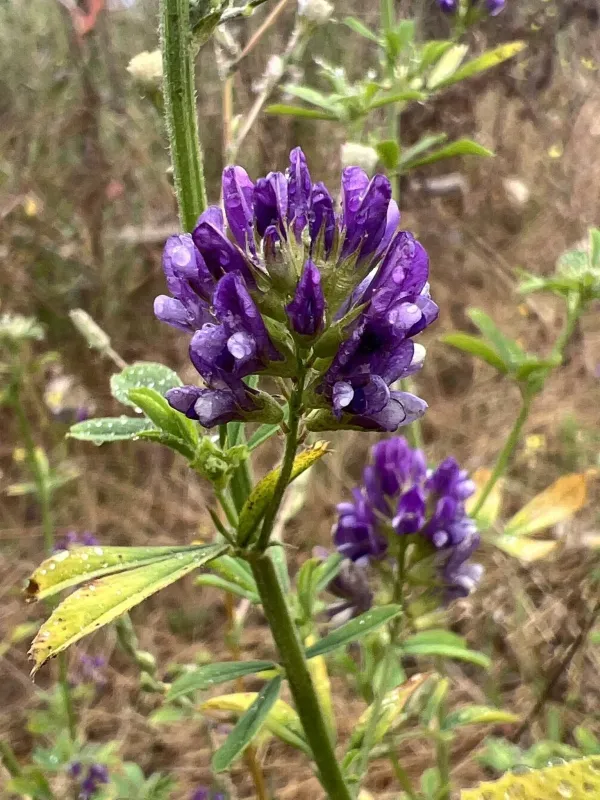
Description
Sowing dates
Variegated alfalfa is a perennial crop, making the timing of sowing critical for the development of a robust root system during the first year. The most favorable window for seeding is early spring as soon as the soil is dry enough for mechanical cultivation.
Winter sowing is also an option, which allows seeds to undergo natural stratification and emerge promptly when temperatures rise. Success depends on ensuring that seeds do not germinate prematurely before the onset of hard frost.
Seeding rates generally range from 12 to 16 kilograms per hectare when using a broadcast or row-seeding method. The planting depth should be shallow, usually between 1.5 and 2.5 centimeters, depending on soil texture.
Rolling the soil after seeding is a mandatory agronomic practice to ensure optimal contact between the seeds and the soil moisture. This step is vital for achieving uniform seedling emergence across the entire field.
Because alfalfa grows slowly during its first year, controlling weed competition is essential for crop establishment. By the second year, the stand usually thickens sufficiently to suppress most competing weed species naturally.
Growing requirements
Variegated alfalfa is a natural hybrid between common alfalfa and sickle alfalfa, classified within the Fabaceae family. It is highly valued for its superior winter hardiness and drought tolerance, making it suitable for harsh climates.
The crop performs best on fertile chernozems and well-drained loamy soils. It is sensitive to waterlogging; therefore, avoiding sites with high water tables is crucial to prevent root rot and the subsequent loss of plant density.
Soil pH should ideally be maintained between 6.5 and 7.5. On acidic soils, liming is necessary to ensure the proper activity of nitrogen-fixing bacteria, which are essential for the crop's natural nitrogen uptake.
Alfalfa requires ample sunlight and should not be grown as an under-crop with tall, dense grain crops. Exposure to full light promotes healthy foliage and maximizes the nutritional content of the harvested biomass.
Inoculating seeds with specific nitrogen-fixing bacteria before sowing is highly recommended. This practice ensures efficient biological nitrogen fixation, reducing the need for synthetic fertilizers and improving soil quality.
Yield
The productivity of variegated alfalfa allows for two to four harvests per season, depending on the climatic conditions. With proper management, green matter yields can reach 40 to 60 metric tons per hectare.
The output of dry matter typically ranges from 8 to 12 tons per hectare. This high yield of nutritious, protein-rich forage makes it a cornerstone crop for livestock operations, particularly for dairy cattle production.
A well-maintained alfalfa stand can be productive for five to seven years. After this period, the stand naturally thins, and periodic reseeding or crop rotation becomes necessary to maintain agricultural efficiency.
Applying phosphorus and potassium fertilizers significantly boosts yield and plant longevity. Potassium, in particular, plays a vital role in increasing sugar accumulation in the roots, which directly enhances winter survival.
Optimizing plant population density ensures maximum nutrient capture per unit of area. Properly managed stands avoid excessive inter-plant competition, which results in more uniform growth and a higher overall quality of the harvested product.
Main diseases and pests
Fungal diseases, such as ascochyta leaf spot, brown spot, and fusarium wilt, are the primary threats to alfalfa. Implementing a rigorous crop rotation plan and choosing disease-resistant varieties are effective ways to mitigate these risks.
Pests like the alfalfa weevil and various plant bugs can cause significant damage to foliage and reproductive parts. Monitoring pest populations is necessary to prevent severe impacts on biomass production and seed set.
Powdery mildew may appear during late summer, particularly in humid conditions, leaving a white coating on leaves that reduces forage appeal. Regular harvesting helps break the pest cycle and prevents disease spread.
Integrated Pest Management (IPM) should be the primary approach, combining agronomic practices with targeted biological interventions. Chemical pesticides should be used as a last resort and strictly according to regional regulations.
Maintaining a timely mowing schedule is a powerful non-chemical tool against many pests. By removing the foliage, growers interrupt the reproductive cycles of insects and minimize the development of pathogens within the crop canopy.
Harvesting
The ideal time to harvest alfalfa for hay is the bud stage. This is when the plant contains the highest concentration of protein and highly digestible nutrients, which are essential for superior livestock feed.
Delaying harvest until the full bloom stage leads to significant leaf loss and increased stem lignification. Since the leaves contain the vast majority of the plant's protein, preserving them during harvesting is crucial.
For seed production, harvesting should begin when 70% to 80% of the seed pods turn brown. Care must be taken to avoid over-drying, as mature seeds can easily shatter and fall to the ground during mechanical operations.
Using a conditioner or crimper during the mowing process accelerates drying time by up to 30%. This helps retain the crop's color and nutrient quality by reducing the duration the biomass is exposed to the elements.
Proper storage is essential to maintain forage quality. Baled hay should have a moisture content of 17% or less to prevent mold growth and heating, ensuring a safe and palatable feed throughout the storage period.